
Separate on Paper
In 1981, an Italian government fell after the exposure of a clandestine Masonic lodge. A published list contained 962 alleged members. Intelligence chiefs, politicians and senior military officers were caught in the scandal. The organization was called Propaganda Due, or P2.1
A parliamentary inquiry documented P2’s penetration of political, military and economic leadership, and its leader’s control over the newspaper Corriere della Sera.2
A government. Its intelligence services. A major newspaper. Separate institutions, connected through a private organization the public hadn’t known was there. The lesson isn’t simply that powerful people join clubs. It’s that power can be concentrated while the institutions exercising it still look independent.
That’s a different way to read an official biography. The title identifies someone’s public responsibility. It doesn’t necessarily reveal the relationships through which they were recruited, the people whose judgment they trust, or the institutions that helped form their priorities.
American intelligence drew heavily from precisely that kind of established social world. The wartime Office of Strategic Services (OSS), a predecessor of the Central Intelligence Agency (CIA), and the agency that followed it recruited extensively from the Ivy League, particularly Yale. Historian Robin Winks documented those connections in Cloak and Gown. The new intelligence institutions weren’t assembling their personnel from strangers. They were drawing on relationships that already existed.3
Yale also housed Skull and Bones. In 2004, both major-party presidential candidates, George W. Bush and John Kerry, were members.4

The affiliations reach into much older institutions. CIA director William Casey and former secretary of state Alexander Haig were members of the Knights of Malta, formally the Sovereign Military Order of Malta (SMOM).5
The order traces its origins to an eleventh-century hospital in Jerusalem. It maintains diplomatic relations with more than a hundred states and permanent observer status at the United Nations (UN). A medieval religious order and a modern intelligence agency can appear in the same biography. The job title alone doesn’t show the full set of relationships.6
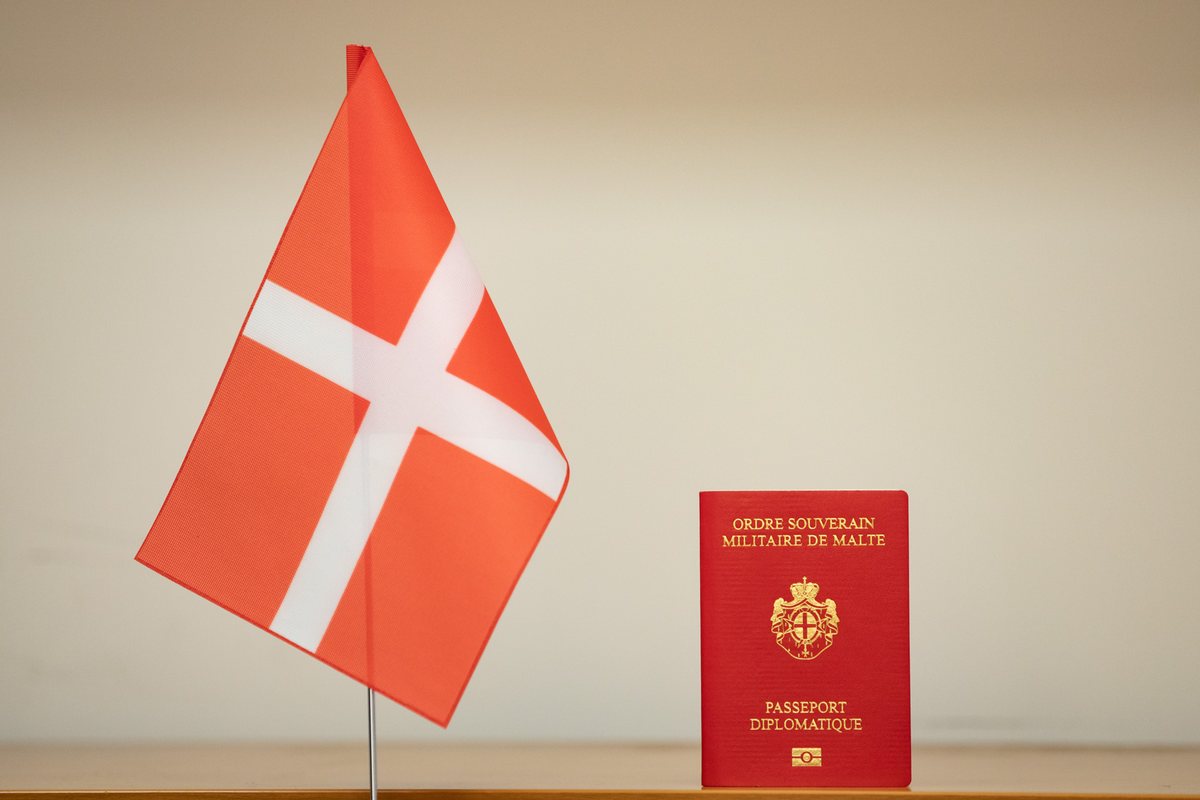
It also issues its own biometric passports. The Order reports roughly 500 diplomatic passports in circulation for its leadership, diplomats and other authorized recipients. It says all 118 of its diplomatic partners accept them as valid travel documents. The Council of the European Union catalogs the passport in its official register, complete with watermarks and security features.78
Bohemian Grove shows what a private audience can offer a political career. Richard Nixon called his off-the-record speech there in July 1967 the “first milestone on my road to the presidency.” He also described discussing the coming primaries with Ronald Reagan during that visit. The Grove’s giant owl and ceremonial burning of an effigy called Care are real. So was the opportunity to address influential men away from the public campaign. The ritual attracts attention; the private access explains why it matters.9
The policy work has its own institutions. The Council on Foreign Relations (CFR) says its War and Peace Studies project produced 670 memoranda for the State Department between 1939 and 1945. David Rockefeller founded the Trilateral Commission in 1973 to bring people from policymaking, business, media and academia into continuing relationships. Private organizations weren’t simply watching government. They were developing advice for it and cultivating relationships across the professions that help explain and evaluate its decisions.1011
Other arrangements supplied operational muscle. In the late 1970s, the Safari Club brought together Saudi Arabia and partners including France, Egypt and Morocco for covert operations in Africa while Congress was restricting the CIA. Former Saudi intelligence chief Prince Turki al-Faisal later described their contribution at Georgetown as helping at a time when the United States couldn’t act. Congressional restraint and the capacity to continue operations existed simultaneously, in different parts of the network.12
Turki’s name later appeared alongside Peter Thiel’s in SafeGraph’s announcement of a $16 million financing round. Its product was geospatial data about physical places and their relationship to people. WIRED subsequently reported that company materials identified funding from In-Q-Tel (IQT) and an IQT investment executive on SafeGraph’s board. The CIA established IQT in 1999 to connect commercial technology with intelligence requirements. Here, the connection runs through financing and product development, not just a guest list. Intelligence agencies can help shape the technology that later reaches the market.131415
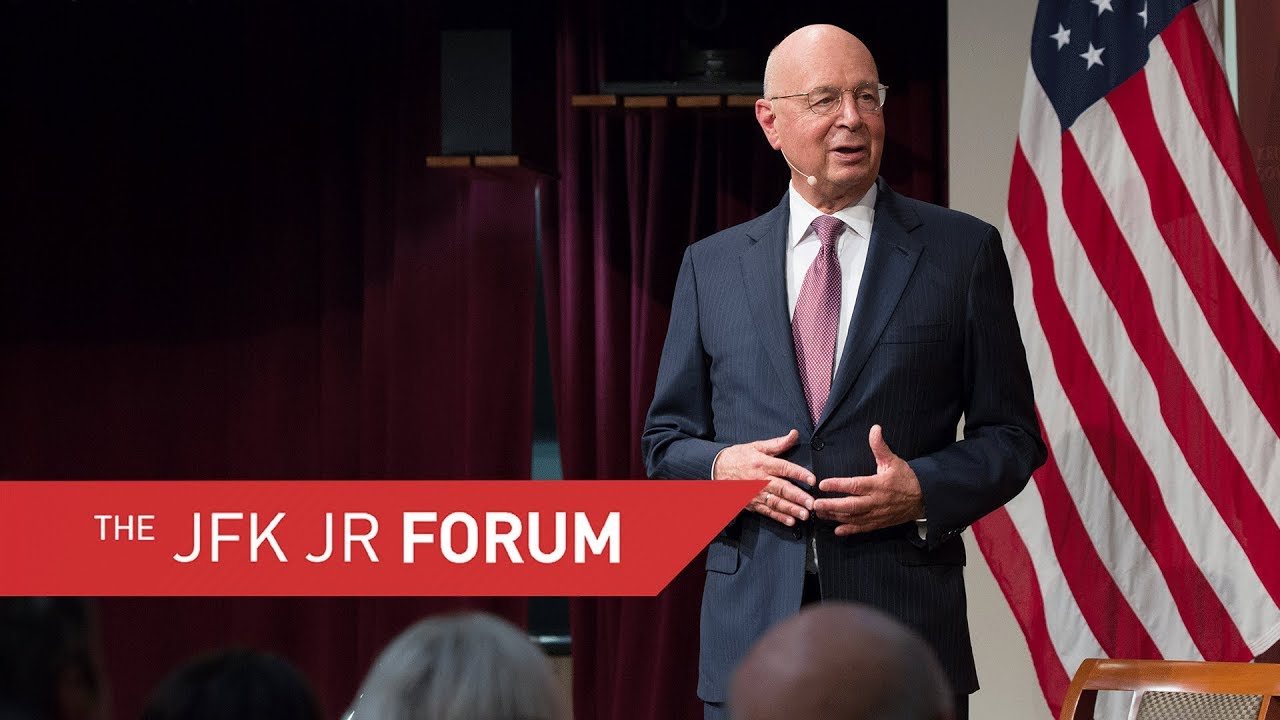
The World Economic Forum (WEF) supplied an unusually blunt description of its own ambitions. At Harvard in 2017, Klaus Schwab invoked Angela Merkel, Vladimir Putin and Justin Trudeau while discussing the Forum’s political reach. “We penetrate the cabinets,” he said, referring to its Young Global Leaders. Those names were part of Schwab’s claim, not a verified alumni list. What he chose to celebrate was the presence of people associated with his organization inside national governments.1617
These aren’t interchangeable cases. An intelligence investment, a social retreat and P2’s clandestine penetration of state institutions establish different things. But each challenges the habit of treating an official position as the whole story. The question is what the relationship enables: access, recruitment, policy development, financing or the exercise of power beyond the public’s view.
Consider the next policy announced by a government, endorsed by a think tank and welcomed by industry. Three institutional names don’t automatically amount to three independent judgments. Did they arrive separately at the same conclusion, or did the proposal move through relationships they already shared? Who financed the research? Who recruited the advisers? Who gets the contract? Those are questions that records can answer.
The stakes aren’t whether a few officials have unusual hobbies. They’re whether institutions that are supposed to scrutinize one another actually do so. A public asked to accept a consensus deserves to know how independent its authors were. And an election can change the person holding an office without changing the relationships that supply its advice, personnel and capabilities.
Knowing who holds the office isn’t the same as knowing whose influence enters with them.