
The Back Bar
October 2026 5 notes
Hold My Bag
Anthropic’s prospective IPO could invite ordinary investors into a company valued above $2T. That’s the figure Reuters reported last week after reviewing its confidential prospectus. In March 2025, a private financing round valued Anthropic at $61.5B. By May 2026, another round put it at $965B. A tremendous increase in the company’s valuation has already happened before its shares reached a public exchange. Reuters, Anthropic’s March announcement, May announcement
There’s also a tremendous amount left to pay for. Reuters reported more than $8B in operating losses in 2025, even as revenue grew twelvefold to nearly $4.6B. Separate reporting put Anthropic’s computing and infrastructure commitments at $518B over a decade. About 80% is noncancelable or payable regardless of usage. Those obligations will belong to the business public investors are being offered a stake in. Financial reporting, infrastructure commitments
The debate will concentrate on whether Anthropic deserves that valuation. Congress helped change how much of a company’s growth could happen before ordinary investors had a chance to buy its shares.
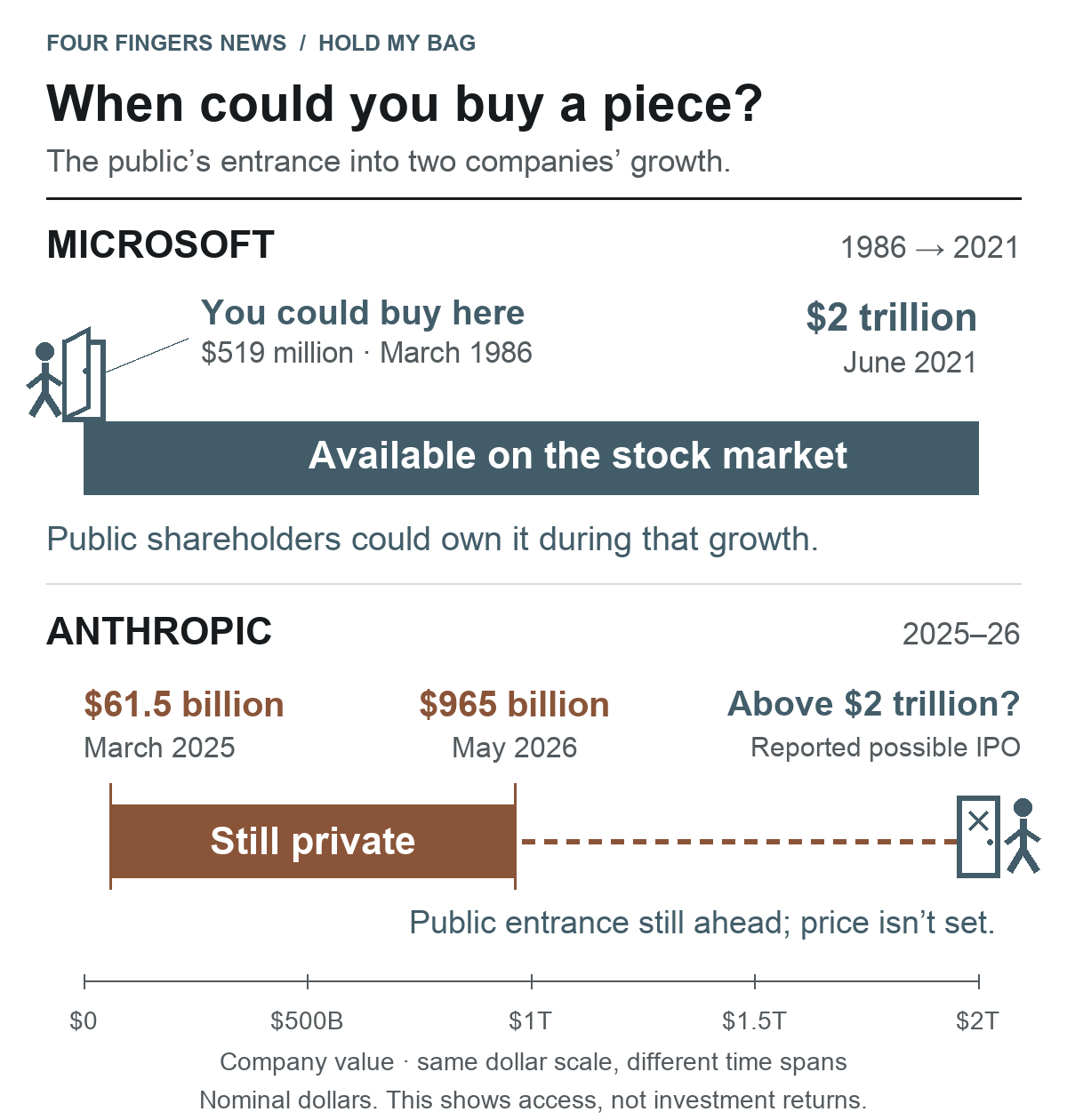
Microsoft’s 1986 offering priced the company at about $519M, in that year’s dollars. Public shareholders could own it through decades of expansion. They had to recognize the opportunity, take the risk and keep holding. Plenty of other investments disappointed people. But someone with a brokerage account could buy Microsoft while much of the business we know today was still ahead of it. Original prospectus
That opportunity wasn’t simply a gift from generous founders. Rules helped bring companies into public ownership.
In 1996, Congress passed the National Securities Markets Improvement Act. Among its changes, it created a private-fund exemption that removed the existing 100-investor ceiling for funds whose investors met the more demanding “qualified purchaser” standard. Institutions had already been investing in venture capital. The change gave private funds more room to assemble large pools of money. SEC’s contemporary explanation
That mattered to a growing company’s choices. Raising serious money increasingly became possible without selling shares to the public. Research by Michael Ewens and Joan Farre-Mensa identifies the law as one of several changes that expanded late-stage private financing and helped companies stay private longer. Research
Then came the JOBS Act in 2012.
That’s the Jumpstart Our Business Startups Act. Somebody in Congress must’ve been very pleased when they got the letters to spell JOBS.
For companies with more than $10M in assets, the old threshold of 500 shareholders of record became 2,000 overall, or 500 who weren’t accredited investors. Qualifying shares issued through employee compensation plans were excluded from the count. A growing workforce could receive equity without pushing the company toward public reporting in the same way. SEC
The old rule required registration and financial reporting, rather than an IPO. But that requirement created pressure: once a company had to disclose its financial results anyway, an important advantage of remaining private had diminished. Goldman Sachs, which helped take Microsoft public, describes the approaching shareholder threshold as a factor in its decision. Goldman Sachs
Private share sales also give employees and early investors ways to turn equity into cash without a listing. Those transactions existed before the JOBS Act. Alongside larger pools of private capital and looser reporting thresholds, they reduce another reason to enter the public market.
The advantages for a company are understandable. Founders gain flexibility. Employees can get paid. Investors can negotiate deals without the full obligations of public ownership.
The consequence for someone building wealth through public stocks deserves equal attention. More of a company’s development can happen within a market they can’t readily enter. By the time an IPO arrives, years of financing rounds have established a much higher starting valuation for their investment.
Some ordinary savers have indirect exposure through pensions or funds. That’s different from being able to choose a company and buy its shares during that earlier period.
“Socialize the losses” is the concern this arrangement brings to mind. An IPO alone doesn’t establish a taxpayer bailout, and private investors have borne real losses along the way. But an offering can broaden who bears the next stage of risk. Where existing owners sell, it can also let them realize gains while new buyers take their place.
The offering’s terms will tell us how much money goes into Anthropic and how much goes to existing shareholders. Calling both “investment in the future” would obscure an important distinction.
Anthropic may build a business that rewards its public shareholders. That possibility doesn’t erase what changed in the meantime. Congress gave companies and private capital more freedom to decide how long early ownership would remain private. Ordinary investors’ access depended on those decisions.
For someone saving out of a paycheck, the March 2025 entry point won’t be available at the IPO. Their decision could begin above $2T, with a decade of computing bills still ahead.
Separate on Paper
In 1981, an Italian government fell after the exposure of a clandestine Masonic lodge. A published list contained 962 alleged members. Intelligence chiefs, politicians and senior military officers were caught in the scandal. The organization was called Propaganda Due, or P2.1
A parliamentary inquiry documented P2’s penetration of political, military and economic leadership, and its leader’s control over the newspaper Corriere della Sera.2
A government. Its intelligence services. A major newspaper. Separate institutions, connected through a private organization the public hadn’t known was there. The lesson isn’t simply that powerful people join clubs. It’s that power can be concentrated while the institutions exercising it still look independent.
That’s a different way to read an official biography. The title identifies someone’s public responsibility. It doesn’t necessarily reveal the relationships through which they were recruited, the people whose judgment they trust, or the institutions that helped form their priorities.
American intelligence drew heavily from precisely that kind of established social world. The wartime Office of Strategic Services (OSS), a predecessor of the Central Intelligence Agency (CIA), and the agency that followed it recruited extensively from the Ivy League, particularly Yale. Historian Robin Winks documented those connections in Cloak and Gown. The new intelligence institutions weren’t assembling their personnel from strangers. They were drawing on relationships that already existed.3
Yale also housed Skull and Bones. In 2004, both major-party presidential candidates, George W. Bush and John Kerry, were members.4

The affiliations reach into much older institutions. CIA director William Casey and former secretary of state Alexander Haig were members of the Knights of Malta, formally the Sovereign Military Order of Malta (SMOM).5
The order traces its origins to an eleventh-century hospital in Jerusalem. It maintains diplomatic relations with more than a hundred states and permanent observer status at the United Nations (UN). A medieval religious order and a modern intelligence agency can appear in the same biography. The job title alone doesn’t show the full set of relationships.6
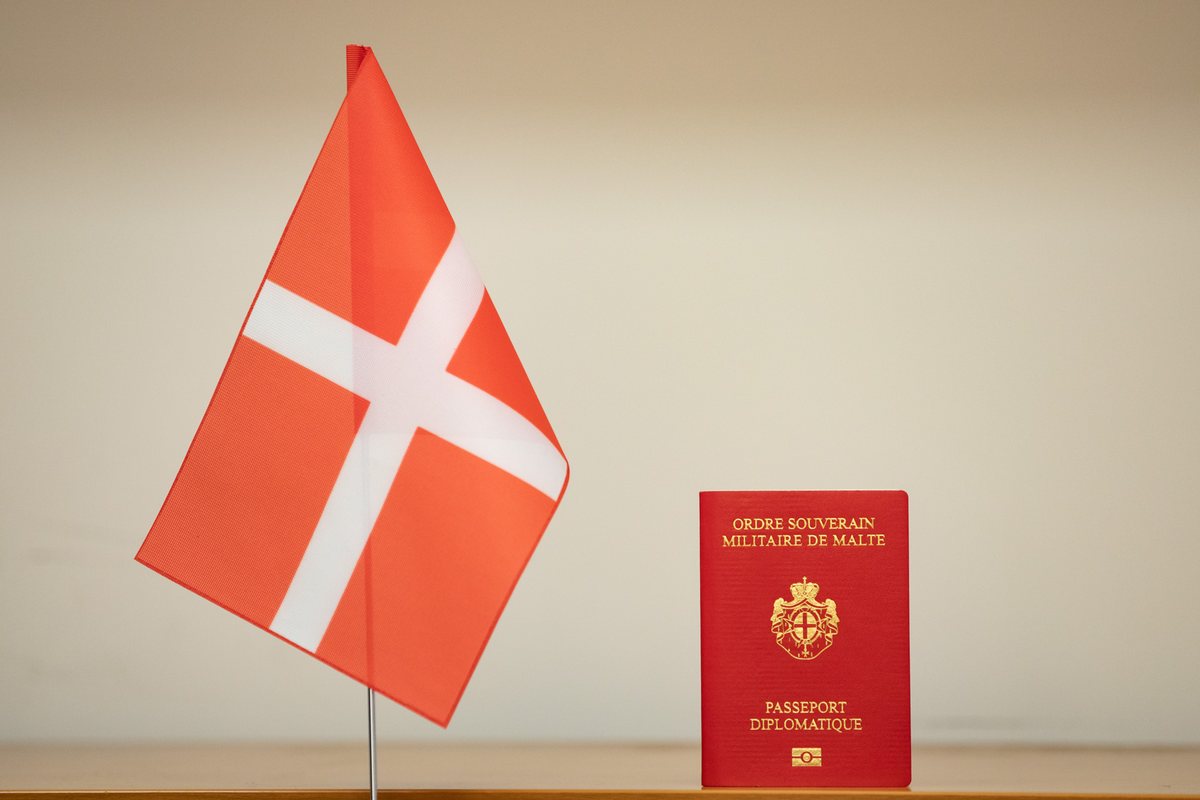
It also issues its own biometric passports. The Order reports roughly 500 diplomatic passports in circulation for its leadership, diplomats and other authorized recipients. It says all 118 of its diplomatic partners accept them as valid travel documents. The Council of the European Union catalogs the passport in its official register, complete with watermarks and security features.78
Bohemian Grove shows what a private audience can offer a political career. Richard Nixon called his off-the-record speech there in July 1967 the “first milestone on my road to the presidency.” He also described discussing the coming primaries with Ronald Reagan during that visit. The Grove’s giant owl and ceremonial burning of an effigy called Care are real. So was the opportunity to address influential men away from the public campaign. The ritual attracts attention; the private access explains why it matters.9
The policy work has its own institutions. The Council on Foreign Relations (CFR) says its War and Peace Studies project produced 670 memoranda for the State Department between 1939 and 1945. David Rockefeller founded the Trilateral Commission in 1973 to bring people from policymaking, business, media and academia into continuing relationships. Private organizations weren’t simply watching government. They were developing advice for it and cultivating relationships across the professions that help explain and evaluate its decisions.1011
Other arrangements supplied operational muscle. In the late 1970s, the Safari Club brought together Saudi Arabia and partners including France, Egypt and Morocco for covert operations in Africa while Congress was restricting the CIA. Former Saudi intelligence chief Prince Turki al-Faisal later described their contribution at Georgetown as helping at a time when the United States couldn’t act. Congressional restraint and the capacity to continue operations existed simultaneously, in different parts of the network.12
Turki’s name later appeared alongside Peter Thiel’s in SafeGraph’s announcement of a $16 million financing round. Its product was geospatial data about physical places and their relationship to people. WIRED subsequently reported that company materials identified funding from In-Q-Tel (IQT) and an IQT investment executive on SafeGraph’s board. The CIA established IQT in 1999 to connect commercial technology with intelligence requirements. Here, the connection runs through financing and product development, not just a guest list. Intelligence agencies can help shape the technology that later reaches the market.131415
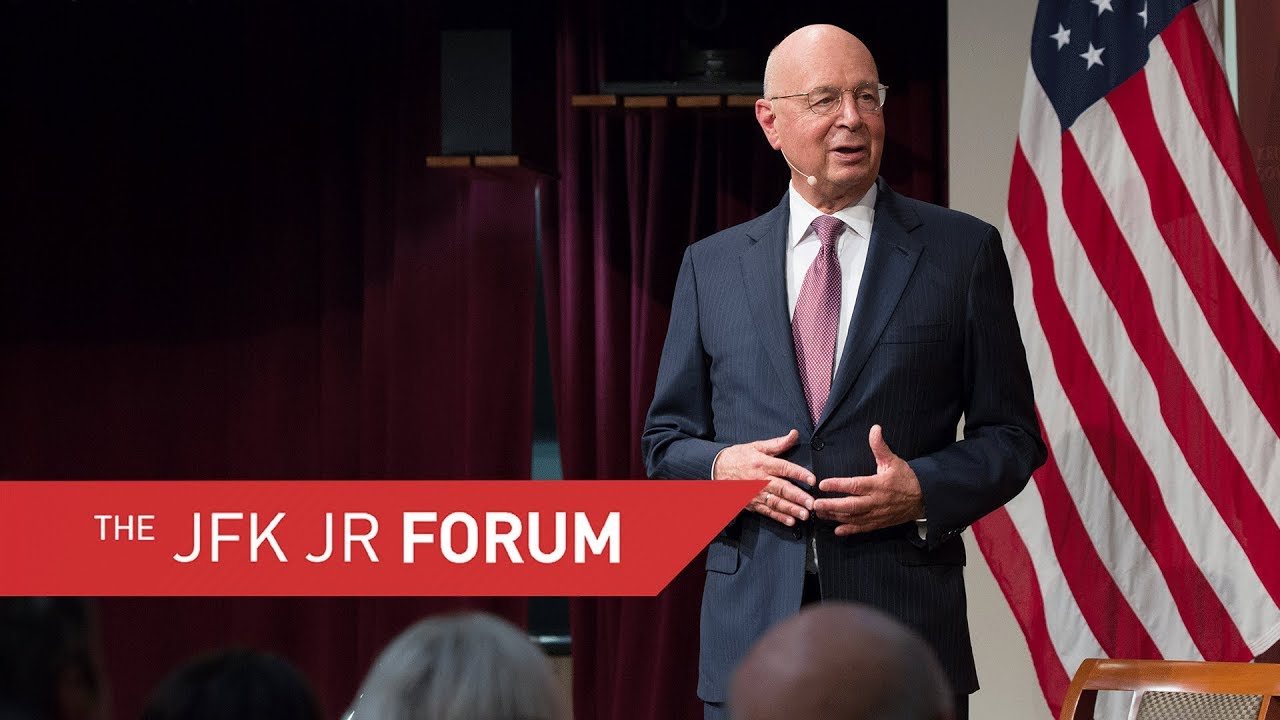
The World Economic Forum (WEF) supplied an unusually blunt description of its own ambitions. At Harvard in 2017, Klaus Schwab invoked Angela Merkel, Vladimir Putin and Justin Trudeau while discussing the Forum’s political reach. “We penetrate the cabinets,” he said, referring to its Young Global Leaders. Those names were part of Schwab’s claim, not a verified alumni list. What he chose to celebrate was the presence of people associated with his organization inside national governments.1617
These aren’t interchangeable cases. An intelligence investment, a social retreat and P2’s clandestine penetration of state institutions establish different things. But each challenges the habit of treating an official position as the whole story. The question is what the relationship enables: access, recruitment, policy development, financing or the exercise of power beyond the public’s view.
Consider the next policy announced by a government, endorsed by a think tank and welcomed by industry. Three institutional names don’t automatically amount to three independent judgments. Did they arrive separately at the same conclusion, or did the proposal move through relationships they already shared? Who financed the research? Who recruited the advisers? Who gets the contract? Those are questions that records can answer.
The stakes aren’t whether a few officials have unusual hobbies. They’re whether institutions that are supposed to scrutinize one another actually do so. A public asked to accept a consensus deserves to know how independent its authors were. And an election can change the person holding an office without changing the relationships that supply its advice, personnel and capabilities.
Knowing who holds the office isn’t the same as knowing whose influence enters with them.
$5,000
The president keeps coming back to 1929.
Donald Trump’s $5,000 payment promise and 1929 warning · October 3, 2026. Source: Dialogue Works, 39:51–41:04.
Trump keeps returning to Herbert Hoover. In his July 2 CNBC interview, he said, “I don’t want to be a president with a depression on his resume,” and repeatedly named Hoover as the president he doesn’t want to become. Interview transcript.
Hoover was a Republican, with Republican majorities in both chambers when the Depression began. House history. Banking panics and Federal Reserve mistakes helped deepen the collapse. Congressional party control alone doesn’t explain what happened. Federal Reserve history.
Now Trump promises every adult citizen $5,000 if Republicans keep the House and Senate. Elect Democrats, he says, and the result will be “an economic depression much like 1929.” His own term isn’t on November’s ballot. Oct 3 video.
Five thousand dollars would matter to plenty of households. The appeal doesn’t need explaining.
Read alongside the Hoover remarks, the warning sounds to me like an attempt to assign responsibility for a possible collapse before it happens. He’s named the presidential reputation he wants to avoid. The new clip points to higher taxes, without explaining which tax changes would produce the disaster he’s forecasting.
The Grandson
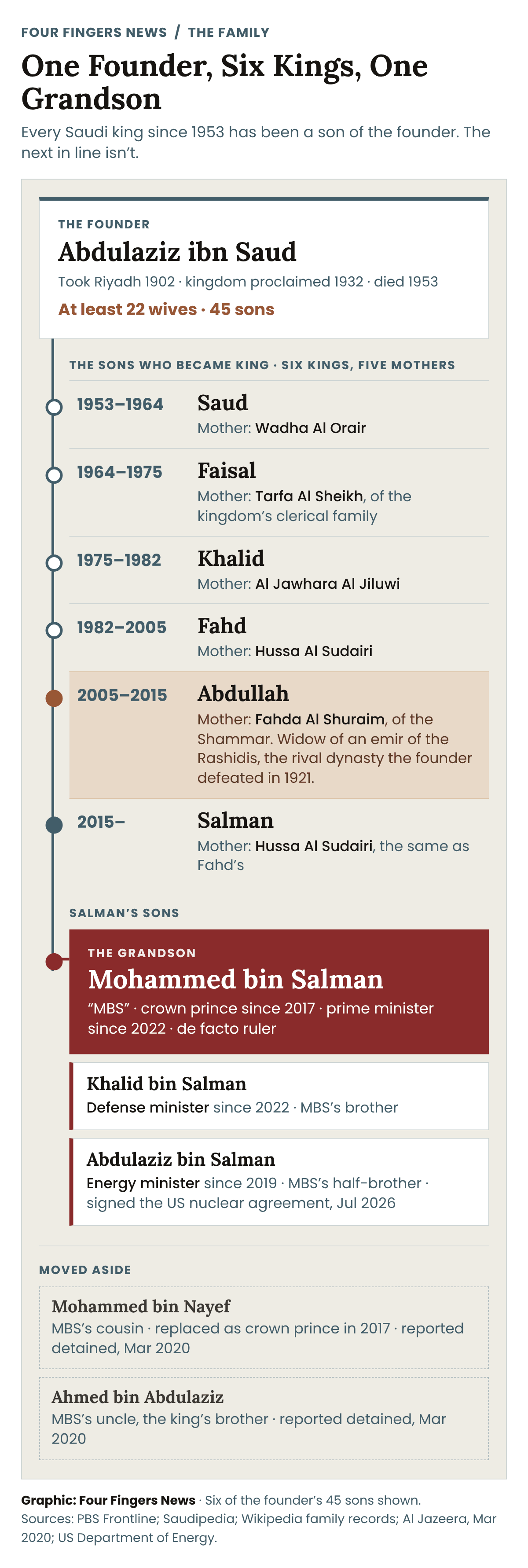
Day 217. Saudi Arabia is 94 years old and named after a family. Its founder, Abdulaziz ibn Saud, took Riyadh in 1902 with 40 men. For years his lands were a British protectorate, and he drew a British stipend of £5,000 a month. Later the protector was American. (Treaty of Darin; British subsidy; Bitter Lake)
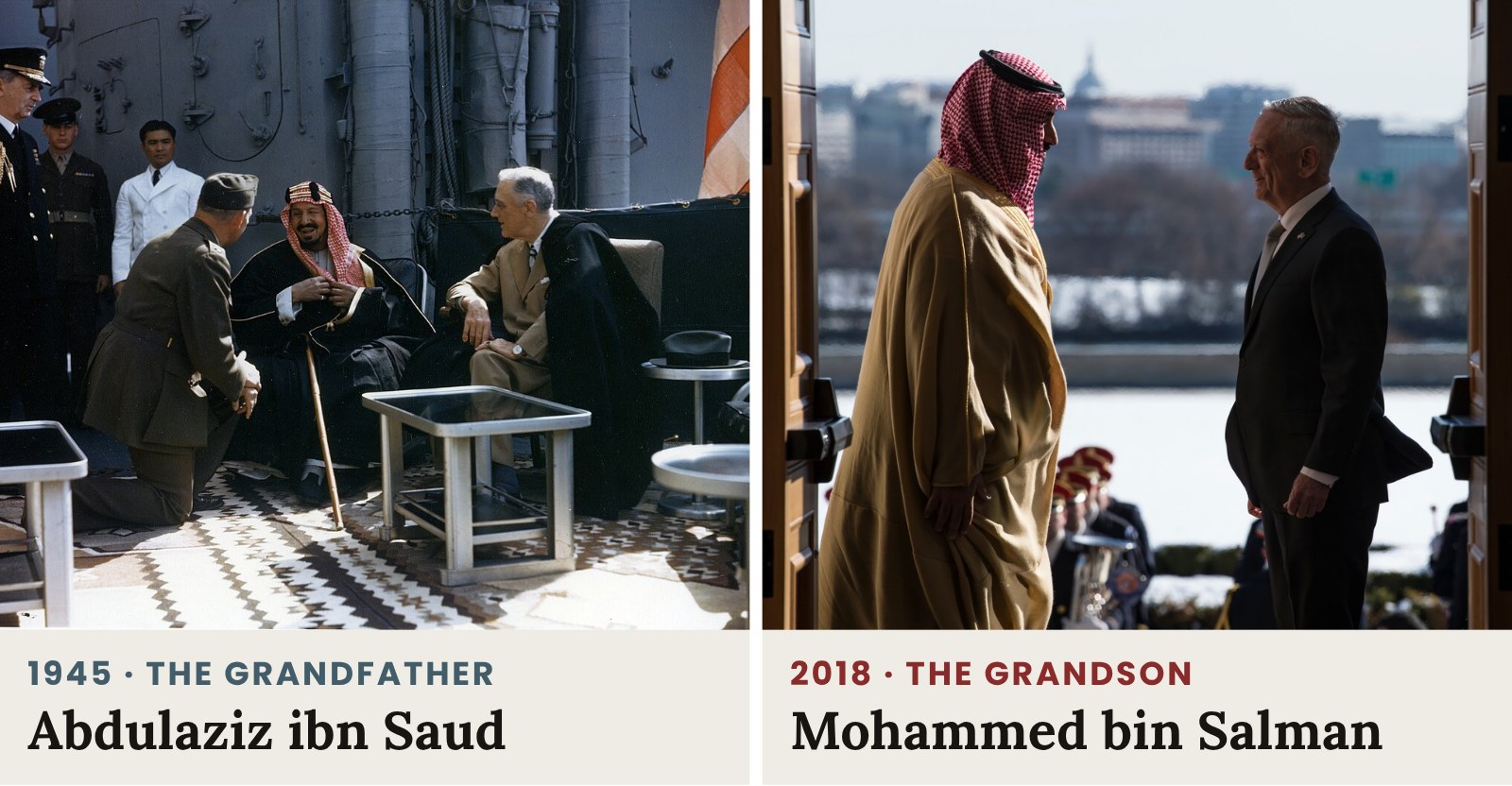
He had at least 22 wives and 45 sons. He took a wife from each tribe he conquered. I’m sure he was a great son-in-law. One wife, Fahda, was the widow of a rival dynasty’s emir. Her son grew up to be King Abdullah. (PBS; Abdullah’s family history)
Every Saudi king since 1953 has been one of the founder’s sons. The first grandson to run the place is Crown Prince Mohammed bin Salman (“MBS”). Here’s his record.
Eight years ago today, a 15-man Saudi team killed the journalist Jamal Khashoggi inside the kingdom’s Istanbul consulate and cut up his body. His remains were never found. US intelligence concluded MBS “approved an operation in Istanbul, Turkey to capture or kill” him. He denies ordering it. (US intelligence assessment; RSF)
“We assess that Saudi Arabia’s Crown Prince Muhammad bin Salman approved an operation in Istanbul, Turkey to capture or kill Saudi journalist Jamal Khashoggi.”
Read the original document
In 2017 MBS replaced his cousin as crown prince. Five months later, hundreds of princes and businessmen were locked in the Riyadh Ritz-Carlton. The New York Times reported that at least 17 detainees needed hospital treatment for physical abuse. One general died in custody; a witness described his neck as twisted. In 2020 the detainees included that same cousin and MBS’s own uncle, the king’s brother. (Human Rights Watch; Al Jazeera)
As defense minister in 2015 he took the kingdom into Yemen’s war. UNDP estimated the war’s toll would reach 377,000 by the end of 2021, most from hunger, disease and other indirect causes. (UNDP)
Ansarallah governs about 70% of Yemen’s people. This July, after four years of relative calm between it and Riyadh, a Saudi-led strike disabled the runway at Sanaa airport to stop an Iranian plane from landing. People have lived in Sanaa for more than 2,500 years. An Ansarallah official said Riyadh had “dug its own grave.” (AP; World Bank; UNESCO; Ynet)
Since then, Ansarallah has hit Saudi oil facilities and seized Mokha and islands at the entrance to the Red Sea. The kingdom is preparing another offensive. MBS asked Washington for airstrikes. Washington said no, for now. (AP; Reuters)
In July MBS’s half-brother, the energy minister, signed a nuclear agreement with the United States. It doesn’t bar Saudi Arabia from enriching uranium. The administration says it has the safeguards the law requires. MBS told Fox News that if Iran gets a bomb, “we have to get one.” (Department of Energy; Reuters; Al-Monitor)
Iran’s history of statehood reaches back some 2,500 years. Saudi Arabia turned 94 last week. (Britannica)
A Senate vote is expected before Dec 13. Senators: which line of that résumé says trust him with enrichment?
Watch: The Crown Prince of Saudi Arabia
FRONTLINE · Oct 1, 2019 · 1 hr 54 min · Correspondent Martin Smith
Sending the Metal
Day 216. Two Georges hold the Arabian Sea, and a Teddy is on his way.
The George H.W. Bush and George Washington carrier groups are already on station. The Theodore Roosevelt left San Diego on Sunday, and a day behind it came the Makin Island and two more ships carrying about 2,200 Marines and sailors of the 13th Marine Expeditionary Unit. It’s a landing force that brings its own stealth jets. (USNI News, Sep 28, 2026; USNI News, Sep 29, 2026)
The metal already out there isn’t small. The Naval Institute’s tracker names 26 American hulls between the Mediterranean and the Indian Ocean, 16 of them in the Arabian Sea, on the doorstep of a strait that carried a fifth of the world’s oil before the war. The Roosevelt’s four escorts add roughly 400 missile tubes. The ships named in USNI’s September 28 regional tracker are drawn to scale below. (USNI fleet tracker; EIA; The War Zone)
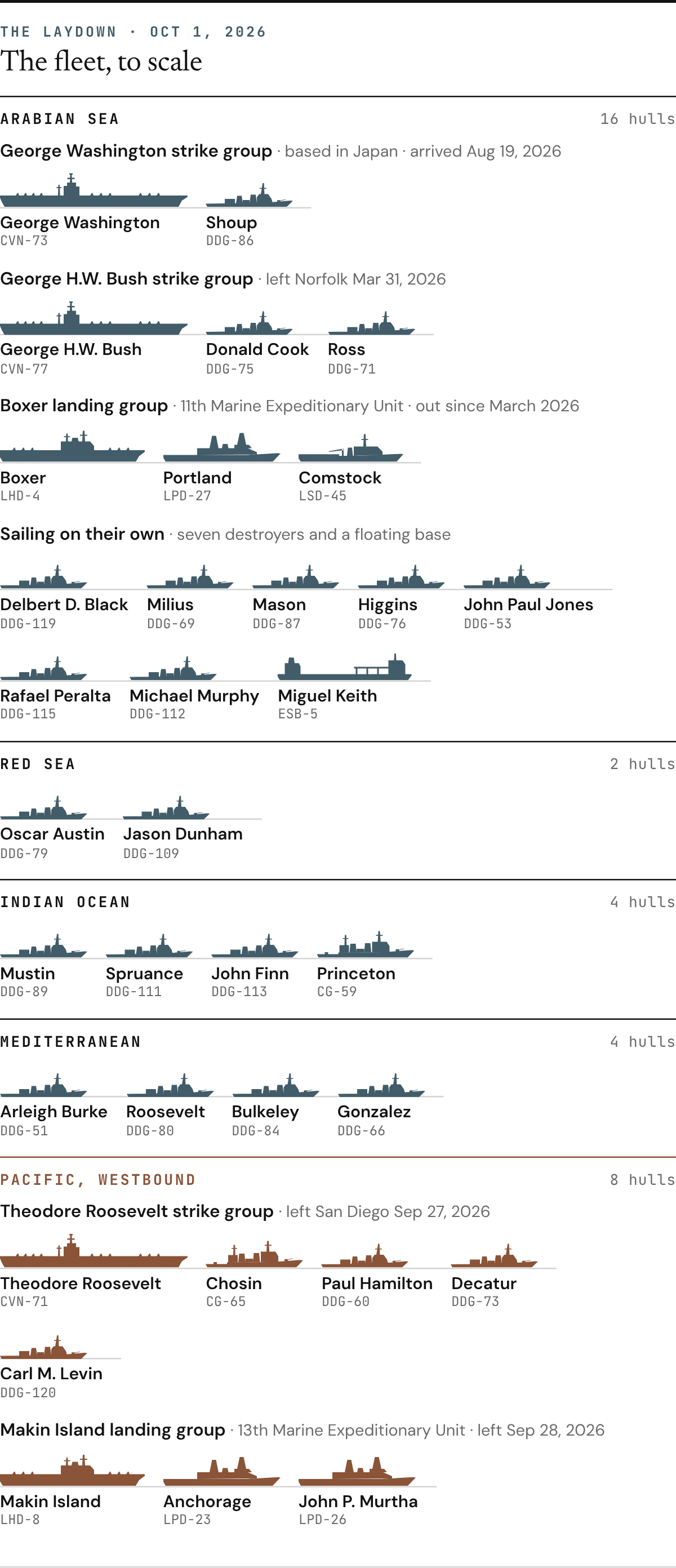
If nobody goes home when the Roosevelt arrives, three American carriers will be working the same theater. That happened for eight days in spring 2026, and it was the first time since the invasion of Iraq in 2003. (Al Jazeera, Apr 24, 2026; The War Zone, May 4, 2026)
The unofficial word is “options.” On the record, the Roosevelt is expected to relieve a carrier that’s already there, and a Navy official called the Marines’ sailing a “scheduled deployment.” The Jerusalem Post, reporting the deployment from an unnamed US official, describes the result as “a wider range of options for potential action against Iran.” Arrival estimates differ, so the timing of any overlap remains uncertain. So the Navy is sending a 100,000-ton option with more combat aircraft on its deck than many national air forces own. (Jerusalem Post)
Iran brought a seven-day roadmap to the United Nations: the blockade of its ports lifts, the frozen money moves, and on day seven the strait reopens and the talking starts. Washington’s official answer went back through the mediators and hasn’t been made public. The answer anyone can see is a third carrier and a landing force. In the strait on Thursday, a tanker was burning, hit by a projectile nobody has claimed. (Al Jazeera, Sep 26, 2026; AP via Arab News; UKMTO via Arab Times)
The timing is the tell. TIME asked Trump whether he’d ramp up the bombing after the midterms. “Possible,” he said. And the buildup itself arrived as a leak: at least five outlets on Thursday, every one of them citing officials who wouldn’t be named. You don’t have to trust the messenger to read the message. When Washington wants Tehran to see something, it prints it. Tehran does the same; three senior Iranian officials told Reuters their commanders are reviewing a longer target list. The story is the message. The carrier is the underline. (TIME; AP; Bloomberg; Al Jazeera via Newsquawk; Reuters via Cyprus Mail)
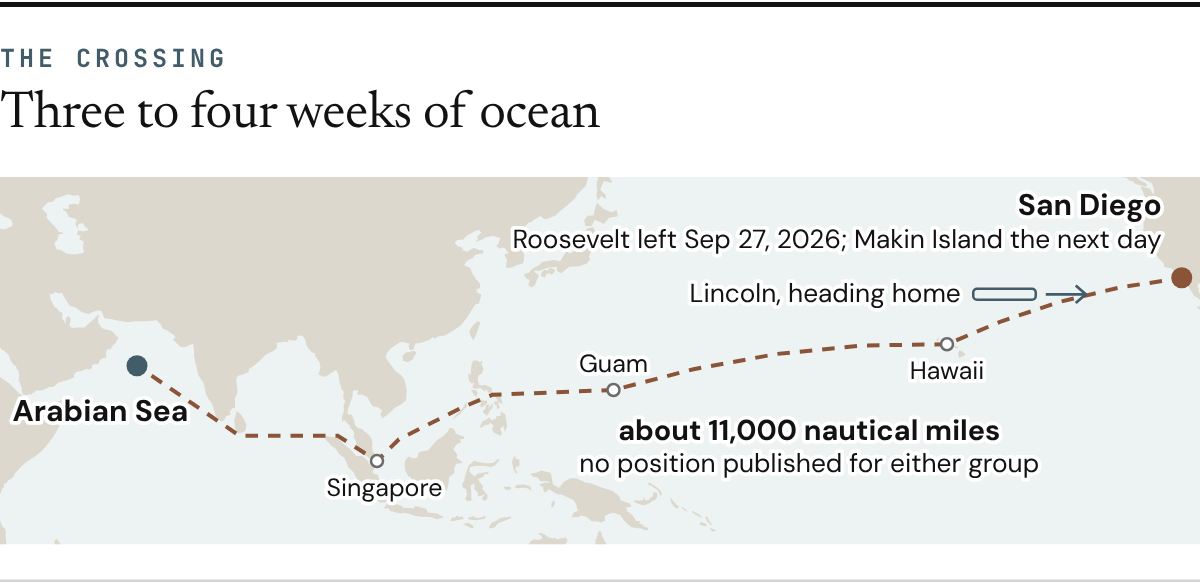
Teddy Roosevelt’s advice was to speak softly and carry a big stick. The ship that bears his name is nicknamed the Big Stick, and it’s crossing the Pacific on behalf of a president who has never once tried speaking softly.
September 2026 29 notes
The AI Boom Has a Landlord
New Mexico has a history with chain reactions. This one comes with lease payments.
A data center is a building that makes money only when the power arrives. Oracle’s New Mexico site, Project Jupiter, learned that the hard way: the 17.8-mile gas pipeline that feeds the plant lost its state right-of-way twice, got rerouted across federal land, and now arrives in February 2027 instead of August 2026 — a longer wait for electrons, and an unchanged stack of bills (CryptoBriefing, Aug 18; Reuters, Sep 24). The building keeps costing whether or not the lights are on. That’s what it means to be the landlord.
Oracle’s the AI boom’s landlord. It borrows like a utility, builds like a developer, and rents compute to the companies having the boom. And the landlord’s problem is old and unforgiving: the rent has to cover the mortgage. Here’s the mortgage. Debt past $125 billion. Free cash flow last year near negative $24 billion. Capital spending that ran $56 billion last fiscal year and $28 billion in the latest quarter alone. And in an SEC filing, $288 billion of lease commitments — nearly all data centers — that start between this quarter and fiscal 2029 and then run 15 to 19 years each, none of it on the balance sheet yet (company filings). In July, S&P cut Oracle to BBB-, one notch above junk. A further downgrade doesn’t just raise the interest bill; it could force some institutional holders to sell, whether they like the AI story or not.
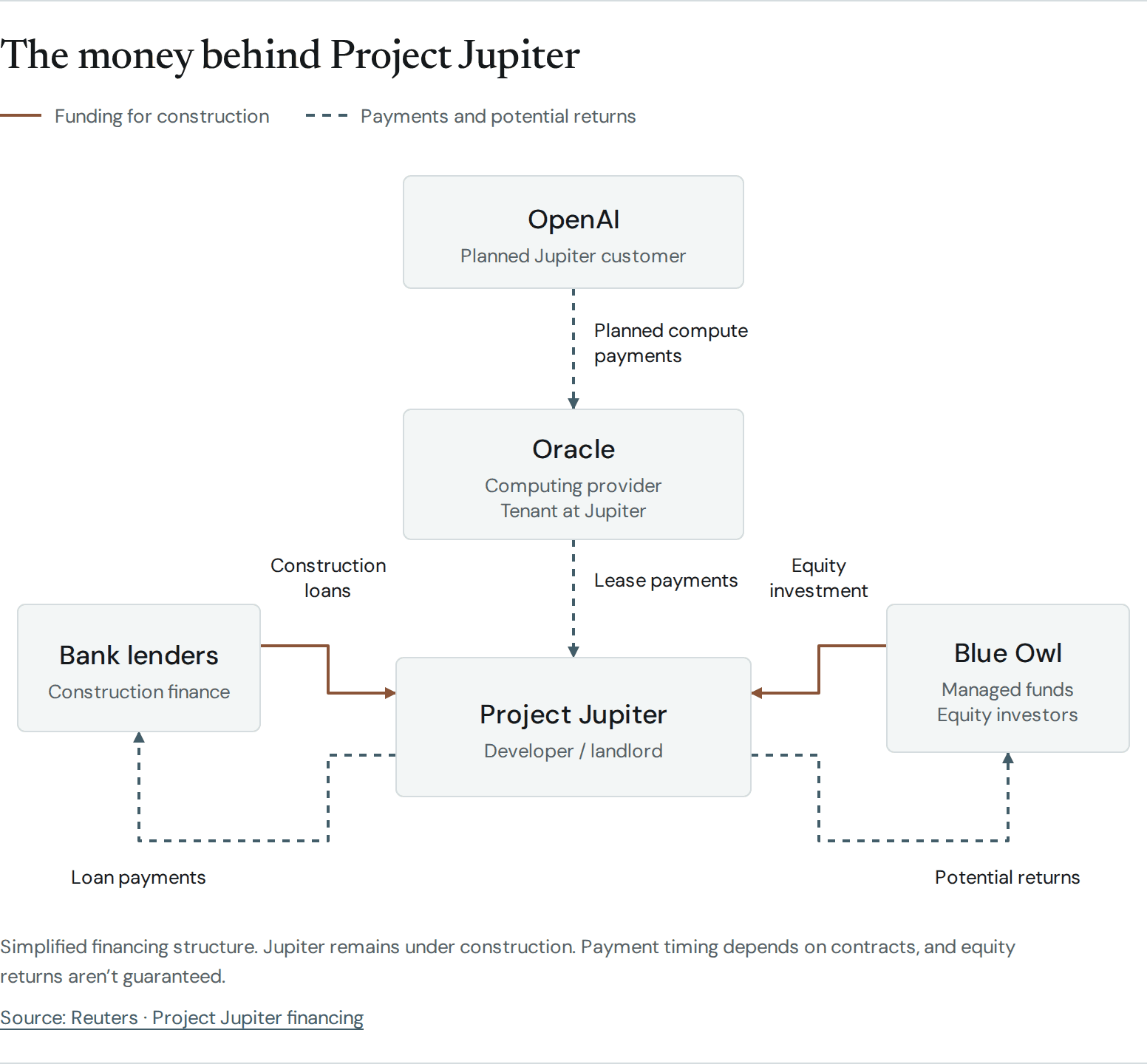
Here’s the rent. Oracle sold $18 billion in bonds in September 2025, the same month a cloud contract with OpenAI worth roughly $300 billion over five years was reported. OpenAI burns cash rather than producing it, reportedly expects to burn $278 billion from 2026 through 2030, and has pushed its listing out of this year (FT via Reuters, Sep 18; Fortune, Sep 12). A lease is a promise about the future, and the future tenant’s still raising the deposit. Bondholders sued in January, saying the full scope of the financing needs wasn’t disclosed when they bought in.
And here’s the meter. On Sep 24, five-year credit default swaps on Oracle traded at 227.5 basis points — a record — meaning it costs $2.28 a year to insure $100 of Oracle debt, more than four times the investment-grade index (Barron’s, Bloomberg data; Reuters). Trading in tech-name CDS reached nearly $650 million in the second quarter, up almost 600% from a year earlier, and in February JPMorgan began selling a basket of swaps on five hyperscalers — Alphabet, Amazon, Meta, Microsoft and Oracle — as a standalone product (DTCC; Reuters; CryptoBriefing, Aug 12). Oracle also sent a force majeure notice on Project Jupiter, its flagship build — the clause you invoke when you need the contract to forgive what physics or finance won’t. Look at who got the notice: Blue Owl, the asset manager that owns the developer building Jupiter. Oracle is landlord to OpenAI and tenant to Blue Owl, and this is the tenant asking to defer the higher rent that kicks in once the building is running. Oracle says the project remains on schedule. Ask who’s writing the other side of all that insurance, and you have the only question in this story that matters.
The exposure isn’t one company’s spreadsheet: the five biggest spenders are on pace for combined 2026 capital spending near three-quarters of a trillion dollars, much of it bond-financed, and Alphabet last quarter posted the first negative free cash flow in its 22 years as a public company. The boom’s landlord is leveraged, its biggest tenant is unprofitable, its power is late, and its insurance bill just hit a record.
The boom has a landlord. The landlord has a mortgage. The mortgage doesn’t wait for power.
Zoom In
Open Google Maps, switch to satellite, and go to Rafah. As of this weekend you can. Google quietly replaced its Gaza tiles with imagery from as recently as June 2026, and the internet spent Sunday panning across it.
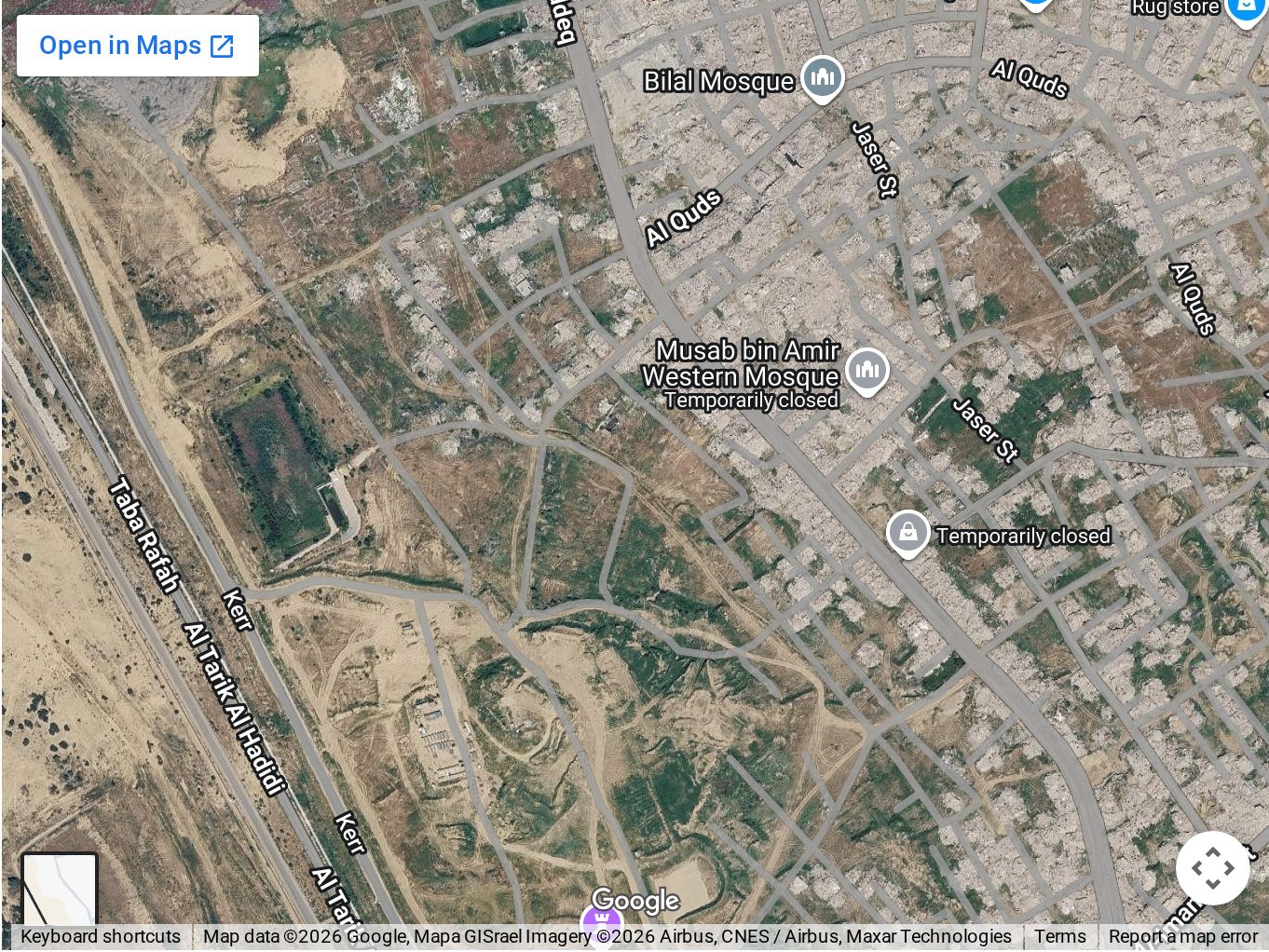
That took a while. From 1997 to 2020, US law capped commercial satellite imagery of Israel and the Palestinian territories at two meters per pixel. Gaza was a blur on every map app through three wars while Seattle was sharp enough to count cars. The cap lifted, the sharpness arrived, and this is what it shows. (NOAA on the 1997 limit; 2020 notice lifting it)
The UN’s satellite unit puts the damage at 82% of all structures in the Strip, just over 200,000 buildings, and counts 134,422 of them destroyed outright, more than half of everything that stood before the war. From a drone it stops being a percentage. (UNOSAT; UN News, Aug 13, 2026)

I wanted to know whether the worst-hit cities of the Second World War looked like this. They did.
| People | Share destroyed | How long | |
|---|---|---|---|
| Warsaw, 1939–45 | 1.3M | 85–90% | six years; nearly half of it demolished after the fighting stopped |
| Hamburg, 1943 | 1.7M | 75% | one week |
| Cologne, 1940–45 | 0.8M | 61% | five years; 262 raids |
| Dresden, 1945 | 0.6M | 59% | two nights |
| Berlin, 1940–45 | 4.3M | 33% | five years; 314 raids, then the ground battle |
| Gaza Strip, 2023–26 | 2.1M | 82% damaged, over half destroyed | three years, still rising |
Hamburg had about 1.7M people in 1939. Gaza had 2.1M in 2023, more people in half the space. Operation Gomorrah ran eight days and seven nights in July 1943 and killed somewhere between 34,000 and 40,000; a million people left the city that week. Gaza’s three years have killed 74,000 by the Gaza health ministry’s count, the only running tally there is; the UN uses it, and Israel has never published its own. 1.9M people are displaced. Hamburg’s happened in a week. Gaza’s has run three years, and more than 1,100 people have been killed here since the October 2025 ceasefire. (Hamburg; Gaza · Ground Truth)


The number of destroyed buildings kept climbing after the guns stopped too. The UN says destroyed structures rose 9% after the October 2025 ceasefire, and Al Jazeera’s satellite unit found demolitions in Shujayea, Tuffah and Rafah through mid-December 2025, inside the 58% of the Strip Israel holds behind the yellow line. The IDF says those demolitions fall within the ceasefire and answer active threats, mostly tunnels under buildings and risks to its troops. There’s a Gaza tab at the top of this site, updated daily, and in 213 of these notes I’ve never written about it. The map doesn’t need me to. (UN News; Al Jazeera Sanad, Dec 15, 2025)
The UN Development Programme ran the rubble clearance after the 2009, 2014 and 2021 wars: 2.8M tonnes, all three combined. This war has left 61M tonnes. The agency’s best case for clearing most of it is seven years, and in August 2026 the UN said its partners still lacked the permissions and equipment to remove the unexploded ordnance inside it. (UNDP; UN News, Aug 13, 2026)
More footage


Of Course We Have a Base There
Day 213. One of the places helping sustain America’s war against Iran is this dot in the Indian Ocean.
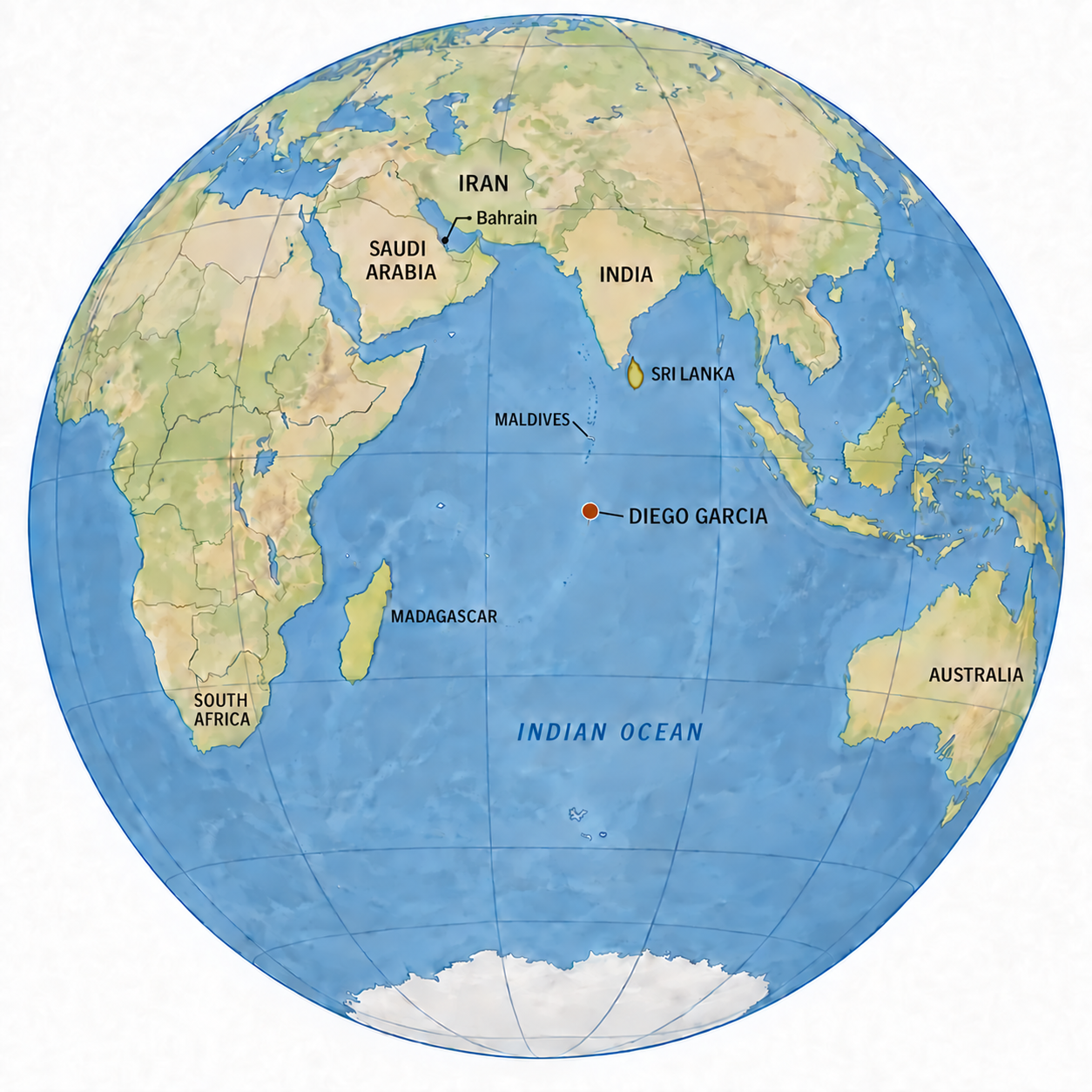
South of the Maldives, surrounded by an enormous amount of water, there’s an American military base on British-controlled territory.
Of course there is. A country that expects to fight almost anywhere has to spend a great deal of time arranging how to get there.
Britain acquired control of Diego Garcia from France in 1814. The American foothold came through a 1966 agreement with Britain. A 1970 Navy memorandum described the strategy as “stockpiling of islands for contingency use of the U.S.” (House of Lords; Navy memorandum)
Stockpiling islands. Securing useful places before the occasion to use them arrived.
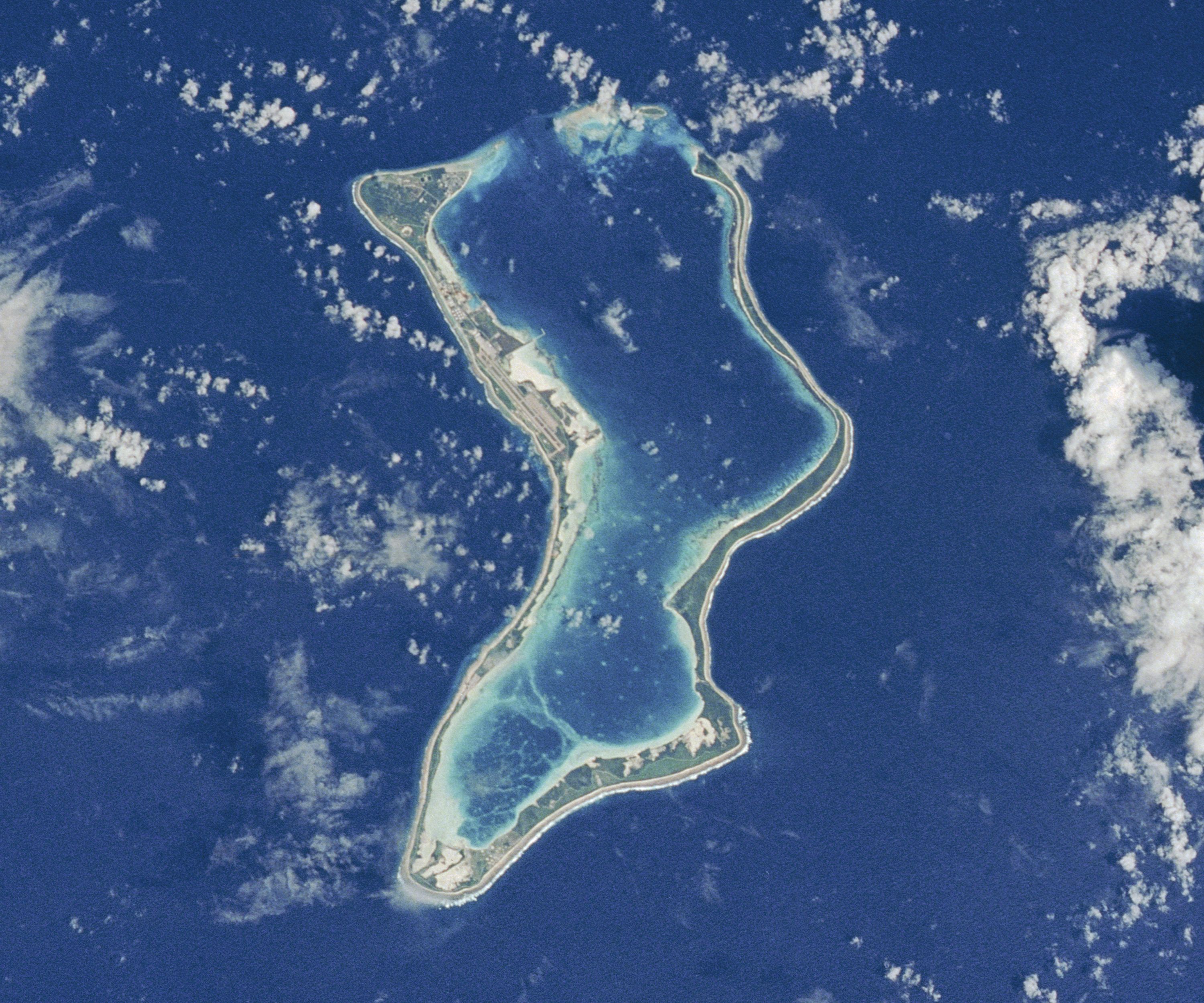
The island’s position mattered to planners concerned about Soviet naval activity and continued access to countries around the Indian Ocean. By 1977, a National Security Council assessment explicitly described its expansion as preparation for circumstances in which coastal facilities became unavailable. (NSC assessment)
Over time, the preparation took physical form.

This war has supplied one of those contingencies. After Iranian attacks badly damaged the Navy’s logistics hub in Bahrain (Navy 5th Fleet HQ), the fleet turned to Diego Garcia, more than 2,000 miles from the carrier forces it was supplying. The distance complicated replenishment, but the alternative hub already existed. (Navy Times)
A 2025 inventory by World BEYOND War counted 877 U.S. foreign military bases and sites. Diego Garcia is one of them.
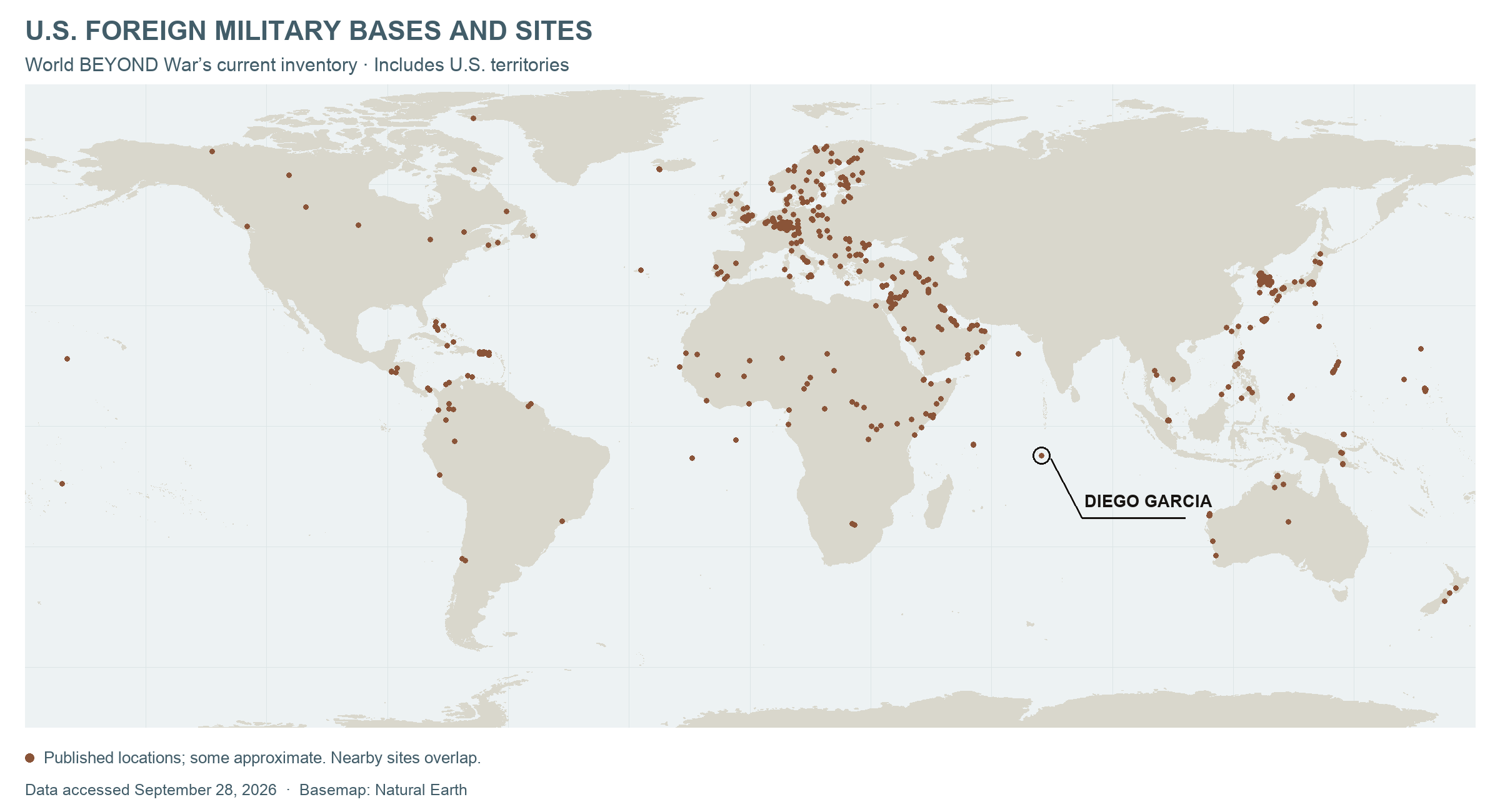
Presidents inherit all that preparation. Long before a particular crisis arrives, someone has secured access, built the runway and arranged the fuel. Using force becomes an option with an enormous amount of work already behind it.
That readiness can shape the choices we consider. Bombing a distant country starts to feel like an ordinary instrument of policy. The danger is a foreign policy with a hair trigger, because we’ve spent generations making sure the weapon can reach.
State Television Arrives at the 50-Yard Line
Day 212. There’s an unwritten pact between the American television viewer and Sunday football. For about three hours, the nation gets a ceasefire. We mute the culture war and route our collective blood pressure into arguing about defensive pass interference and missed field goals.
The commercials are supposed to honor that. Pickup trucks towing boulders up impossible cliffs. Light beer poured in high-definition slow motion. A gecko trying to save you 15%. Crass consumerism, sure, but harmless. It’s part of the ritual.
Then Fox breaks away from the Seahawks.
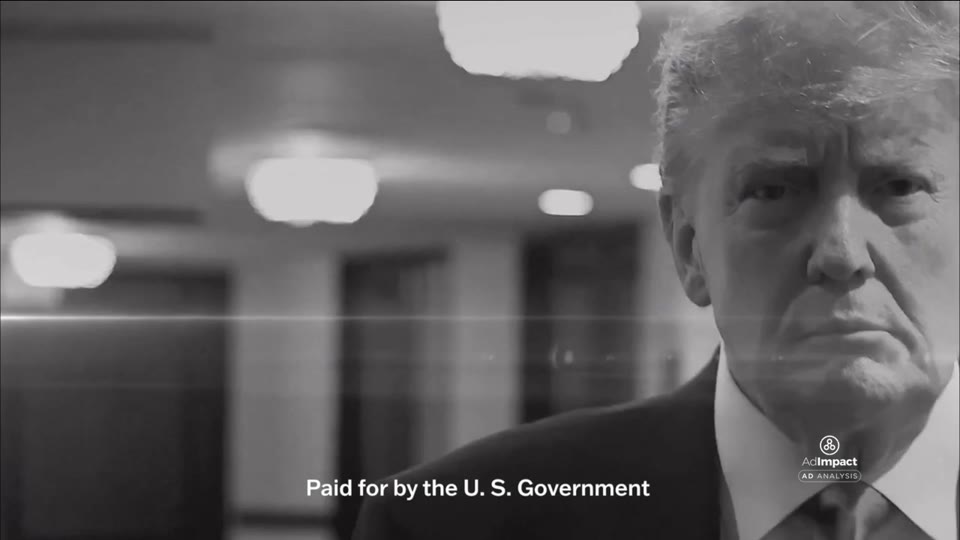
In black and white, Donald Trump walks a hallway toward the camera. The voice isn’t pitching low-interest financing. It’s his: “This is the final battle.” “We will cast out the communists, Marxists, and fascists.” “We will rout the fake news media.” If it sounds familiar, it should. The audio echoes his 2023 Veterans Day speech and nearly mirrors a campaign video he posted to Truth Social in January 2024. Your brain waits for the boilerplate: I’m Donald J. Trump, and I approve this message, then a PAC address in Alexandria, Virginia.
But, no, instead, a quiet strip of white text: Paid for by the U.S. Government.
Wait, did that ad just say it was paid for by the government?? The executive branch just ran a stump speech on the public tab between a beer commercial and a punt return. By AdImpact’s count, it’s the third one.
The White House calls it a public service announcement, “educational and unapologetically patriotic.” Defending an earlier spot, a spokesperson laid out the legal theory plainly: “The President is not on the ballot and the ads don’t have a call to action.” By that logic, a recycled campaign speech sits in the same civic drawer as Smokey Bear and a Medicare enrollment reminder.
It takes contempt to say that with a straight face. It also takes the wrong rulebook. “On the ballot” and “call to action” are campaign-finance tests, the magic-words standard that governs PACs and outside spenders. They don’t govern how an agency spends its appropriation.
The spending rule dates to 1951, when Congress began adding this restriction to appropriations bills: no appropriated money for “publicity or propaganda purposes” it hasn’t authorized. GAO reads that rider narrowly, and it’s flagged administrations of both parties under it. The test is whether the government is informing the public or promoting itself. A stump speech with no program, no deadline and no phone number isn’t informing anyone. It’s the self-aggrandizement the rule was written for, five weeks before a midterm.
The Washington Post reports more than $300,000 spent on “Final Battle,” citing AdImpact. Campaigns are paid for by people who choose to give. The government is paid for by everyone: the fan who reveres the man, the one who reviles him, and the one who just wanted to watch the game.
The Price of Passage
A ship paid $5.3M to secure a passage through the Panama Canal earlier this month. That was the auction premium for a reservation, on top of the ordinary toll. The gas carrier G. Spirit made its crossing on Sep 1. (Reuters, Reuters column)
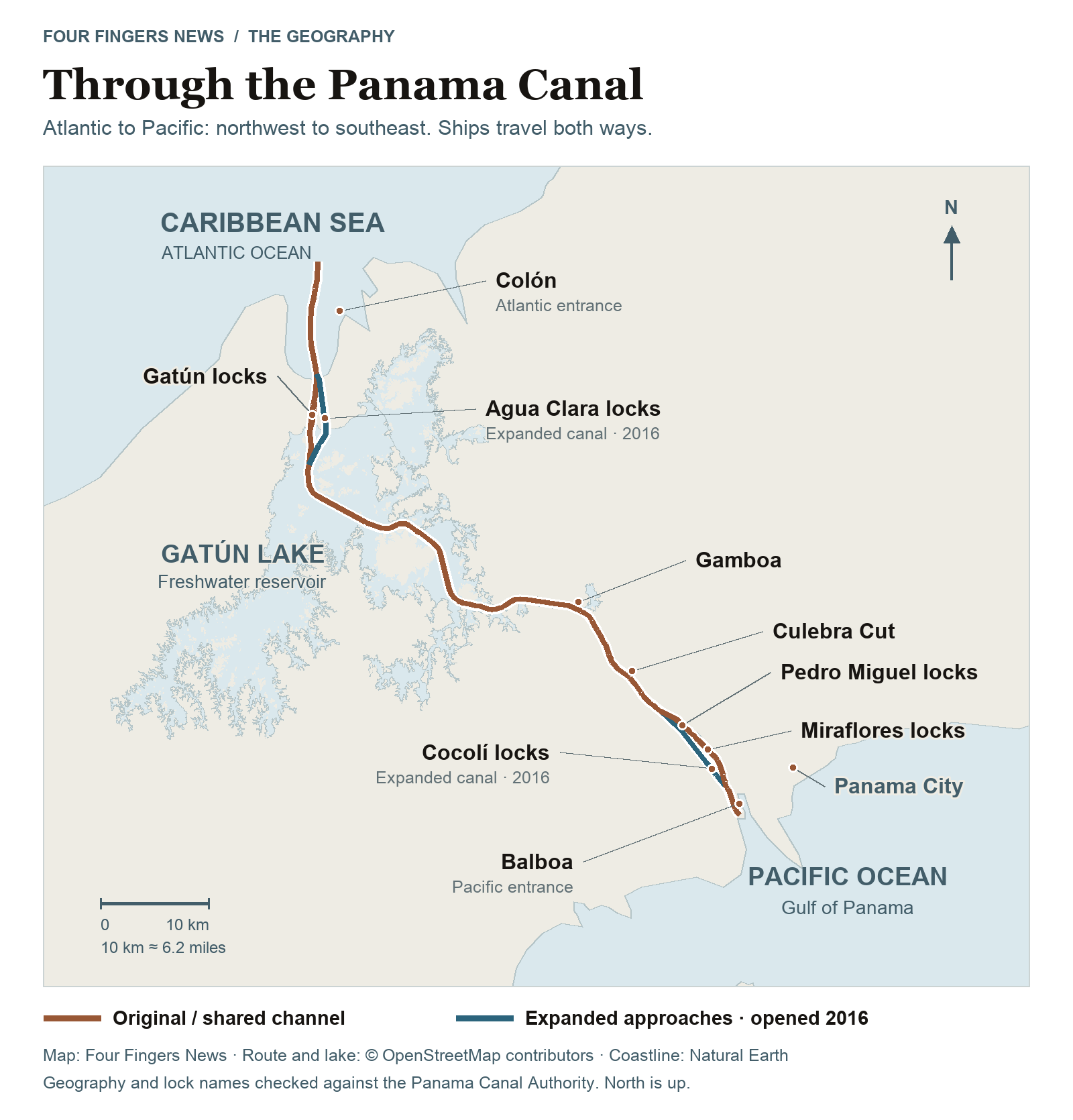
The Iran war helps explain the demand. Disrupted Gulf shipping has pushed more energy cargoes toward Panama, where low rainfall has constrained the freshwater supply the locks depend on. A route that offers relief from one crisis has limits of its own. (Reuters)
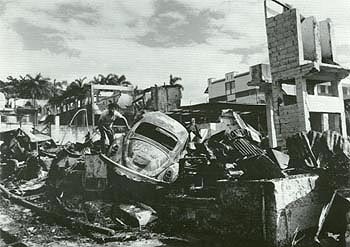
Panama also has a history worth keeping beside those shipping figures. The U.S. invaded on Dec 20, 1989, and removed Manuel Noriega. We already operated the canal. Its transfer to Panama, agreed under the 1977 treaties, wasn’t completed until Dec 31, 1999. (Army history, Canal Authority)
My film recommendation tonight is The Panama Deception, the 1992 documentary that won the 1993 Oscar for Best Documentary Feature. It examines the invasion’s civilian consequences and challenges the government’s explanation and American media coverage. With so much of today’s war discussed through the security of shipping routes, I think there’s value in revisiting what an American intervention looked like to the people living beside one.
Watch: The Panama Deception
Play the official trailer · 3:36 · The Empowerment Project
Preview image: El Chorrillo after the invasion, Panama, December 1989. Photo: Julio Cesar Guerra D., via The Empowerment Project.
“In the End We All Die Anyway”
Day 210. Tucker Carlson says he went to the Oval Office days before the Iran war began to argue against it. In an interview NPR published September 24, he told Steve Inskeep that he’d warned the conflict would serve Israel’s regional ambitions at the expense of America’s position in the Gulf.
Carlson described three aims he believed Israel was pursuing:
- Establish regional dominance by removing Iran as a competing power and leaving it consumed by internal conflict.
- Weaken the six Gulf Cooperation Council states, whose growing power he viewed as a challenge to Israel’s position.
- Drive the United States out of the region, including eliminating American bases, because he argued that the US presence constrained Israel’s ambitions.
Carlson recalls Trump’s answer:
“Yes, you’re right. But in the end we all die anyway, so it doesn’t matter.”
Carlson says he pressed him about their children, grandchildren and the country’s future, and got no substantive answer.
NPR says the White House didn’t address the exchange specifically when asked for comment. Instead, it supplied a Trump social media post attacking Carlson and other critics and accusing them of wanting Iran to have a nuclear weapon.
WATCH · CARLSON ON TRUMP & IRAN
Conservative pundit Tucker Carlson recalls talking to President Trump days before the Iran war
NPR · September 24, 2026 · 1:54
The quoted response begins around 0:49.
“Yes, you’re right.” That’s the part I keep coming back to. In Carlson’s account, Trump accepts all three points, including that the war would weaken America’s position in the region.
What explains that acceptance? Did Netanyahu have leverage over him, or did Trump share the objectives Carlson was warning him about? Why would he hear that argument and agree to proceed?
And then this: “But in the end we all die anyway, so it doesn’t matter.”
What Are We Being Prepared For?
Britain’s chief of the defence staff, Sir Richard Knighton, says more families will come to know what sacrifice for the nation means. The language of preparation is becoming familiar: duty, readiness, resolve. The public is being asked to get used to the possibility of war with Russia.
Sir Richard Knighton
Chief of the Defence Staff
I can’t get used to it. The confidence of the language bears so little relationship to the consequences being contemplated.
Consider Oreshnik, Russia’s ballistic missile already used against Ukraine. A rocket carries multiple reentry vehicles on an arc through space before their payloads descend at hypersonic speed. One launch delivers multiple incoming objects. The speed compresses the time available to respond; the multiplicity complicates interception.
The United States once explored a weapon concept nicknamed “Rods from God”: dense metal projectiles released from orbit, striking with such speed that they wouldn’t need explosives to cause destruction. That idea helps explain the interest in Oreshnik’s non-nuclear payload. The missile launches from the ground, but its descending projectiles carry destructive energy in their motion.
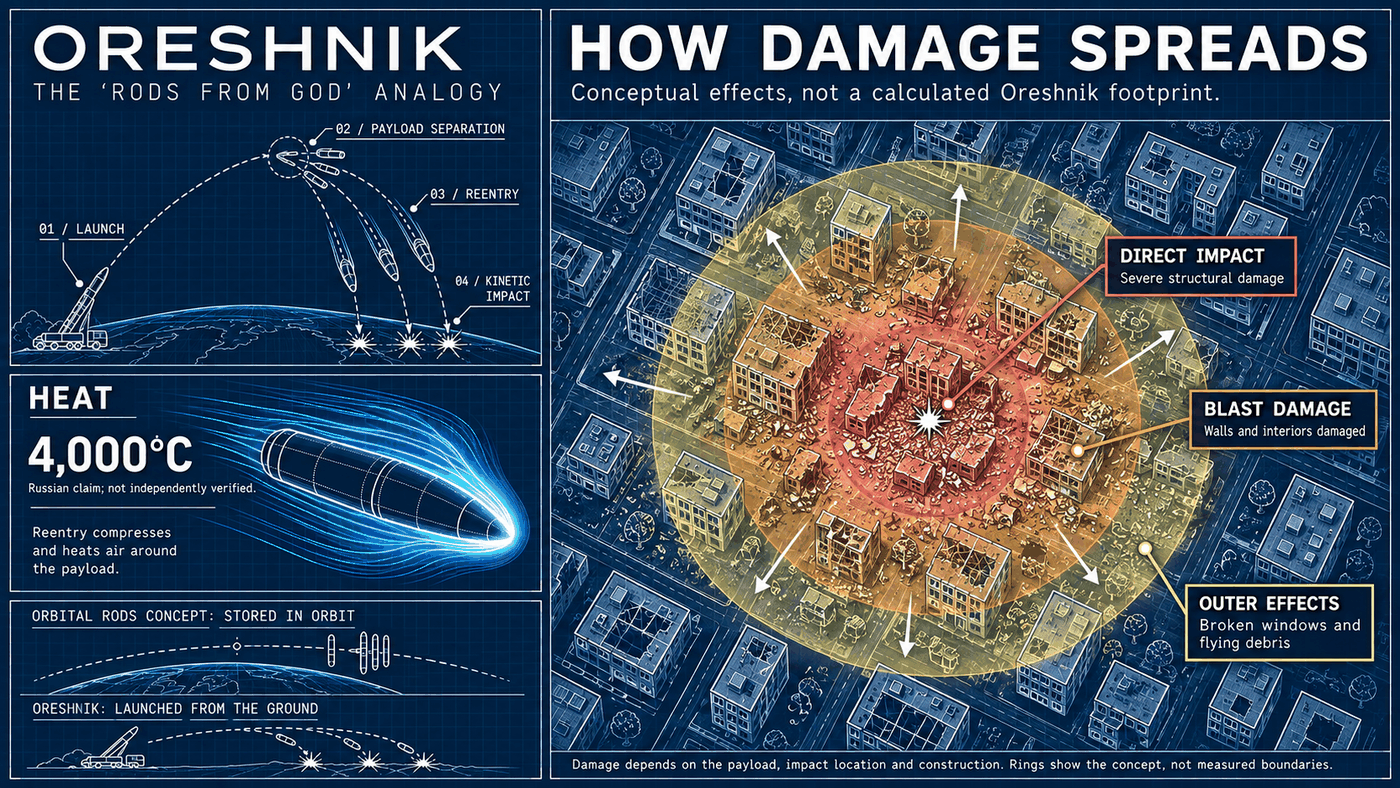
This is the machinery behind the word “conventional.” It’s a classification, not a promise that the damage will be manageable.
Missile defense introduces another uncomfortable question. How long can it last? Every engagement consumes interceptors. Launchers have finite magazines, stockpiles have limits, and replacement missiles take time to manufacture and deliver. Even perfect interception wouldn’t resolve that arithmetic. A defense that stops one salvo still has to stop the next.
That’s before considering the reliability of the interceptions themselves. MIT professor emeritus Theodore Postol estimates that Patriot PAC-3’s success against Iranian ballistic missiles has been only a few percent. His assessment raises a fundamental question about how much protection these systems actually provide.
What’s the plan for sustaining that protection through a direct war with Russia?
The consequences extend beyond military installations. Electricity, fuel storage, railways, communications, and water treatment sustain civilian life. Damage to those systems spreads beyond the point of impact. Repairing them during continuing attacks becomes part of the war.
NATO would retaliate. Russia would respond. Each round would produce losses, demands for escalation, and another decision about how far to go. Nuclear weapons would remain available throughout.
What I can’t make sense of is the purpose of all this. Surely the people preparing these speeches know what a direct war with Russia would involve. They have military advisers, intelligence briefings, and information the rest of us don’t. They know there would be retaliation. They know the consequences could escape their control.
So what are they trying to accomplish?
Is the language meant to frighten Russia into backing down? Frighten Europeans into accepting higher military spending and sacrifices at home? Prepare the public for a confrontation officials genuinely expect? Those are different purposes, with very different implications for everyone being told to get ready.
The talk about duty and dying for your country is shocking. But underneath that reaction is real confusion. It’s difficult to believe these governments actually want the war they’re describing. It’s equally difficult to understand why they’re working so hard to make it feel inevitable.
What are we being prepared for?
What Backs the Promise?
After the 2008 crash, I started to believe the United States could borrow forever. Maybe the debt didn’t matter. ZIRP—zero interest rate policy—kept the Fed’s benchmark near zero through 2015, then again from 2020 to early 2022.
But financial confidence also rests on power. In January, U.S. forces seized Nicolás Maduro and his wife with CIA inside help. Washington later announced 100-year oil concessions and a 35% federal stake in the concession holder’s parent company. Rights to future Venezuelan oil income can become collateral for loans on American banks’ books. Another country’s resources become an American financial opportunity.
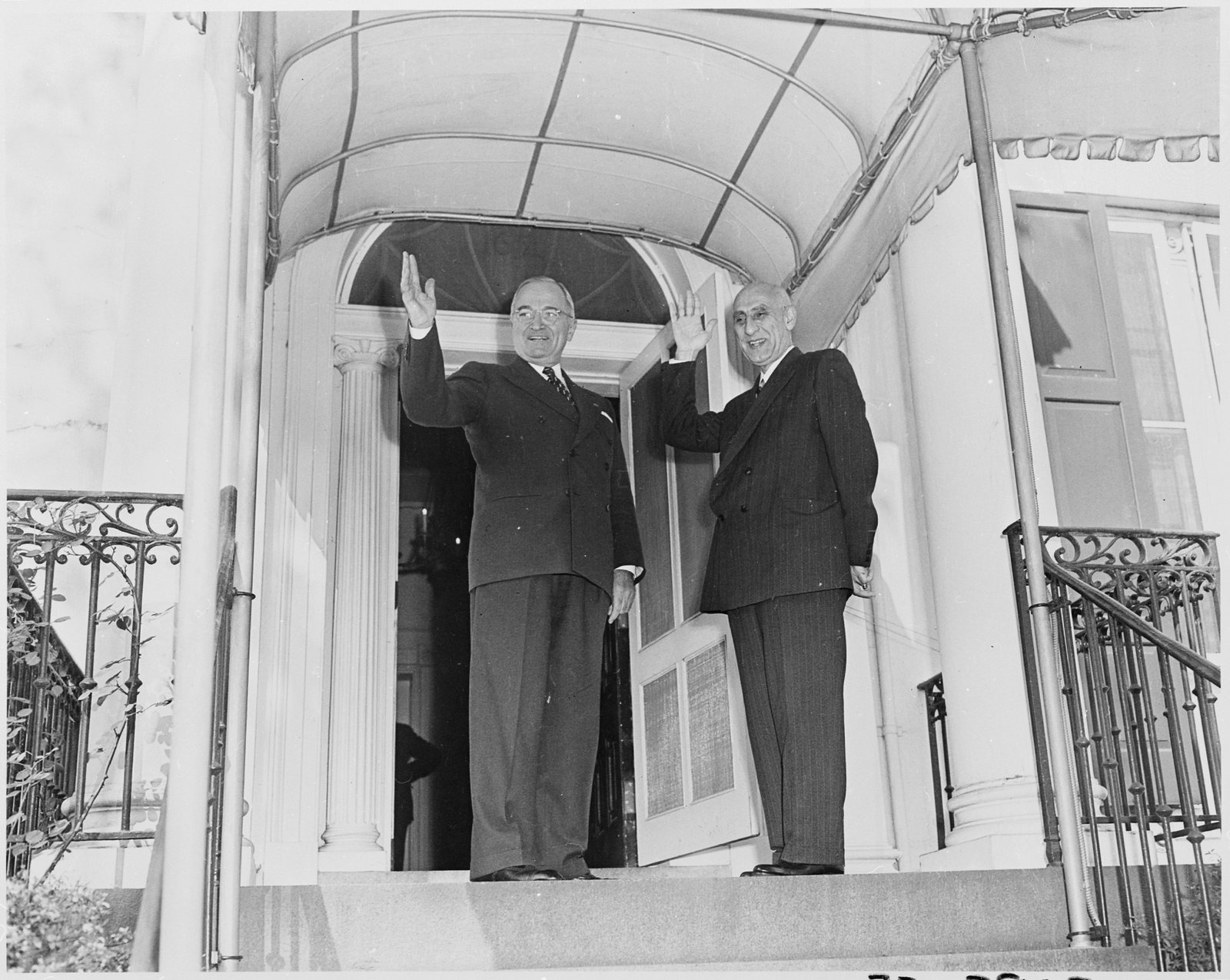
Maduro’s capture must’ve felt like an old formula working again. Mohammad Mossadegh’s government nationalized Iran’s oil industry in 1951, taking over the Iranian operations of the Anglo-Iranian Oil Company—today’s BP. In 1953, America’s CIA and Britain’s MI6 helped overthrow him. Hundreds died, but no Americans. Eisenhower wrote that it sounded “more like a dime novel than an historical fact.”
If $1 million could buy off a Venezuelan official or military insider, that’d be cheap beside the cost of missile defense. U.S. crews protecting bases in West Asia can fire two PAC-3 (Patriot) interceptors at one incoming ballistic missile to improve the chances of a hit. At the Army’s 2026 budgeted PAC-3 MSE cost, that’s roughly $7.7 million trying to stop a single missile. An insider might help secure a cooperative government. The interceptors don’t purchase Iran’s submission.
The U.S. and Israel assassinated Iran’s supreme leader. Iran kept resisting. I don’t believe Washington will secure Venezuela’s submission in Iran. Disruption at Hormuz is feeding inflation and raising borrowing costs, including the cost of financing the war itself.
The chaotic U.S. withdrawal from Afghanistan in 2021 should’ve challenged our assumptions about what American power could guarantee. I’m watching bonds because those assumptions reach into our finances. Loans backed by future income become vulnerable when the political arrangements producing it start to fail. The risk I see is Washington borrowing to finance both the war and the financial losses it leaves behind.
The Terraces
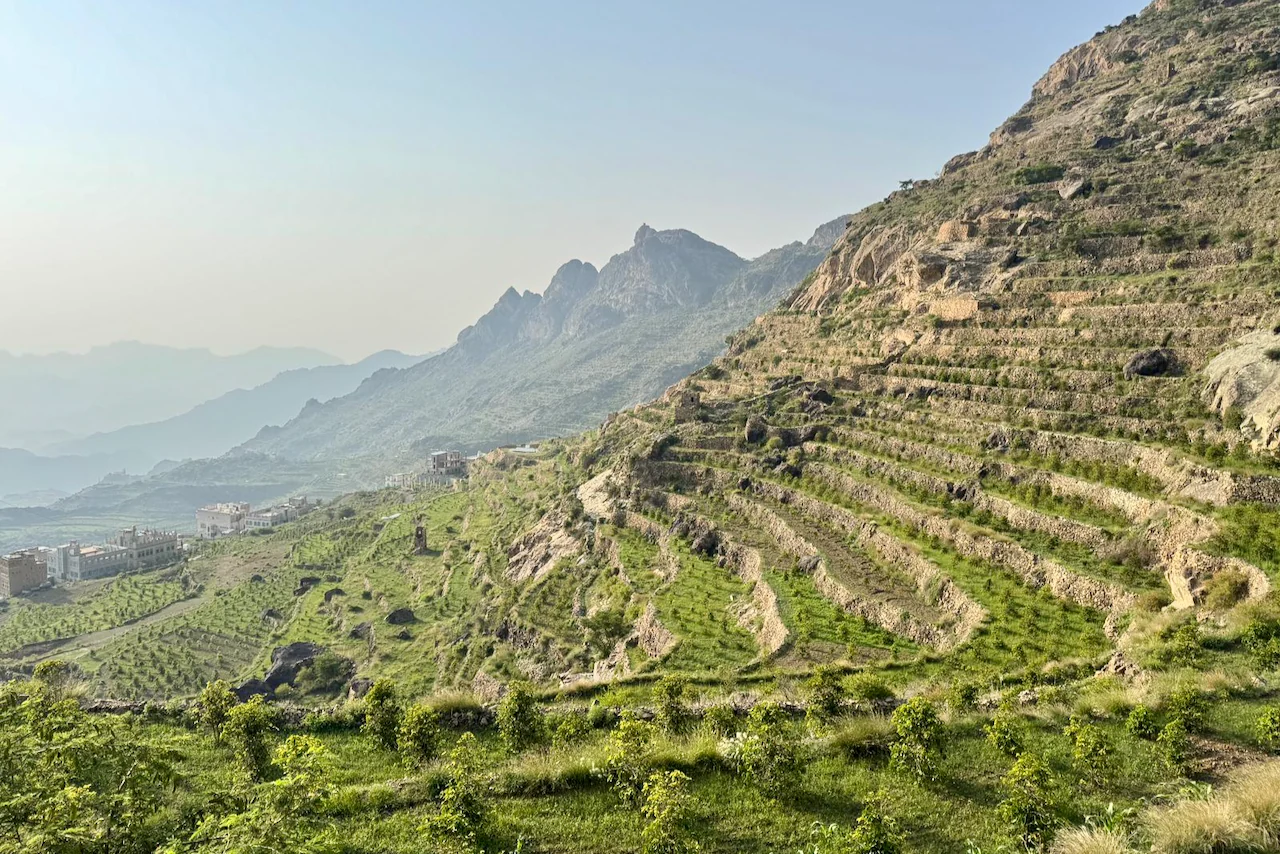
Day 207. I was watching two discussions about Ansarallah, which governs about 70% of Yemen’s population, and its conflict with Saudi Arabia when the photographs caught my attention. World Bank · April 2026
When I hear Saudi Arabia, I almost always picture desert. Yemen lies just to its south, across borderlands the two countries fought over and disputed for decades before reaching a settlement in 2000. I hadn’t pictured green terraces curving around steep mountains, with villages perched above them. Parts of Yemen looked more like Hawaii or Jamaica. Sana’a Center
Yemen’s western mountains rise beyond 10,000 feet. Seasonal winds, including the summer monsoon, bring moist air against their slopes. Forced upward, that air cools, forming clouds and rain. Generations of farmers have built stone terraces to hold the soil and slow the water’s passage downhill, giving it time to soak into their fields. Some cultivated strips are barely a metre wide. World Bank’s climate assessment · FAO’s field assessment
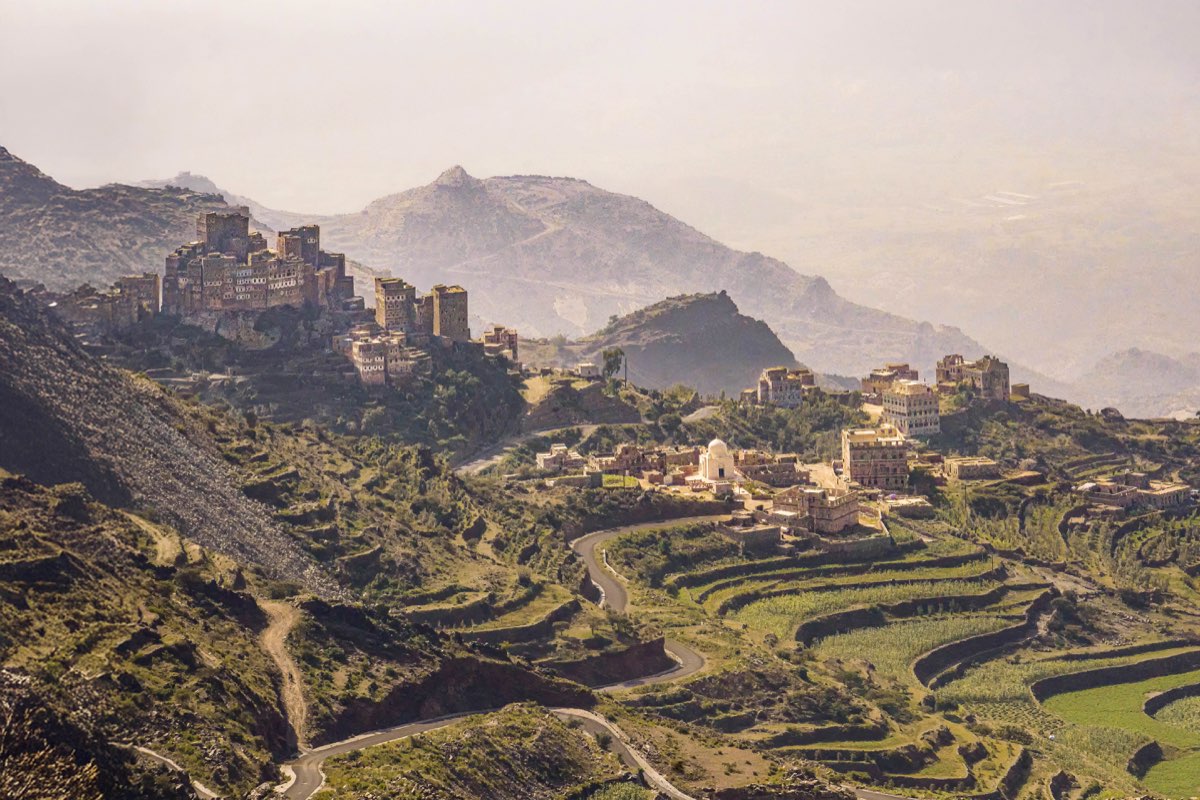
Those terraces are the work of generations, and families still depend on them. Giving up that land would mean giving up their fields, their livelihoods and the life they’ve built around them. Looking at those mountains, I can understand why people would fight to stay. In Haraz, villages were built on rocky heights both for defense and to leave more room for cultivation. Their sandstone and basalt houses blend into the mountain, with fields stepping down below them. Yemen’s UNESCO submission
Coffee grows in those terraced highlands too, which brings us to Mokha. Arabica’s wild home is in Ethiopia and South Sudan. Yemen became an early center of cultivation and a major source of the coffee traded abroad. Mokha, the port on Yemen’s Red Sea coast, became so closely associated with that trade that its name followed the beans around the world. The “mocha” on a café menu carries that history. Kew · FAO
WATCH · YEMEN IN 4K
Al-Shara’i, Ibb
Marwan al-Badani · 12:51 · Sep 23, 2024
Start at 2:34 for the green terraces and mountain villages. English subtitles and 4K playback are available on YouTube.
The discussions that prompted this note:
Eritrea, of All Places
I remember Eritrea from church.
Growing up at Sammamish Hills Lutheran, I remember collections and fundraisers for people in a country I knew almost nothing about. The details faded. The name stayed.
This week, seeing Eritrea in the news again, I finally asked the question that never occurred to me as a kid: why did a Lutheran church outside Seattle care about Eritrea?
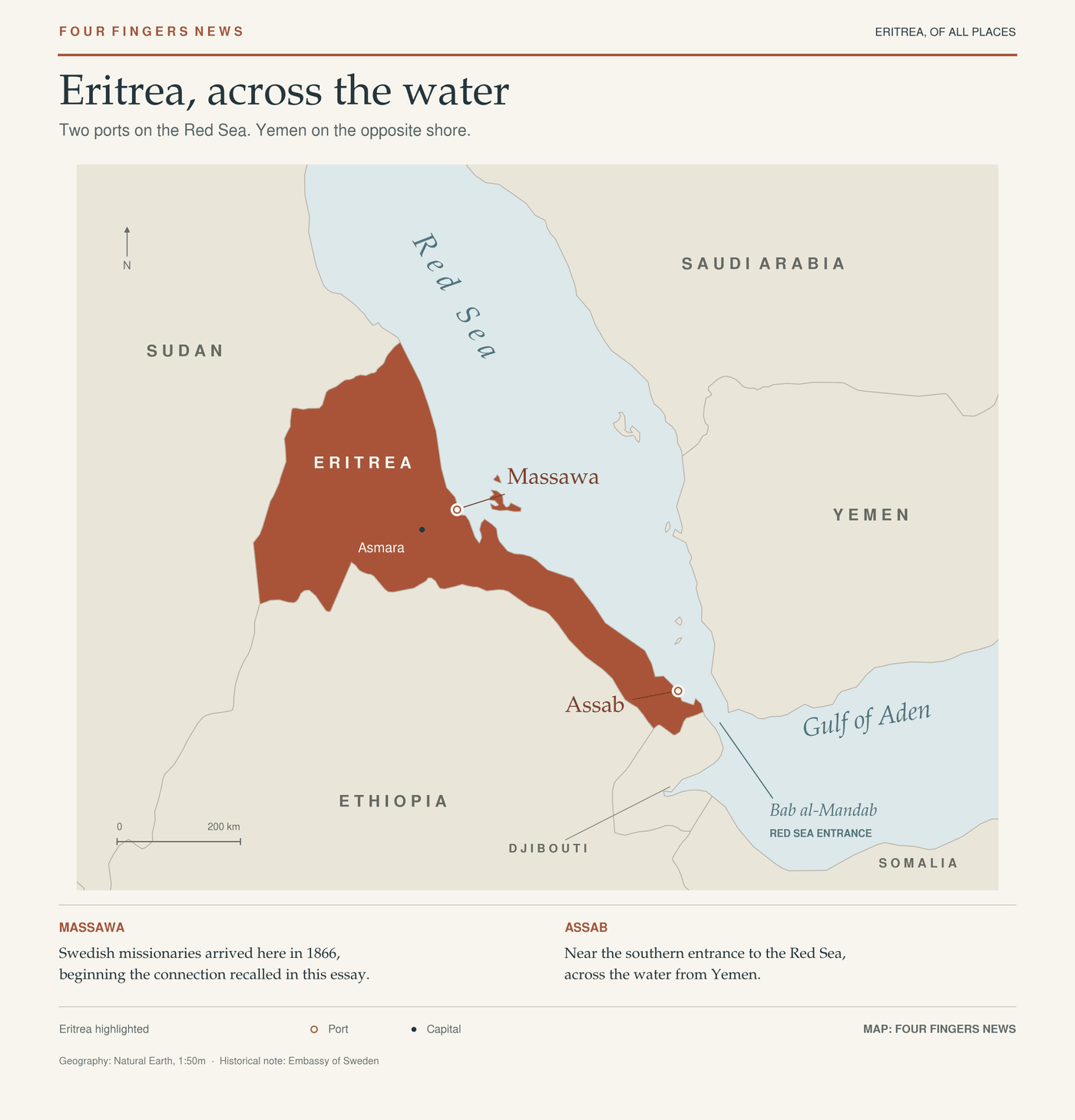
The answer goes back to 1866, when Swedish Lutheran missionaries landed at Massawa on the Red Sea. They meant to push on into Ethiopia. Unrest changed their plans, so they stayed and built missions in what’s now Eritrea. Over generations, those connections grew into congregations, schools, clinics and relationships that later helped carry humanitarian relief.
My family has Swedish roots. So a childhood memory from a church near Seattle turns out to have a history stretching across continents and back more than a century. I still haven’t found the particular fundraiser I remember. But the connection makes sense.
Now Washington’s got its own renewed interest in Eritrea, and the timing deserves attention.
For months, we’ve watched attacks on American bases in the Gulf expose the vulnerability of a military presence built over decades. Buildings damaged or destroyed. Personnel evacuated. Questions about what can be rebuilt, what can be defended, and where forces might have to operate instead. The geography that once helped the United States project power has become a source of exposure.
Against that backdrop, look at the opening toward Eritrea. The United States has lifted sanctions on the country’s military and ruling party. Officials have been discussing closer relations, including security cooperation. A government Washington sanctioned is now a government Washington’s courting.
Eritrea’s coastline faces Saudi Arabia and Yemen across the Red Sea. Its ports sit beside some of the most consequential shipping lanes in the world. The UAE previously used Assab to move troops and heavy equipment into Yemen.
There’s no confirmed American basing agreement in the reporting I’ve found. But you don’t need a signed lease to recognize why Washington’s interested.
Meanwhile, Britain’s agreed to provide aerial refuelling for Saudi aircraft responding to Houthi attacks. The problems around these waterways keep drawing in more countries, more resources and more commitments.
As existing positions become harder to defend, the search for alternatives can pull more places into the war. Moving the footprint doesn’t necessarily reduce the conflict. It can spread the commitments needed to sustain it.
Put these developments together and the question gets bigger than Eritrea: what’s the plan for making all of this smaller?
Every new commitment arrives with its own explanation. Protect the shipping. Support the partner. Keep the route open. Answer the latest attack. Find somewhere safer to operate. Each move has an immediate justification. Together, they deserve an explanation of where they lead.
A government should be able to say how its next military commitment brings the end of a war closer. It should tell the public what success requires, what obligations it’s taking on, and what happens if the next move produces another crisis that needs another response. We’re entitled to ask while the decisions are still being made.
Eritrea caught my eye because I’d heard the name in a very different setting, decades ago. What started as a childhood memory led me through Swedish missionary history and back to a country that powerful governments are once again weighing for its location.
A coastline that looks useful from Washington is somebody’s home. Any bargain over access, security or influence carries consequences for people who may have very little say in it.
The map keeps growing. Where’s the plan to bring the war to an end?
Never Let a Good Crisis Go to Waste
Day 205. After the financial crisis, institutional investors bought foreclosed homes in bulk and turned them into rentals. The Government Accountability Office identified a crucial advantage: they could raise capital while mortgage lenders were pulling back. The conditions that cost families their homes gave well-financed buyers an opening. GAO
“institutional investors had a funding advantage over smaller investors at a time when mortgage lenders were generally reducing lending.”
Read the original document
A crisis doesn’t leave everyone standing in the same place. Someone who needs to sell to stay afloat faces a different economy from someone with cash and time to buy. Falling prices can destroy a household’s savings while making the assets it once owned more accessible to somebody else.
That history is part of why I’m increasingly dissatisfied with incompetence as a complete explanation for this war. Decisions that look disastrous from where most people sit may be acceptable—even desirable—to some of the people with influence over them.
The danger to Hormuz was understood beforehand. In March, the director of national intelligence told the Senate that Iran using the strait as leverage had long been an intelligence assessment. Foreseeable risks were accepted. Understanding that choice means examining how its supporters weighed the costs, including costs they wouldn’t personally bear. Senate testimony
There’s a difference between taking advantage of a crisis and helping create or prolong one. The first is well documented in our economic history. Establishing the second means tracing decisions, money and influence; the outcome alone won’t do it.
For this war, I want to follow the people and institutions that supported the policies, the risks they expected to bear, and the opportunities they stood to gain. Their interests belong in the explanation of how these decisions were made.
I’m keeping the receipts.
Already in Orbit
Day 204. Air Force Secretary Troy Meink said Monday that the United States already has “on-orbit space control weapons.” Asked to elaborate, he answered, “No.” He explained that the phrase had been carefully chosen, then described the need to protect American space capabilities against threats from other countries. Conference transcript
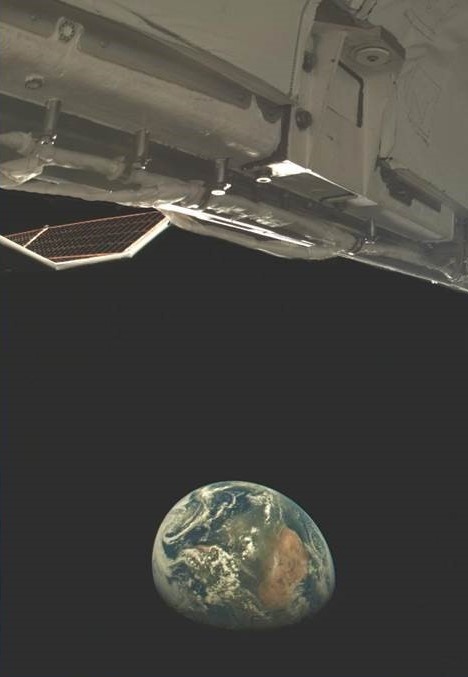
Watch: Inside the Pentagon’s Black Budget | Cappy Army
The money behind classified space programs is poised to grow sharply. Space Force’s FY2027 budget request includes $17.33B for classified research and development, up from $6.56B in the FY2026 column of the same table. That’s a proposed increase of 164%. About 43% of its requested R&D funding sits under the label “Classified Programs.” The table doesn’t identify the individual projects or connect that increase to the weapons Meink described. Pentagon budget
Meink’s security argument deserves consideration. A military that depends on satellites needs ways to protect them. Revealing a weapon’s capabilities could help an adversary defeat it. But that leaves a substantial part of the discussion outside the engineering: what Washington intends these weapons to accomplish, what limits govern their use, and how another country might interpret an action described here as defensive.
The public has now been told that American weapons are already in orbit. It deserves an explanation of what would justify using them, and how Washington intends to keep a confrontation there from becoming a wider war. Those questions shouldn’t have to wait for the first use.
Who Pays When Diesel Runs Short?
Day 203. October’s diesel supply is being squeezed now. The Saudi pipeline attack has disrupted crude deliveries that European refineries were counting on for next month. Oil that doesn’t arrive can’t become diesel. Those lost cargoes have to be replaced, or the refineries have to cut production.
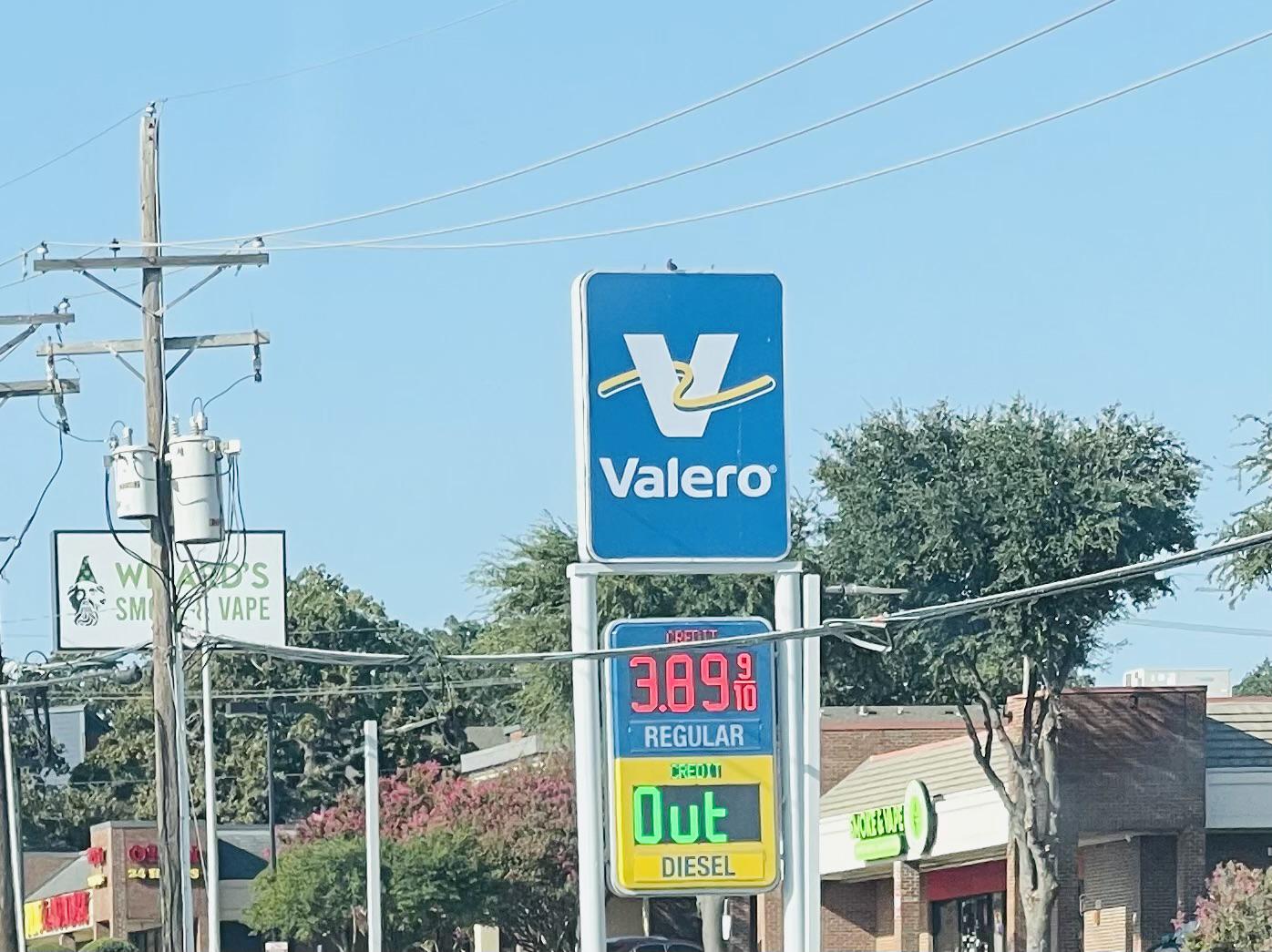
Some late-September cargoes to European refiners were cancelled or pushed into November. Bloomberg reported Friday that Aramco told at least two European customers they’d receive no October crude under their term contracts. The disruption reaches into the fuel those refineries were supposed to produce in October.
Russia has restricted diesel exports to protect its domestic market. I want to know what an American restriction would accomplish: how much fuel would stay here, whether it could reach the businesses that need it, and how quickly. That deserves a public answer now.
Higher diesel prices take money out of every business buying the fuel. High profits for oil companies won’t pay a farmer’s fuel bill or a builder’s equipment costs. A trucking company buying 200 gallons pays another $200 for every dollar added to the pump price, before it earns another dollar moving freight.
Fully Participating
Day 202. Thomas Massie (R-KY) spent an hour on the House floor Wednesday answering House Speaker Mike Johnson (R-LA), who had accused Massie of “not participating as a full member of the Congress.” The entire speech was extemporaneous.
Massie talked about Epstein, the Iran war, prices, debt, health care, campaign money and committee assignments. His charge was simple and scathing: voters elect the members, but party leaders decide who gets committee seats and what Congress gets to debate and vote on. Members who cooperate are rewarded. Members who force unwanted votes can be stopped by canceling Congress and declaring recess.
On Sep 1, Johnson called Massie’s prediction of an early recess “stupid” and said Republicans would work every day on the published calendar, “so long as people like him don’t stop the progress.”
Two days later, Johnson did exactly as Massie predicted and canceled the final two weeks of September voting.
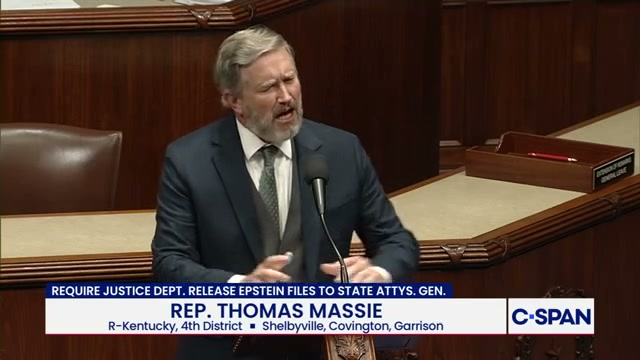
Massie filed impeachment articles against Pete Hegseth on Sep 15. The next day, Johnson canceled the House’s last scheduled voting day. The House left without addressing them.
Johnson says the government is funded through Dec 11, the Senate hasn’t moved its budget plan and the House has done its job. It hasn’t voted on either matter. The House isn’t scheduled to vote again until Nov 9 unless Johnson calls it back.
Massie’s prediction was “stupid” for two days.
Pre-Existing Condition
Saudi Arabia is having a tough week.
The kingdom led a military intervention in Yemen in 2015, with American intelligence and logistical support.
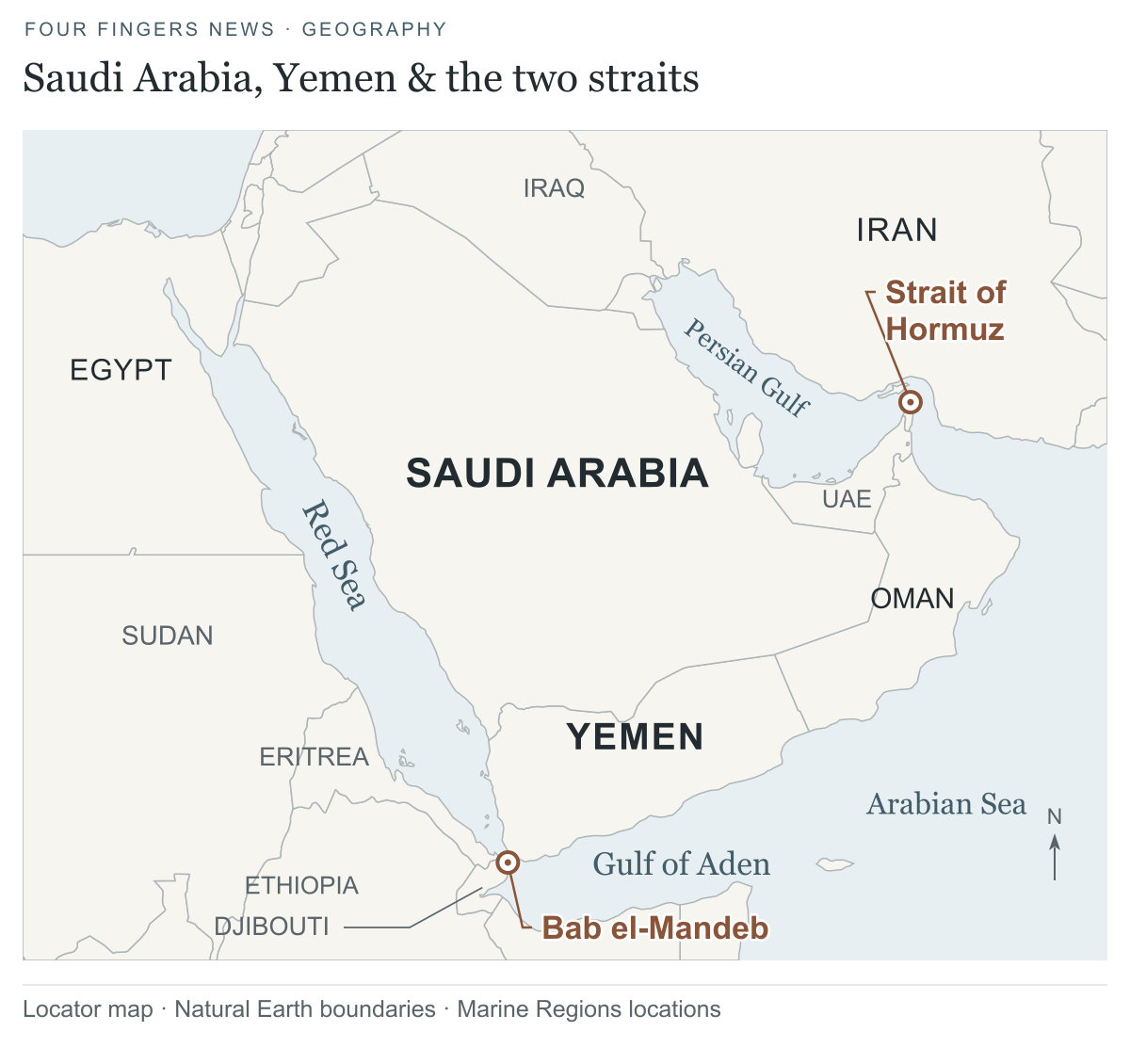
Today, Ansarallah, the Houthi movement, holds islands at the mouth of Bab el-Mandeb and the ground overlooking the shipping lane. Retreating Saudi-backed forces abandoned a sizeable stock of advanced American- and Saudi-supplied weapons, which the Houthis captured. A diplomat told Reuters the group had quietly assembled about 100,000 fighters and that “everyone, including the Saudis, missed this build-up.”
This week the group released footage of what it says is a Saudi F-15 shot down over Marib. Riyadh hasn’t acknowledged losing one.
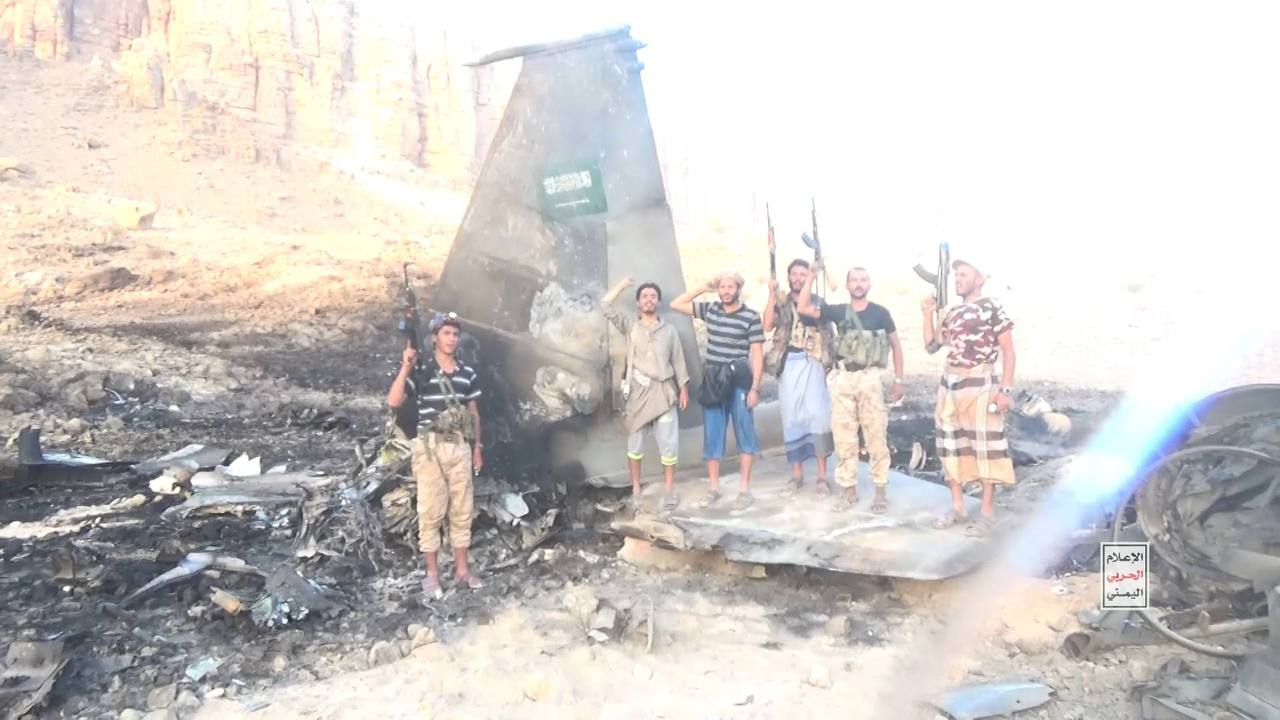
The Saudis have reason to worry. The Iran-aligned movement has fired missiles at Saudi cities and now holds territory overlooking a major oil shipping lane.
So the Saudi government is asking for outside military help again. Two Western officials told Reuters that neither the U.S. nor European countries are prepared to directly back a counteroffensive. MBS went to Cairo seeking an Egyptian role. Egypt’s Foreign Ministry didn’t respond to Reuters’ request for comment.
The Mecca Joint Defense Agreement, signed Aug 7 with Türkiye and Pakistan, says an armed attack on one is an attack on all. An unnamed Saudi source told Israel’s Channel 12 how that’s gone so far: “From Pakistan or Turkey nothing came except statements, and there was no cooperation. They only want to sell weapons.”
Apparently, Ansarallah is a "Pre-Existing Condition."
The Habit
Day 200. This website exists because two things happened the same week. The Iran war started, and I wanted to see whether a tax accountant who didn’t know how to code could build one.
Everyone was talking about vibe-coding and I wanted to try something. On the day the strikes began, I spent hours on World Monitor, refreshing the global situation board like it owed me money. It even monitors the pizza places around the Pentagon, on the theory that if they’re suddenly swamped late at night, something’s about to go down. My close friends were worried (probably still are). World Monitor was useful, but it wasn’t built around the questions I had or the things I’d already read.
I’m not sure Four Fingers News is any more useful, but I’ve learned a lot building it. I run it myself, with help from a process I mostly understand.
Some parts work better than others. The visitor counter froze at 39 in July and stayed there until I noticed in August. Nobody wrote in. The Iran cost tracker is still carrying numbers from July. I’ll fix it later. My wife keeps reminding me this is a choice and nobody asked me to do it (I’m aware).
I knew the Iran war, or whatever we’re calling it, wasn’t going to be over in “days” or “weeks,” but honestly I didn’t expect to hit Day 200.
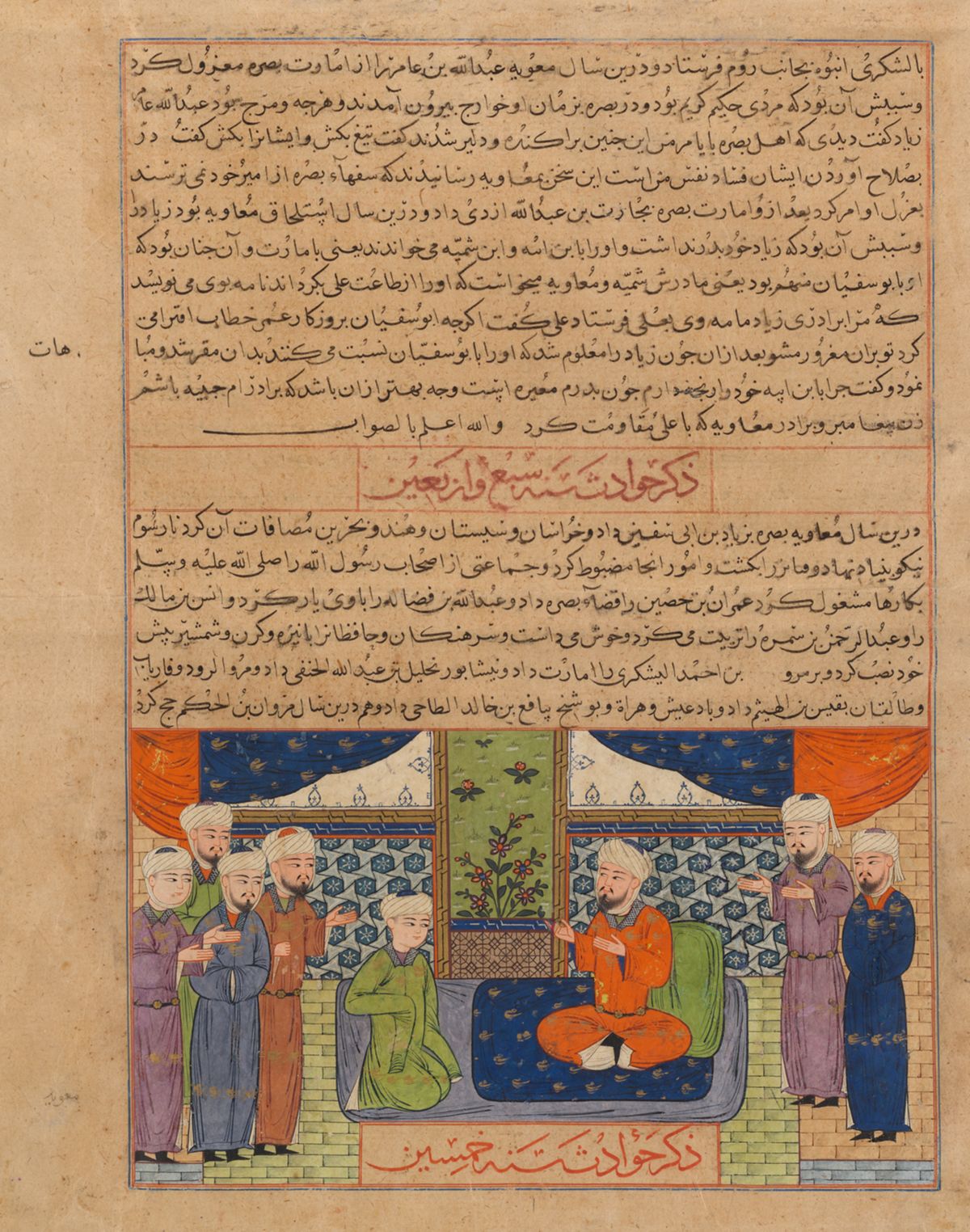
Muawiya’s Hair
Day 199. Muawiya I (c. 602–680), who ruled from Damascus as the first Umayyad caliph, is remembered for describing politics as a single strand of hair stretched between himself and the people he governed. When they pulled, he loosened his end. When they loosened, he pulled. A strand could carry tension, but only if neither side insisted on winning every inch.
In a new interview, Chas Freeman — a retired career diplomat who served as U.S. ambassador to Saudi Arabia during Desert Shield and Desert Storm — reached for that image. Freeman applied it to adversaries: diplomatic contact isn’t an endorsement or a reward for good behavior. It’s the line that lets governments apply pressure, sense resistance and give ground before the relationship snaps.
That’s useful context for a meeting that was supposed to happen today in Salalah. Iran had called regional foreign ministers together to discuss the Iran-Oman shipping arrangement. They didn’t meet. Saudi Arabia submitted amendments, and Oman postponed the gathering “in the interests of consensus.”
Seen through Muawiya’s metaphor, postponement is the diplomacy. Muscat felt the line tighten and loosened its end before the meeting could snap it. The test comes next: whether Saudi Arabia and Iran use the room Oman created to keep hold of the same strand.
The Story We Were Told
Day 198. I've been following the story of “Dude 44” since the beginning. For months, I've checked for updates almost every day, not because I doubted there were American servicemen in danger, and certainly not because I wanted anything bad to happen to them. I kept checking because I couldn't shake the feeling that we were all being directed to focus on the wrong part of the story.
This weekend, 60 Minutes finally aired its interview with Bravo, the Air Force officer who spent nearly two days on the ground in Iran before being rescued. It's a compelling interview. Bravo endured something few of us can imagine, and the newly released rescue footage answers questions that had lingered for months. It answered almost none of the questions I'd been asking about the larger operation.
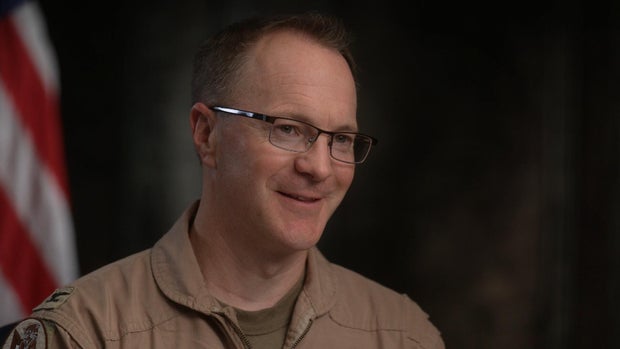
The interview asks us to admire the rescue. I never needed convincing that the rescue was extraordinary. If anything, watching what those pararescuemen and special operators accomplished only increased my respect for them. They did exactly what we expect America's military to do when one of its own is stranded behind enemy lines.
What I still don't understand is why they had to do it. How did an American F-15E end up shot down deep inside Iran? What was the larger operation? What strategic objective justified putting that aircraft there? What succeeded? What failed? What did the United States actually accomplish? Those are the questions that matter, yet they're barely addressed.
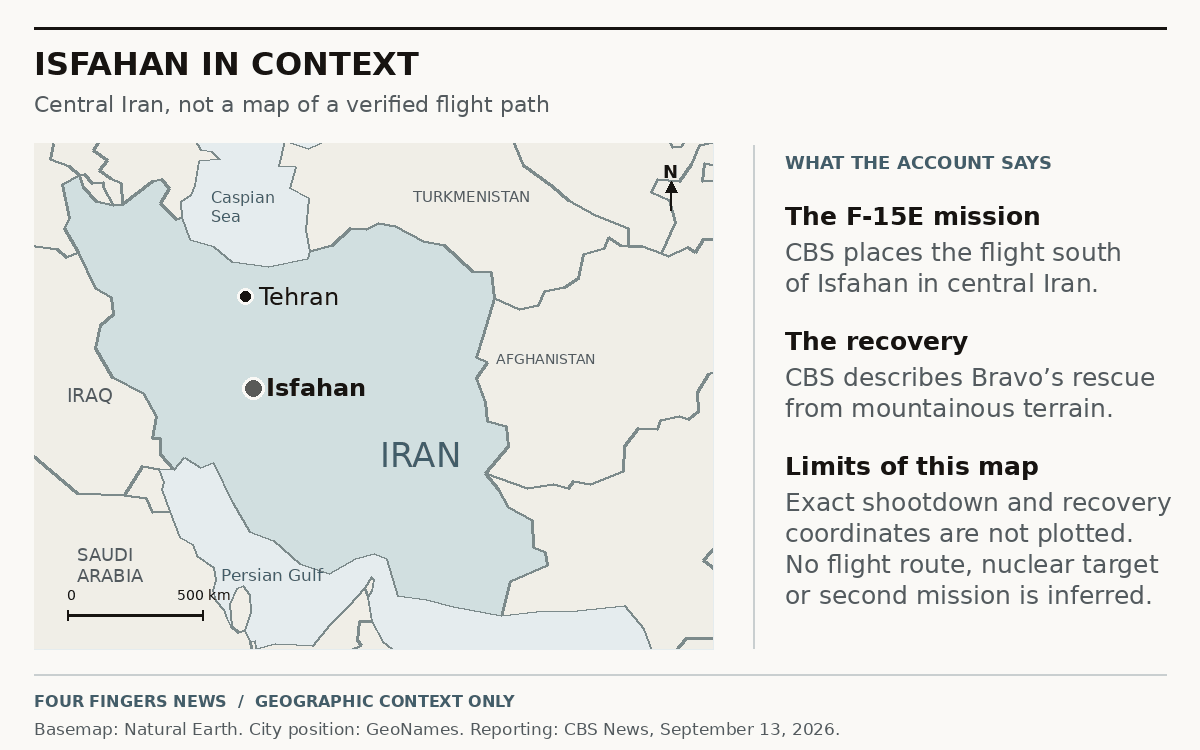
Instead, we've spent months immersed in a different narrative. We heard about Easter weekend. We heard about miracles. We heard about “Dude 44 Alpha” and “Dude 44 Bravo.” We heard about impossible odds, incredible courage, and what officials described as a rescue involving more than 150 aircraft. Pete Hegseth compared the story to the resurrection of Christ, then later recited a Pentagon prayer adapted from Pulp Fiction. It's an unforgettable story. It's just not the story I've been trying to understand.
A rescue isn't a strategy. It's what happens after a strategy has already placed people in extraordinary danger. Celebrating the rescue while ignoring the operation that made the rescue necessary feels like congratulating firefighters for pulling someone from a burning building while refusing to ask how the fire started. That's not a criticism of the firefighters. It's a recognition that they weren't the cause of the crisis.
The same is true here. Bravo deserves every ounce of respect he's receiving. So do the men and women who brought him home. Nothing in this diminishes what they accomplished. But courage on the battlefield doesn't answer questions about judgment in Washington.
As I watched the interview, I kept waiting for someone to pull the camera back. Not literally, but strategically. I wanted someone to stop asking what Bravo was thinking in those mountains and start asking what American policymakers were thinking before his aircraft ever crossed into Iran. Maybe those answers are still classified. Maybe they genuinely can't be discussed. Or maybe the rescue story became the story because it's the version everyone can rally around without having to wrestle with the much larger questions.
If that's the case, then we've mistaken the most emotional part of the story for the most important part. Bravo survived. That's something every American should be grateful for.
Now tell us why he was there.
The Oil Has to Get Out
Saudi Arabia’s main escape route around Hormuz is shut.
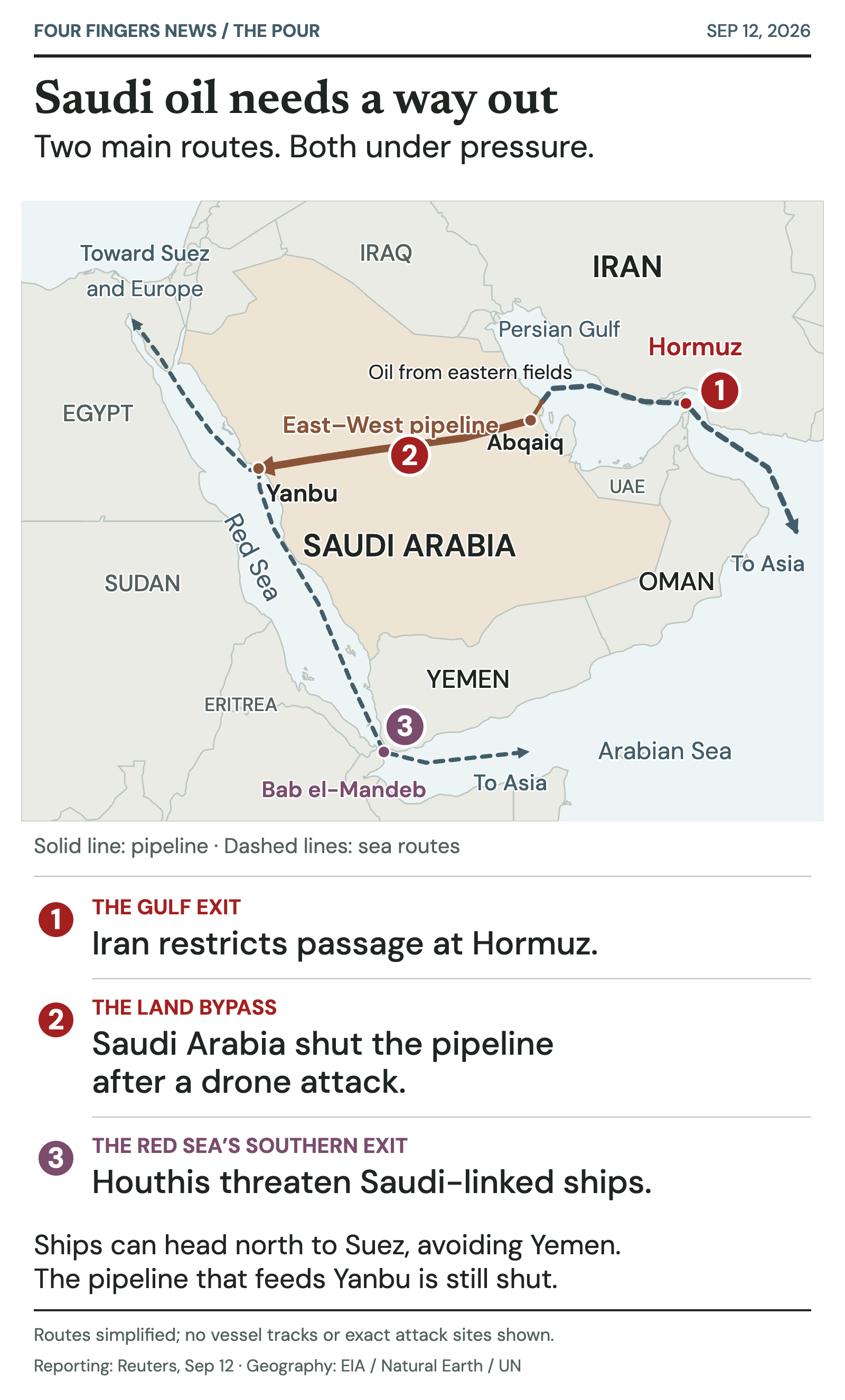
The East-West pipeline had been carrying four to five million barrels a day across the kingdom to the Red Sea. That’s roughly 4–5% of global oil supply. Saudi authorities closed it as a precaution after a drone attack. Meanwhile, the Houthis have seized Perim island at the Red Sea’s southern entrance.
Riyadh asked Washington for direct military help against the Houthis. Reuters reports that Washington offered intelligence and targeting assistance but declined direct action for now.
Yesterday’s note traced the relationship between Saudi oil and American protection. Here’s where that relationship meets a practical test: the kingdom needs to get its oil to customers, and its available routes keep getting more vulnerable.
Into that situation comes Iran’s proposed shipping arrangement with Oman. Pezeshkian says Arab ministers will meet Monday to sign it; Oman hadn’t immediately confirmed the meeting in Anadolu’s report. An Iranian security official says Tehran would control the corridor’s entrance and exit.
That’s a claim to power over the neighbors’ trade.
Getting tankers moving again would bring real relief. The terms could also require Gulf governments to accept authority they’ve spent decades trying to keep Iran from acquiring.
No such settlement has been established. But that’s the significance of these negotiations. An Iranian veto over its neighbors’ exports would change the region’s balance of power long after the damaged pipeline is repaired.
Bitter Lake
Twenty-five years ago today, 19 men seized four airliners. Three hit buildings. The fourth went into a field in Pennsylvania because the people on board fought back. 2,977 people died.
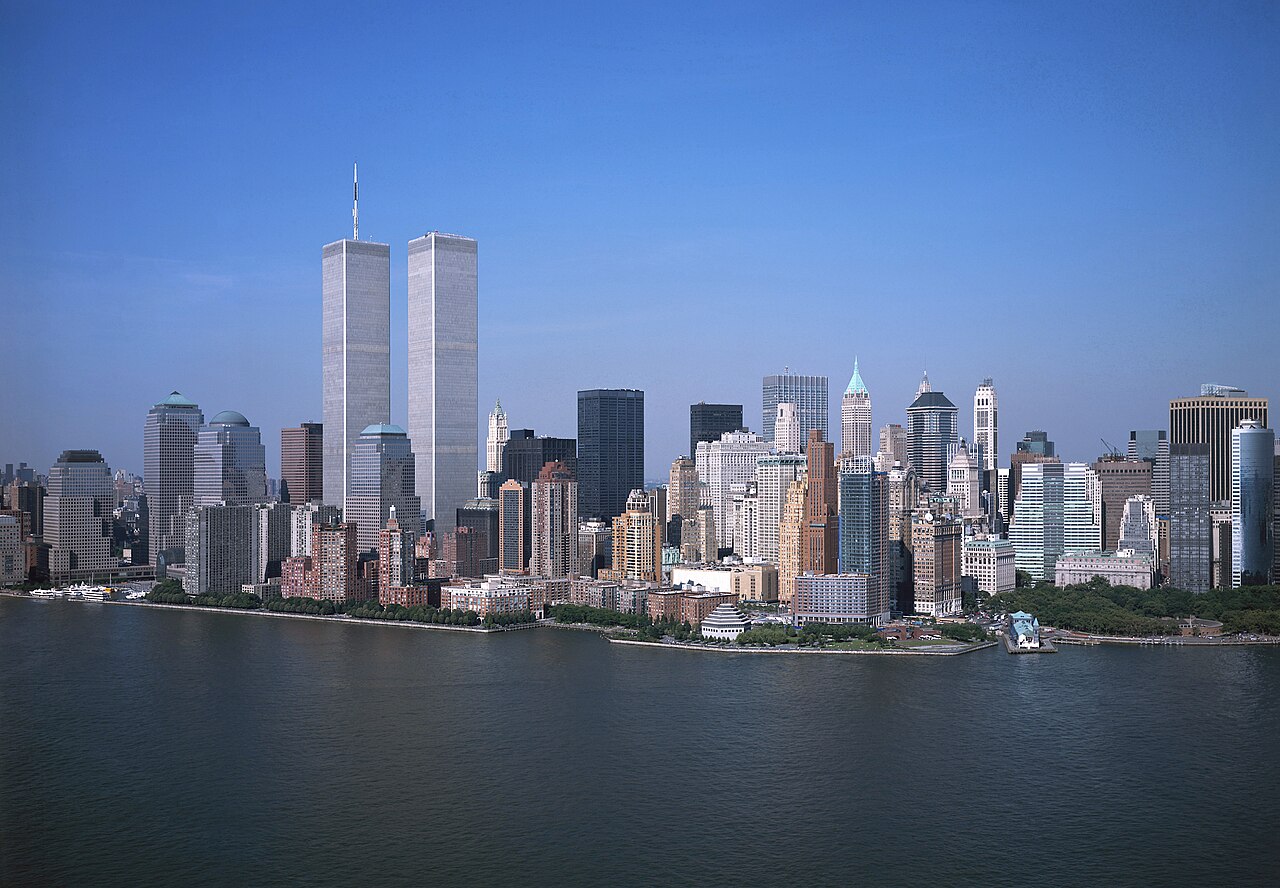
The story we settled on was terrorism. A cave, a madman, a hatred of freedom.
Calling it terrorism doesn't explain how we got there.
A better starting point is February 1945, aboard the Navy cruiser USS Quincy, anchored on the Great Bitter Lake in the Suez Canal. A dying Franklin Roosevelt sat across from King Ibn Saud.
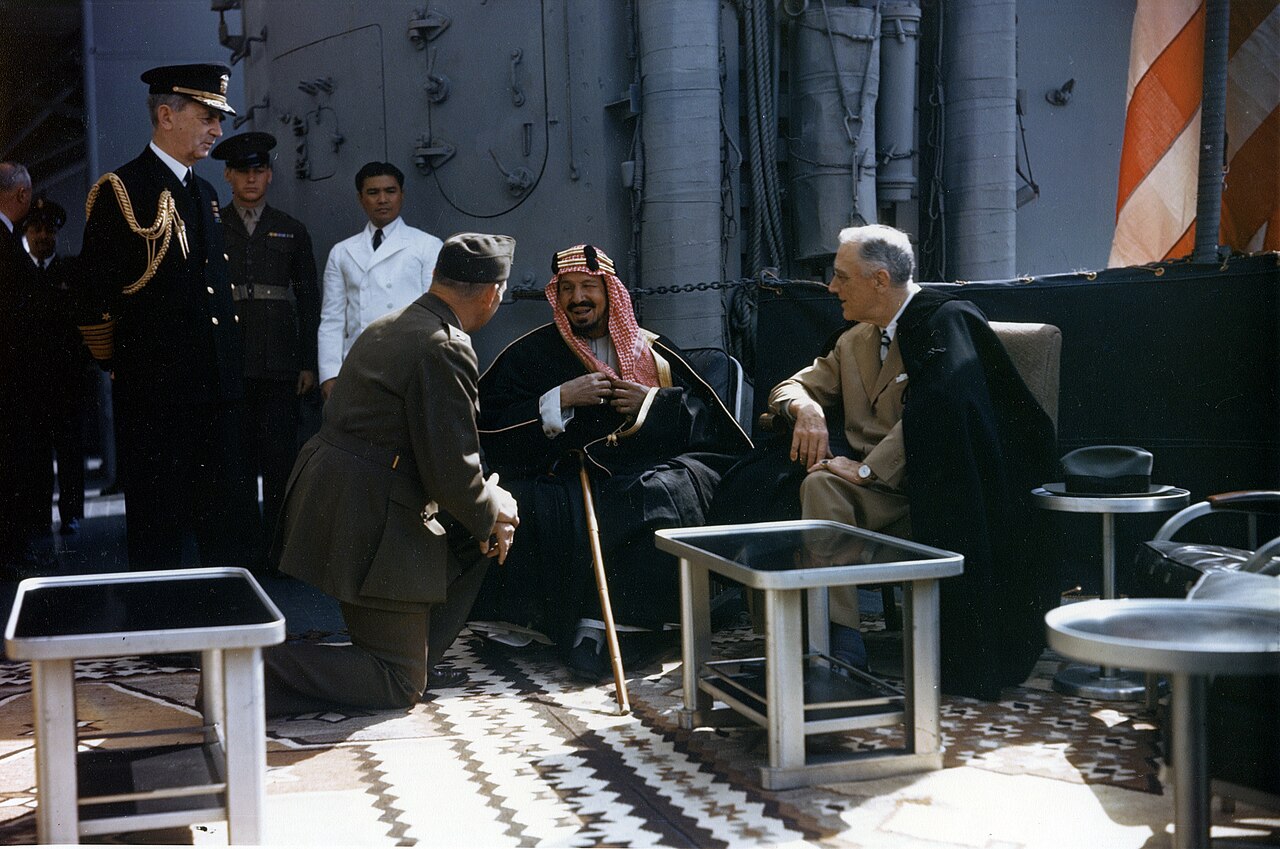
They signed a memo of the conversation, mostly about Palestine. There's no oil-for-protection clause. The broader understanding took shape over the next decade. America gets the oil. The House of Saud gets protection. What happens inside the kingdom is the royal family's business.
At home, the Saudis kept a bargain older than the United States. Since 1744, through two collapses and a reconquest, the Saudi family has ruled with the blessing of the Wahhabi clerics. The family holds the sword, the clerics hold the pulpit. Protect one and you protect both.
The export of that creed started before the money did. The Muslim World League was founded in 1962.
Then came 1973. Oil went from $3 to nearly $12 in a matter of months, and a modest missionary project became one of the best-funded religious movements in the world.
Riyadh spent tens of billions of dollars over the next three decades on mosques, schools and charities from Lahore to Sarajevo to Brooklyn. Not all of them preached the same thing. Plenty taught a narrow, brittle version of the faith. And the 9/11 Commission found that some of them became cover for people with worse intentions.
In 1979 gunmen seized the Grand Mosque in Mecca. The royal family responded by giving the clerics even more control over Saudi life.
That same year the Soviets went into Afghanistan. Washington and Riyadh split the bill for the Afghan resistance, dollar for dollar. America called it anticommunism. The Saudis called it religious duty.
The Arab volunteers who joined the fighting had their own networks and raised their own money. American aid mostly didn't reach them. Saudi private donors helped support them.
Osama bin Laden was one of those volunteers.
Wahhabism alone didn't produce him. The Saudi state clerics preached obedience and later condemned him by name. He drew on Saudi money and Saudi piety, but also on the revolutionary ideas that came out of Egypt's prisons. Muslim Brotherhood exiles brought those ideas into the kingdom, where Riyadh hired them to staff its universities in the 1960s and 70s.
He had a long list of grievances. When he declared war on the United States in 1996, the one in the title was American troops in the land of the two holy places.
Which is to say the Bitter Lake arrangement helped build the ideology and then handed it a target.
That doesn't require a conspiracy. For 56 years, both governments had reasons to keep the kingdom's domestic affairs largely out of the discussion.
That's harder to reckon with than a man in a cave. The story runs through 12 presidents of both parties, the Afghan program, and a relationship that's still the spine of American strategy in the Gulf.
Which brings us back to this week.
Saudi Arabia's watching the Houthis advance along the Red Sea. Hormuz is choked. Axios reports MBS called Trump twice Thursday to ask for American strikes on Yemen.
The same kingdom stripped its religious police of arrest powers in 2016. The prince has been clipping the clerics ever since. Whatever his reasons, the country that funded the export is now trying to change the product.
That meeting was 81 years ago. Roosevelt and Ibn Saud are long dead.
Their successors have updated the relationship plenty of times. Last November it got a fresh defense agreement with a price tag attached.
I don't think we've reckoned with what that relationship helped set in motion.
The Other Strait
Day 195.
Ansarallah has taken Mocha.
Saudi-backed PLC forces are falling back toward Dhubab, on the Bab el-Mandeb Strait. Houthi forces have also reached the Hanish Islands.
This isn’t another drone strike. It’s a territorial defeat for the Saudi-backed government.
And the timing could hardly be worse.
Hormuz is already badly constrained. Saudi Arabia’s alternative is to move oil west to the Red Sea. Now the force it spent a decade trying to destroy is advancing toward the southern exit of that sea.
Saudi Arabia bombed Yemen for years. The United States armed it. The Houthis survived.
Now they’re advancing, Saudi cities are again being struck, and Riyadh is watching the war move toward a chokepoint it can’t afford to lose.
Iran is supposed to be isolated.
Instead, the conflict is spreading outward from Iran into the Gulf, Saudi Arabia, Yemen and the Red Sea.
Washington may still have overwhelming military power.
But power and control aren’t the same thing.
Right now, control is getting harder to find.
Welcome to the Neighborhood
Day 194. Seattle has a particular way of welcoming people. Tonight, it involved falling behind New England, losing our starting quarterback, and making everyone wait until the final seconds to breathe. Seahawks 13, Patriots 10. Three fourth-quarter interceptions. Welcome, Khoslas. This is sometimes how we relax. AP
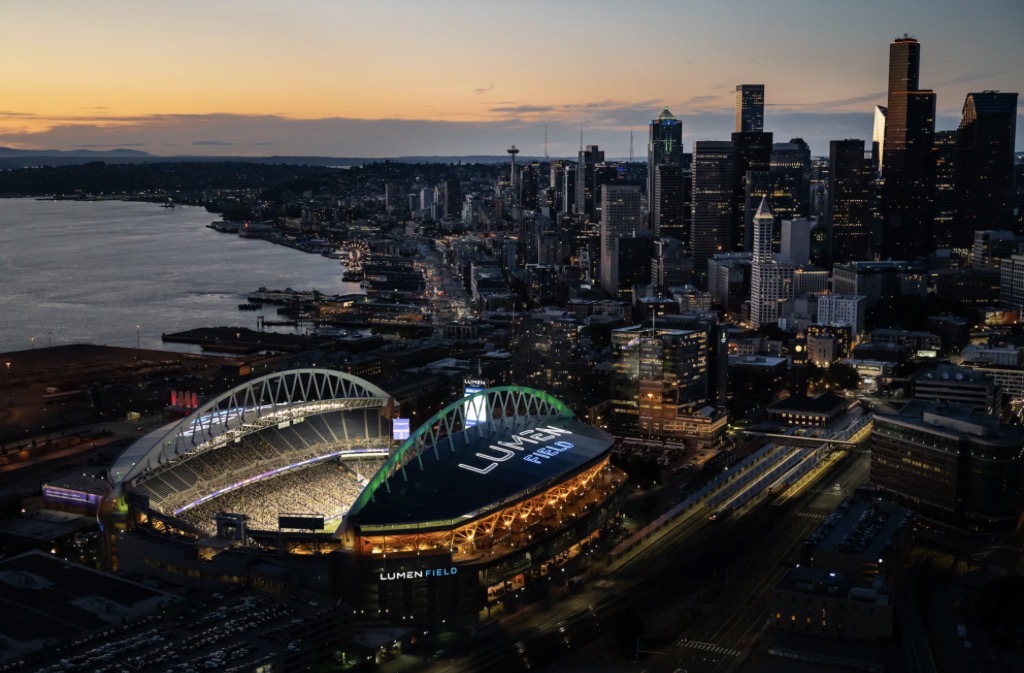
If you’re celebrating the win while wondering who exactly just bought the team, here’s the introduction.
The Khosla family’s ownership group closed its $9.612 billion purchase on September 3. Vinod Khosla is the chair, his wife Neeru is the controlling owner, and their son Neal is vice chair. That’s the family taking over from Paul Allen’s estate, at the highest price ever paid for an NFL franchise. Reuters
Their story comes through India and Silicon Valley. Vinod grew up in an Indian Army household and studied electrical engineering in Delhi before coming to the United States for graduate school at Carnegie Mellon and Stanford. He co-founded Sun Microsystems in 1982, became an investor at Kleiner Perkins, and started Khosla Ventures in 2004. His fortune grew out of building technology companies and backing others, with investments spanning computing, energy, healthcare, and artificial intelligence. Khosla Ventures
Neeru brings a different background. Raised in India and England, she studied molecular biology and co-founded the nonprofit CK-12 Foundation, which provides free educational resources. She’ll also lead the Seahawks Charitable Foundation. There’s a meaningful opportunity there to make the family’s arrival matter to children who may never get a ticket to Lumen Field. Biography, CK-12
Neal helped drive the family’s interest in buying the team. His mother credits his enthusiasm for football and desire to get involved. The family also arrives with previous ties to the 49ers, which I’m willing to treat as a correctable error in judgment. Introductory remarks
They’ve already announced white throwback uniforms for 2027. Somebody’s doing the homework. Announcement
Of course, the Allen name means something here. Paul helped keep the Seahawks in Seattle. Jody carried that stewardship forward after his death. The new owners are inheriting decades of attachment that no purchase agreement can fully describe. The ownership transition
I hope the Khoslas enjoy getting to know this place. Show up. Listen. Invest in the team and trust the people who know football. Let the community work become something families can point to.
Tonight, we got a win and a reason to introduce ourselves. Welcome to the neighborhood, Khoslas. Cheers to a good start. Go Hawks.
The Person Inside the Uniform
Day 193. Yesterday I wrote about my grandpa Harold and the life he built after World War II. Today I listened to Peter Pajakowski talk about his son Nigel, an Air Force staff sergeant who died at 24.
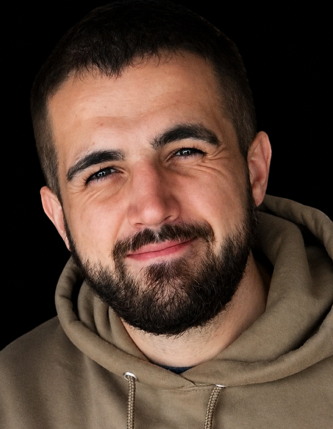
In a conversation with Daniel Davis, Peter Pajakowski describes Nigel, an Air Force staff sergeant who loved his work, his colleagues and the opportunities service had given him. He also describes isolation, repeatedly delayed homecomings and a growing struggle to reconcile what Nigel believed in with what he believed his country was doing.
Those feelings weren’t mutually exclusive. That’s the part worth sitting with.
We ask young Americans to develop judgment, integrity and a sense of responsibility. Their convictions don’t switch off when the mission becomes difficult to explain. For someone who joined partly to find purpose, questioning that purpose can reach well beyond a disagreement about policy.
Nigel died by suicide after returning from deployment, according to the discussion. His father explicitly resists reducing his death to one event or one explanation. His account deserves that same care from anyone repeating it.
It also deserves more than being absorbed into an argument about which side supports the troops. A person can remain devoted to the people beside him while struggling profoundly with the work they’ve been asked to do.
Yesterday’s note looked across the decades Harold had after the Navy. Nigel’s father describes the conversations he’d expected to have when his son came home.
The Uniform Is the Beginning
Day 192. My grandpa Harold Grigsby Johnson would’ve been 103 years old today. September 7 is also Labor Day this year, which makes the uniform only the beginning of his story.
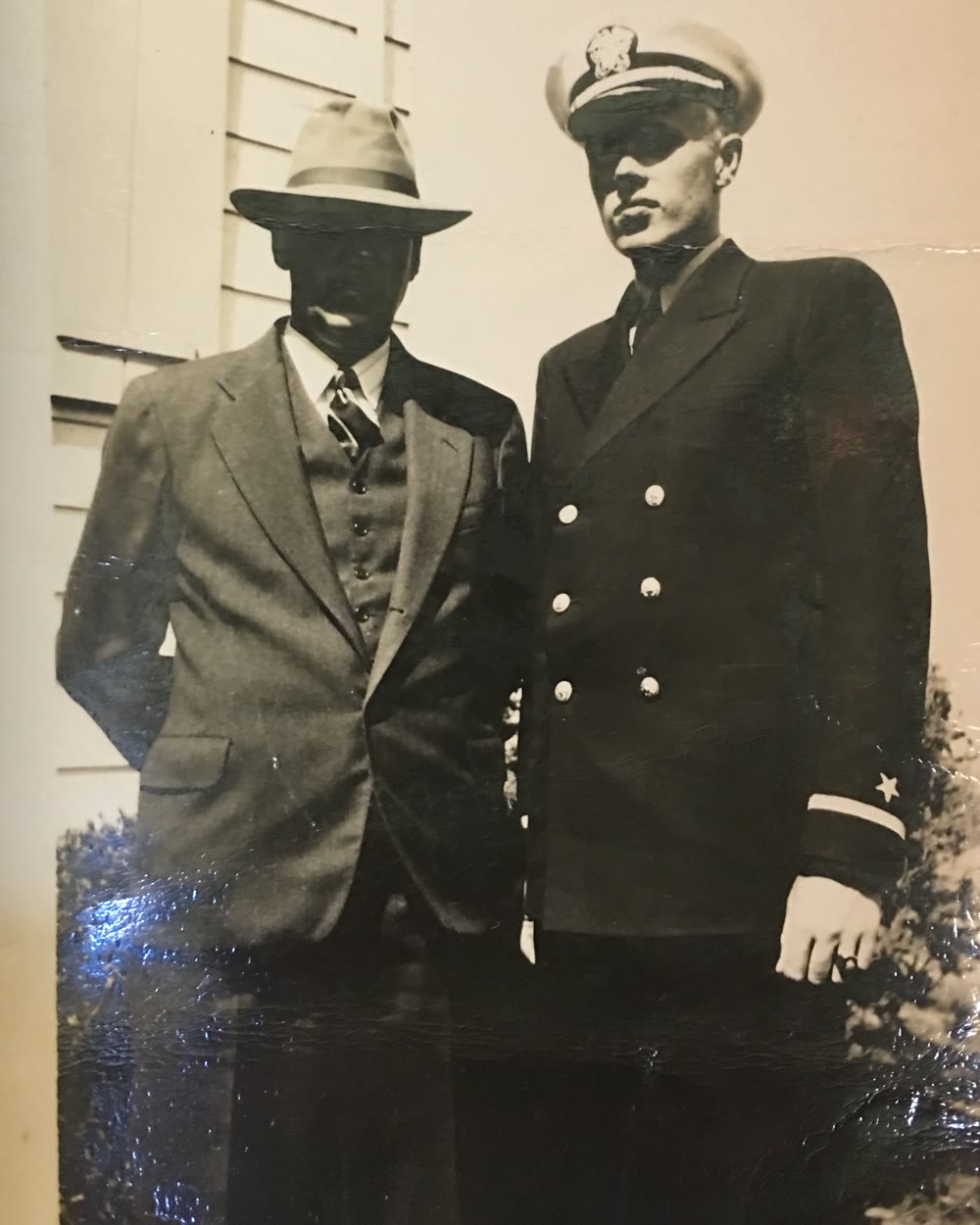
Left: Harold G. Johnson in his Navy uniform with his father, John Johnson. Right, from left: Tisinger, Stunkard, Mitchell and Harold. Family photos.
He left Washington State College for the Navy during World War II, served with the Amphibious Forces in the Asiatic-Pacific Theater and graduated from the Navy Midshipmen’s School at Columbia. Afterward he returned to college, spent 49 years at Aberdeen Federal and Anchor Bank, and served on the school board and through the YMCA, Red Cross, Lions Club and church.
World War II was neither clean nor simple, but the country acknowledged it as a national undertaking. Congress declared it, millions mobilized and a formal surrender marked its end.
Young Americans still stand watch on ships and at bases around the world. Today they’re carrying Day 192 of a war Congress hasn’t authorized, while most civilian life proceeds without having to call it a war. What’s changed sits with the country behind them: we’ve become less willing to say what we’re asking them to do, or what would let the mission end.
Most of Harold’s life came after the war. The people serving now are still at the beginning of theirs.
Tonight, a Manhattan for Harold.
The Exchange Rate
Day 191. Two American warships targeted. Three Iranian oil tankers struck. Washington’s latest explanation of the war comes with a ratio. Admiral Brad Cooper says attacks on two U.S. ships will be answered by taking out three Iranian vessels. CENTCOM says no American personnel were harmed. CENTCOM
Iran says it hit the warships. The damage is disputed. The question that survives either account: what happens when an exchange produces a result neither government can comfortably absorb?
There’s no stable exchange rate between a tanker and an aircraft carrier. You can count hulls. You can’t calculate in advance the political consequences of hundreds of dead sailors, an oil terminal burning, or commercial crews deciding the next voyage isn’t worth their lives. Announcing the price of retaliation doesn’t mean you control what the other side does after paying it.
CENTCOM’s statement contains an extraordinary sentence about the Iranian tankers: “Iran has no means by which to defend them.” The vulnerability of the targets is presented as an American advantage. But the ability to destroy another ship leaves the central question unanswered: how does this get us out of the war? CENTCOM
The same problem applies to reopening Hormuz. A successful passage gets a ship through. Restoring a trade route requires enough confidence to book the next voyage, insure it, crew it, and do it again next month. Every new exchange gives everyone involved another reason to reconsider. A naval escort can accompany a tanker. It can’t order its owner to believe the danger has passed.
That’s the danger in measuring success one exchange at a time. Each round can produce a favorable military report while making the next round harder to escape.
Two of ours. Three of yours.
The arithmetic works until the bill arrives.
Who Paid for Independence?
Day 190. Gloria Steinem died on September 2 at 92. Her death has prompted a reassessment of a life spent organizing, writing, and fighting for women’s equality. It’s also a reason to examine a part of that life she acknowledged decades ago: her work with the CIA. Death announcement and background.

Before she became a leading figure in women’s liberation, Steinem directed the Independent Research Service, a CIA-funded organization that sent American students to international youth festivals in 1959 and 1962. The connection was publicly reported in 1967. Contemporary reporting.
The Guardian’s obituary mentions the CIA connection in a paragraph about disputes over her prominence within feminism. The obituary.
It deserves a question of its own. What was an intelligence agency buying when it financed people who spoke the language of independence?
The agency’s own history provides an answer. Supporting the non-Communist left became a foundation of its political operations. Through the Congress for Cultural Freedom, it secretly supported publications and conferences that brought influential intellectuals together. Political credibility was something it could cultivate and finance. The CIA’s account.
Former CIA official Thomas Braden explained the mechanics in 1967. Use existing organizations. Disguise the American involvement. Allow recipients to disagree with aspects of American policy.
And, crucially: “Limit the money to amounts private organizations can credibly spend.” Braden’s account.
As an accountant, that last instruction caught my attention. Someone had to calculate how much independence would look reasonable in the budget.
A conference needs airfare. A publication needs printing. An organizer needs a salary. Financing those things helps determine whose ideas travel, whose arguments get published, and who can afford to keep working.
The people involved can believe every word they say. Concealed sponsorship still deprives their audience of information needed to judge the enterprise.
Steinem’s involvement belongs in our assessment of her political judgment. She knowingly participated in a project whose public identity concealed the institution paying for it. Her later achievements don’t answer the questions that decision raises.
Remembering someone means allowing the facts of their life to complicate the story we prefer.
We can recognize what Steinem helped women accomplish and examine what she helped the CIA accomplish. A serious account of her life has room for both.
The funding was concealed at the time. Its significance shouldn’t disappear in remembrance.
Who Polices Whom?
Ukraine’s security services brought an internal dispute into a residential courtyard.
Day 189.
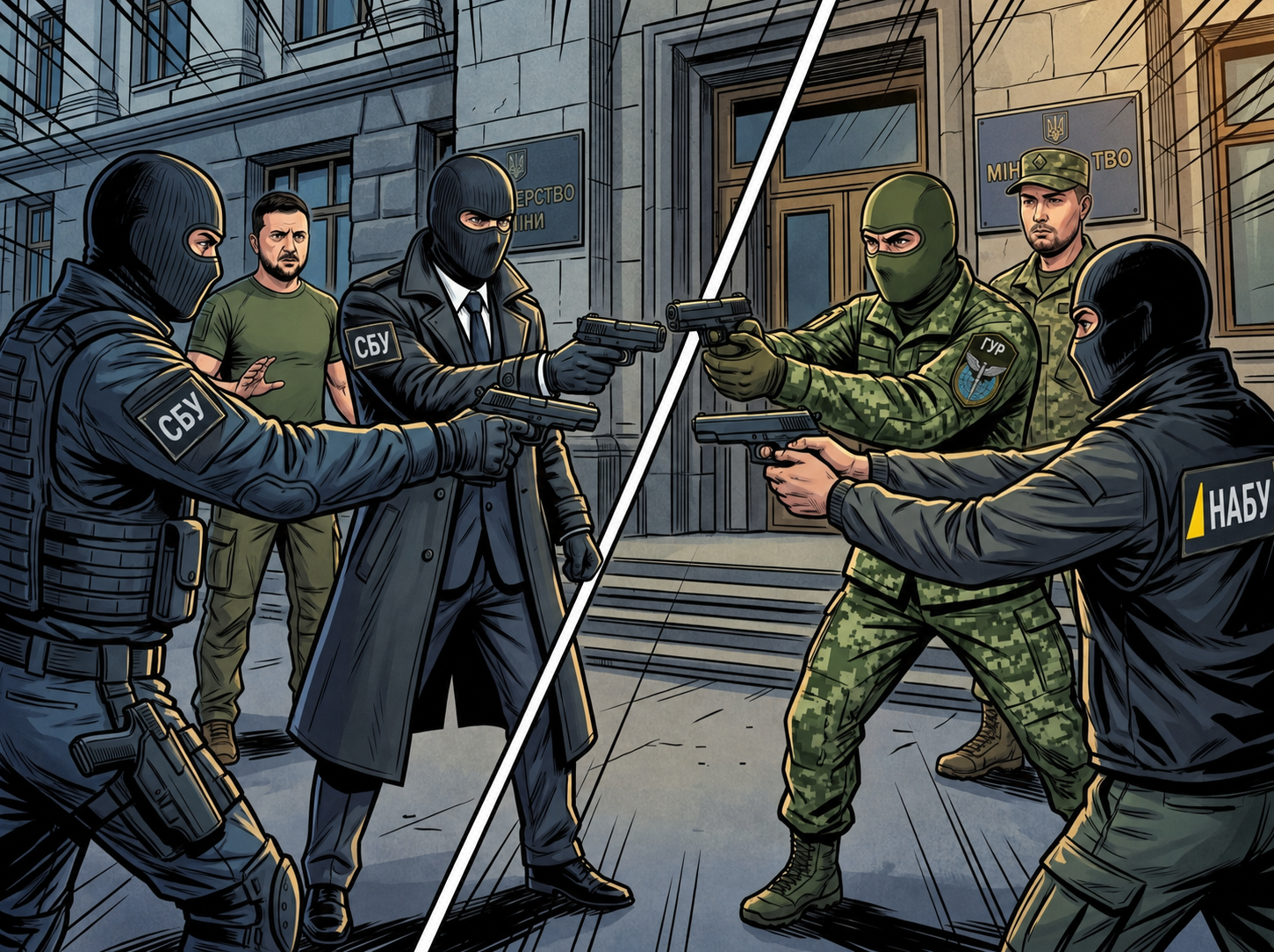
Gunfire broke out in a Kyiv apartment courtyard Wednesday during a confrontation between Ukraine’s domestic security service, the SBU, and its military intelligence agency, GUR. Three GUR members were reported wounded. The video captures the confrontation but doesn’t establish who fired first.
The dispute centered on Stepan Kaplunov, a deputy commander in a Russian volunteer unit fighting for Ukraine under GUR. The SBU says it was searching his apartment while investigating an assassination plot directed by Russia’s Federal Security Service. Kaplunov says the SBU abducted him, held him for nine days and pressured him to confess.
The Prosecutor General’s Office initially echoed the SBU’s account of officers facing armed resistance. Investigators have since named a suspect from each service.
On Friday, Ukraine’s National Anti-Corruption Bureau, known as NABU, and specialized anti-corruption prosecutors conducted a separate operation at the Prosecutor General’s Office. They allege that an official there led a group protecting fraudulent call centers and laundering assets. No public evidence connects that case to the shooting.
The bureau’s ability to investigate senior prosecutors was itself contested last year. President Volodymyr Zelensky signed a law placing the anti-corruption bodies under the prosecutor general’s authority, then restored their independence nine days later after street protests and European Union criticism.
An investigation into prosecutors can show that oversight is working. The courtyard raises a more immediate concern about who can contain a dispute once armed agencies stop cooperating. Reporters from Suspilne, Ukraine’s public broadcaster, found police had cordoned off the area while representatives of the two services negotiated inside.
A conference room would have been easier on the neighbors.
No Random Craters
The Post found 228 damaged assets and no manipulated images. Tonight’s strike at Camp Titin remains unseen.
Day 187.
GPS disruption affected Iranian missile and drone guidance during the June 2025 war. China granted Iran military access to BeiDou in 2021, though the U.S.-China Economic and Security Review Commission says open sources still can’t establish how broadly Tehran uses it. Current defense reporting describes Iranian missiles using GPS, BeiDou and Russia’s GLONASS together, with some steering optically or by heat on descent.
The public evidence can’t assign BeiDou its share of the improvement. It can show what arrived.
The Washington Post authenticated 109 satellite images released by Iran, found none manipulated and documented 228 damaged or destroyed structures and pieces of equipment at 15 American military sites through April 14. A retired Marine colonel who reviewed the images put it plainly: “There are no random craters indicating misses.” Central Command disputed calling the damage extensive, then declined to address the findings in detail.
That doesn’t mean Iranian missiles never miss; many are intercepted before accuracy matters. It means the old photograph of an intact base surrounded by Iranian craters no longer describes the weapons that get through.
Less than two weeks into this war, the two largest American commercial satellite providers began limiting, delaying or withholding regional imagery at the U.S. government’s request. The Post verified Iran’s pictures against lower-resolution imagery from Europe’s Copernicus system.
The latest claim arrives through the same narrow opening. The IRGC says it killed American personnel at Camp Titin in Jordan. U.S. officials told Reuters their initial assessment found no casualties. No independent high-resolution image of the base has yet entered the public record.
The 2,000-Mile Workaround
The fleet stayed on station. Its supply line moved to Diego Garcia.
Day 186.
The Navy’s Bahrain plan now begins with a question smaller than strategy: how sailors can get their belongings back.
At Monday’s worldwide town hall, a sailor asked about household goods left behind after Iran struck Naval Support Activity Bahrain on February 28. Adm. Daryl Caudle answered plainly: “We’re not getting back in there anytime soon.” Six months later, the Navy’s top officer is describing a plan to retrieve those possessions as a “scheme of maneuver.”
The operational map changed with the locks. Navy Times reports that logistics shifted to Diego Garcia, more than 2,000 miles from carrier forces in the region. One littoral combat ship sailor said food orders had to be placed 30 days ahead—a lead time imposed on operations whose schedule could change overnight.
The Pentagon’s first public measure was continuity: no fatalities at the base, no significant effect on military operations. Continuity records whether ships keep moving. It doesn’t record the distance, lead time and improvisation consumed to keep them there.
The ships stayed on station.
The next pour comes from Diego Garcia.
August 2026 31 notes
The Imaginary Strike
Kharg Island wasn’t hit. Its destruction became an official message anyway.
Day 185.
Kharg Island wasn’t attacked Sunday night. The president posted its destruction twice.
During the exchange that began with an American strike on two launchers at Larak Island, Trump published an AI-generated video showing explosions across Kharg, the oil hub that handled 90 percent of Iran’s oil exports before the war. The caption said it was “being blown to smithereens.” A minute later, he posted a second view without a caption.
By Monday, a U.S. official had confirmed that American forces hadn’t targeted Kharg. JD Vance supplied the purpose: Trump was sending Iran a message.
That makes the videos more than synthetic spectacle. They place an event that didn’t happen inside the signaling of a war that did. Governments routinely use ambiguity to threaten what they haven’t yet done; what’s new is that the commander-in-chief supplied the finished footage.
Kharg remained intact.
That wasn’t the point of the videos.
The Green Photo
Five years ago tonight, the last C-17 lifted from Kabul. The picture supplied a clean ending. Policy rarely does.
Day 184.
Five years ago tonight, a green-tinted night-vision camera captured Maj. Gen. Chris Donahue crossing the tarmac at Hamid Karzai International Airport, rifle down, walking onto the final Air Force C-17 out of Kabul. The aircraft left at 3:29 p.m. Eastern — 11:59 p.m. in Kabul.
The picture gives the ending a precision policy rarely achieves: one soldier, one aircraft, one minute before midnight.
At the Pentagon, Gen. Frank McKenzie announced that the withdrawal was complete and the nearly 20-year military mission was over. In the same briefing, he acknowledged: “We did not get everybody out that we wanted to get out.”
The next day, President Biden widened the claim. Afghanistan’s end, he said, marked the end of an era of major military operations intended to remake other countries.
Five years later, the green image reads differently. The United States did leave Afghanistan. Iran isn’t Afghanistan: there’s no American occupation, no nation-building project and no honest comparison of scale or purpose.
But on Day 184, the claim attached to the photograph looks narrower than it did. The picture proved Washington could end a deployment. It couldn’t prove Washington had learned to demand a stopping rule before entering the next one.
The green photograph was a period at the end of Afghanistan.
It wasn’t a policy.
Pour something anyway.
Clear on Paper, Severe at Sea
The Navy cleared the lanes. The mariners kept the threat at severe. Declarations move faster than fleets.
Day 183.
Adm. Brad Cooper said Thursday night that U.S. forces cleared Iranian mines from Hormuz’s recognized shipping lanes. That’s narrower than declaring the strait mine-free: he named the traffic separation scheme, not every mile between Oman and Iran.
The Joint Maritime Information Center kept its threat assessment at severe in its latest published advisory, warning of drifting or uncharted mines near those lanes and saying survey work continued. It recorded 37 U.S.-facilitated transits over two days against a 2025 baseline near 138 a day. The Navy says it cleared a route. The commercial market hasn’t treated that as normal.
Tehran’s answer came earlier, after President Trump issued a broader all-clear Tuesday. Deputy Foreign Minister Kazem Gharibabadi said only Iran knows where the mines were laid and maintained that traffic still requires Iranian terms. Iran and Oman announced a temporary corridor and joint mine-clearing project that afternoon. Washington says the lanes are clean. Tehran is still negotiating who cleans them.
The insurance ledger is less theatrical. Lloyd’s Joint War Committee still lists the Gulf as an enhanced-risk area, with coverage priced vessel by vessel. Its own guidance says insurance remains available; owners and masters are holding back because the risks to crew and hull, sanctions exposure and passage terms remain unsettled.
That’s the geometry of Day 183. A navy can clear known mines. It can’t sweep an insurer’s uncertainty, an owner’s liability or Iran’s ability to threaten the next transit.
A military victory requires destroying the weapon. A blockade only requires keeping the voyage in doubt.
Pour something.
We Were Lied To
Six months of deadlines, victories, endings, and renamed hostilities. The record was never secret.
Day 182: Six months.
In Peter Davis’s Hearts and Minds (1974), former Pentagon analyst and Pentagon Papers whistleblower Daniel Ellsberg sits for an on-camera interview about how the administrations of Truman, Eisenhower, Kennedy, Johnson, and Nixon gave Americans five versions of the Vietnam War. Then he says this about the American people:
“…their leaders perceived that they had to be lied to. It’s no tribute to us that it was so easy to fool the public.”
Davis then cuts to Nixon promising the complete withdrawal of American combat ground forces on an orderly schedule. It sounded like a promise to end the war. But “complete withdrawal” was limited to “combat ground forces,” and American aircraft kept bombing Indochina for another three years and nine months, ending over Cambodia in August 1973.
Six months ago today, on February 28, the U.S. and Israel began bombing Iran. By late July, roughly two-thirds of Americans said the war hadn’t been worth fighting. In an August 21–24 poll, just 31% supported U.S. military action against Iran. The president now says there’s no timetable for ending it, and the war continues.
This isn’t Vietnam. There’s no draft, no American ground occupation of Iran, and the duration and scale of the killing aren’t comparable. The parallel’s narrower: how a government sells a war, keeps it going as the reasons shift, and lets each new promise cancel the last.
Ellsberg revealed a classified history showing the gap between what successive administrations knew in private and what they told the public. There’s no equivalent archive for Iran, but the public record’s enough to compare what the administration said with what it did.
Day 1: President Trump described a massive, ongoing operation. He promised to “destroy their missiles and raze their missile industry to the ground” and “annihilate their navy.” Iran’s terrorist proxies, he said, “can no longer destabilize the region,” and Iran would “never have a nuclear weapon.” He told Iranians that when America was finished, they should rise up and take over their government.
Day 3: He repeated the administration’s first estimate: “We projected four to five weeks,” followed immediately by the qualification that America could go much longer. Pete Hegseth said this wasn’t Iraq. It wouldn’t be endless.
Day 10: “The war is very complete, pretty much.”
Day 25: “This war has been won.”
Day 33: The objectives would be completed “shortly, very shortly,” after another two or three weeks of strikes. Earlier that day, Trump said Iran had asked for a ceasefire and that he’d consider it “when Hormuz Strait is open, free, and clear.” Tehran denied asking. Then: “Until then, we are blasting Iran into oblivion or, as they say, back to the Stone Ages!!!” That night, he repeated it: “We’re going to bring them back to the Stone Ages, where they belong.”
Day 37: A deal should take “days, not weeks.”
Day 39: Hours before his 8 p.m. deadline for Iran to reopen the Strait of Hormuz, Trump wrote, “A whole civilization will die tonight, never to be brought back again. I don’t want that to happen, but it probably will.” Later that night, he announced a ceasefire.
Day 40: The next morning, the Pentagon declared that 38 days of major combat had achieved the president’s military objectives. In the same briefing, Gen. Dan Caine supplied the next definition: “A ceasefire is a pause.” American forces would remain ready to resume.
Day 48: Hegseth said the blockade would remain “as long as it takes.”
Day 53: During the first ceasefire, Trump said, “We’re totally loaded up. We have so much ammo.” The pause had made the U.S. military stronger, he said: “We’ve used this to restock.” In the same interview, he said he expected to resume bombing.
Day 63: The War Powers deadline arrived. Congress hadn’t declared war or passed an authorization. The president sent a signed letter saying the hostilities that began on February 28 had terminated. The carriers and blockade remained. CENTCOM kept enforcing the blockade and interdicting ships. Hegseth argued that the ceasefire ended the hostilities covered by the 60-day limit. The administration didn’t ask Congress to approve the war. It changed the word on which the deadline turned.
Day 67: Marco Rubio declared Operation Epic Fury over and its objectives achieved, then said the administration was now “on to” Project Freedom, a separate operation to guide commercial shipping through the Strait of Hormuz. The Pentagon said Epic Fury had ended and filed later American casualties under “Overseas Operations,” placing them in a different reporting category.
Day 110: Before signing, Trump said, “If it doesn’t get done in 60 days, that’s all right, we go back to bombing.” Hours later, at the Palace of Versailles, where defeated Germany signed the 1919 peace treaty, he signed the Islamabad Memorandum of Understanding (MOU). Iranian President Masoud Pezeshkian signed electronically. Clause one declared the “immediate and permanent termination of military operations on all fronts” and pledged no further threats or force; clause three gave the parties 60 days for a final deal.
Day 117: The White House asked Congress for $21 billion for munitions and additional money “to rebuild stocks expended” in Operation Epic Fury, one week into a MOU promising a permanent end.
Day 123: Vance said Trump had told the administration to use the MOU to “sort of refill the world’s oil economy,” “refill some stocks,” and “see where the hand is.” If Iran didn’t meet Washington’s terms, the other option was “banking our wins” and “doing things on top of that.”
Day 131: The U.S. blamed Iran for attacks on three commercial ships. CENTCOM said American forces struck more than 80 Iranian targets, and Iran answered with attacks on American bases in Bahrain and Kuwait. Asked whether the MOU was dead, Trump said, “To me, I think it’s over.” The “immediate and permanent termination” had lasted 21 days.
Day 145: Central Command said more than 50,000 American service members were operating across the region as strikes continued for a twelfth consecutive night.
Day 167: Hegseth said the blockade could continue “indefinitely” and added that there was “no timeline.”
Day 180: Trump said, “I have no time schedule, none.” Then: “Whatever it takes.”
Four to five weeks. War complete. War won. Objectives achieved. Hostilities terminated. Operation concluded. Permanent end. Indefinitely. No schedule.
Each claim came with its own explanation. The Pentagon declared “major combat” over, but the blockade began. The president told Congress that “hostilities” had terminated while CENTCOM kept enforcing the blockade. Rubio declared Epic Fury over, and the Pentagon filed later casualties under another heading. Trump signed an agreement promising a permanent end before American strikes resumed.
We were lied to.
Calling the war pointless doesn’t mean it was inconsequential. American and Israeli forces struck and substantially degraded Iran’s air defenses, naval capacity, and missile infrastructure and killed much of its senior leadership. The U.S. blamed Iran for attacks on commercial ships, and Iran attacked U.S. bases in neighboring countries. But Washington never told the public what all that destruction was supposed to produce, or what would count as enough.
So where are we now?
The question of Iran’s enriched uranium still isn’t resolved. Hezbollah hasn’t disarmed. Iran’s government survived and turned the Strait of Hormuz into leverage it didn’t possess while the waterway was open on February 27. Reopening that strait, an objective the war itself created, is now one of Washington’s prime goals. Saudi Arabia, Pakistan, and Türkiye signed a mutual-defense pact. A U.S. defense official and a NATO official told the Associated Press that Patriot stocks in Europe were “beyond critical” after interceptors moved east; Pentagon and NATO spokespeople disputed that assessment.
Hegseth put the Pentagon’s direct estimate at $37.5 billion in July. By late August, Pentagon databases recorded 18 American service members dead and 757 wounded. Iranian and Lebanese death tolls run into the thousands, though the totals remain disputed and incomplete. Those deaths and wounds, along with civilian suffering from the bombing, the blockade, and damaged water and energy systems, didn’t happen inside a vocabulary exercise.
That’s why the lies about time matter. A finite war asks the public to accept a known risk for a stated purpose. This one began without congressional authorization or a stopping rule, then continued as its stated purpose, method, and deadline kept changing.
Congress never authorized the war. It did tell the president to end it: the House passed a war-powers resolution on June 3, and the Senate adopted the same measure 50–48 on June 23. The administration called it nonbinding; its legal force was disputed, and the war continued. Congress still hasn’t cut off funding or passed a limit with the force of law, leaving the constitutional check intact on paper but absent as a practical limit.
The press covered each declaration separately, producing accurate stories that added up to a false history. “War won” gets one headline. “Hostilities terminated” gets another. “Permanent end” gets a third. “No time schedule” arrives months later as fresh news, detached from the promises it cancels.
Four Fingers News did this too. I kept the day count. I published the quotes, linked the documents, and archived the reversals. But a counter isn’t accountability unless it remembers what was promised on those days. Journalism can get every day right and still get the war wrong if it never adds the days together.
People have jobs, children, mortgages, and lives that don’t pause for Pentagon briefings, which is why a democracy builds institutions whose job is to remember. We help the forgetting when we treat each contradiction as “content” instead of evidence, excuse our side’s failed promise as strategy while treating the other side’s as proof of evil, or reduce disapproval to a poll result instead of a limit on power.
From Truman through Nixon, five administrations lied because they believed public consent could still constrain them. The Iran war presents an uglier possibility: it hasn’t needed majority consent, only enough party loyalty to keep Congress from stopping it, enough language to rename what continues, and enough new headlines to bury the last promise.
The Pentagon Papers showed that officials knew one thing and told the public another. This time, the public knows; most of us don’t support the war, but most of us don’t care enough to make that opposition matter. Ellsberg had to risk prison to give Americans the receipts. Ours weren’t hidden; they came in Truth Social posts, White House memes, television interviews, Pentagon briefings, and the occasional letter to Congress, with no declassification required.
At the end of Hearts and Minds, Peter Davis asks Vietnam veteran Randy Floyd whether Americans have learned anything.
“I think we’re trying not to.”
The Option
Day 181. Read Treasury’s designations and the threat is scoped to people and entities in five Iranian sectors. Read Bessent’s prepared remarks and the audience widens to countries—Iran’s partners, handed a timeline, told the clock is ticking. The gap between legal instrument and political warning is standard coercion design: write the authority narrowly enough to use, announce the consequence broadly enough to travel. Scott Bessent was on the Soros team that shorted sterling in 1992, then ran the fund’s 2013 yen short as chief investment officer. Few Treasury secretaries have arrived with more direct experience of the moment a currency defense stops working. He has now made access to the U.S. dollar system conditional on behavior.
Set that against the ledger he inherited. Gross federal debt crossed $40T five weeks before the Joint Economic Committee’s June projection. At the latest IMF count, the dollar held 57.13% of world foreign-exchange reserves, down from 71% in 2000. Treasury carries its 8,133 tonnes of gold at $42.22 an ounce—$11B on paper, roughly $1.2T at Wednesday’s market price.
A trader wouldn’t call this a short on the dollar. He’d call it an option. Every threat to dollar access makes the reserve asset with no issuer easier to see. No public proposal says Bessent plans to revalue Treasury’s gold, and Congress would have to change the statutory price before Treasury could monetize the difference. But the machinery isn’t imaginary. The 1934 revaluation supplied $2B to create the Exchange Stabilization Fund. Last fall Bessent used it for Argentina’s $2.5B draw on a $20B swap line; Argentina repaid it in January.
The threat is denominated in dollars. The hedge is booked at $42.22.
Two Ways to Dissolve
Day 180. The Syrian Democratic Forces dissolved Tuesday and joined Syria’s army.
They were the Kurdish-led, U.S.-backed force that helped defeat the Islamic State and then governed much of northeastern Syria. HTS was an Islamist rebel group descended from al-Qaeda’s Syrian affiliate. It led the offensive that toppled Bashar Assad in December 2024.
HTS leader Ahmad al-Sharaa—formerly known by the insurgent name Abu Mohammed al-Jolani—became president. HTS and dozens of other armed groups then formally dissolved into a new national army.
That army isn’t simply HTS under a new flag. It also contains Turkish-backed and other former rebel factions, some with a longer history of fighting the SDF. But former HTS figures hold the presidency and senior military and security posts. Former HTS commanders have the largest share of division commands.
The SDF remained outside. Its merger agreement with Damascus stalled; government forces attacked in January, captured most of the northeast and negotiated the remaining SDF units into the army. Damascus has since recognized Kurdish language rights, restored citizenship and made Nowruz a national holiday. Whether those guarantees preserve Kurdish political autonomy—or the SDF’s all-female units—remains unsettled.
Washington once offered $10 million for al-Sharaa. It later removed the bounty and formed close ties with his government.
HTS gave up its name after winning the state. The SDF gave up its name after losing the power to remain outside it.
You Can’t Undissolve the Salt
Day 179. The latest official number is 289.7 million barrels.
That’s how much crude oil remained in the United States Strategic Petroleum Reserve as of Friday, August 21. It sounds enormous because it’s enormous. It’s also barely 40 percent of the reserve’s authorized 714-million-barrel capacity.
I’ve heard presidents talk about “releasing oil from the Strategic Petroleum Reserve” my entire life. I pictured giant steel tanks somewhere in Texas. Maybe a government-owned refinery with a fuel gauge on the side.
I never stopped to ask the most obvious question:
Where, physically, is the oil?
It isn’t stored in one place, and it isn’t spread across the country. America’s emergency crude is concentrated at four sites along the Texas and Louisiana Gulf Coast: Bryan Mound, Big Hill, West Hackberry and Bayou Choctaw.
The oil sits thousands of feet underground inside roughly 60 caverns carved directly into natural salt domes.
They aren’t natural caves. Engineers made them by drilling into ancient deposits of rock salt, pumping down fresh water, dissolving the salt and pulling the resulting brine back out. By controlling where the water enters and leaves, they can shape an enormous storage chamber underground.
A typical cavern is about 200 feet across and 2,500 feet tall. It holds roughly 10 million barrels of crude oil. The Department of Energy says Chicago’s Willis Tower could fit inside one with room to spare.
That’s the scale we’re talking about: underground skyscrapers filled with oil.
Fresh water pumped into the bottom forces the lighter crude back to the surface. Repeated drawdowns enlarge and reshape the salt cavern.
THE RESERVE AT A GLANCE
The mechanism for getting the oil out is wonderfully simple.
Operators pump raw water into the bottom of the cavern. Oil floats above water, so the incoming water pushes the crude upward through a well and into the surface pipeline system.
That also corrects one of the more dramatic versions of the story now circulating.
The cavern doesn’t become an empty, unsupported hole when the oil leaves. Water and brine take its place. The oil isn’t holding up the ceiling like a support column, and I haven’t found a Department of Energy or Sandia document establishing one national inventory level at which all the caverns suddenly become unsafe.
The claim that the entire reserve crosses a structural cliff at 300 million barrels is too simple.
The underlying warning isn’t.
Fresh water dissolves salt.
Every drawdown changes the container itself. It enlarges the cavern, alters its shape and reduces the amount of salt separating it from neighboring caverns. The oil can be replaced later. The dissolved salt can’t be put back into the cavern walls.
That distinction matters now because this year’s emergency release is being executed through exchanges. Companies receive government oil during the disruption and promise to return more oil later as a premium. The first 45.2-million-barrel tranche, for example, is supposed to bring 55 million barrels back to the reserve. DOE later said its completed exchanges had secured a 26 percent premium in returned barrels.
That’s a good trade if the returned oil arrives as promised. It can restore the inventory count and may eventually leave the government with more barrels than it released.
It can’t restore the cavern to its previous shape.
You can replace the oil.
You can’t undissolve the salt.
That doesn’t mean each withdrawal does catastrophic damage. The caverns built by DOE were designed to remain geomechanically stable through as many as five full drawdowns. Sandia found that the huge 2022 release affected most caverns in the expected way and left the majority in very good condition. In some cases, the drawdown actually improved cavern shape by removing internal salt bridges.
This isn’t a simple countdown in which every use subtracts exactly one life.
Partial drawdowns can be more awkward than deep ones because fresh water may repeatedly attack the same portion of a cavern. Each cavern has its own geometry, pressure history, location within the salt dome and record of previous use. The national barrel total can’t tell us any of that.
At the end of 2024, Sandia estimated that 47 of the reserve’s 60 active caverns still had at least four available drawdowns remaining. All but one had at least one.
That’s reassuring.
It’s also finite.
The problems aren’t distributed evenly. At Bayou Choctaw in Louisiana, three of the six caverns had only one expected drawdown remaining. Two may have developed a pathway between them that could limit how they’re safely used.
And the caverns may not even be the weakest part of the system.
The wells are the straws that let the government move oil into and out of these underground chambers. According to the Government Accountability Office, well integrity is currently a bigger concern than cavern integrity.
The vast majority of SPR wells are already beyond the normal 20- to 30-year design life of an oil or gas well. The second-newest well is 38 years old. At Big Hill in Texas, a 2023 assessment found moderate to severe casing deformation in more than 70 percent of the wells.
At West Hackberry, most caverns have only one access well. If that well fails, the oil may still be sitting safely underground, but the government can’t reach it without drilling another way in.
That’s the difference between oil that exists and oil that’s available.
Then there’s everything above ground.
Oil leaving a cavern still has to move through pumps, pipes, heat exchangers, brine-disposal systems, commercial pipelines, marine terminals and refineries. Some of the crude may need to be cooled, blended or degassed before it can be delivered safely. A barrel underground isn’t a gallon of gasoline waiting behind a single valve.
At the end of 2025, before the current emergency release, DOE estimated that the reserve’s effective drawdown capability was about 2.7 million barrels per day. That was 61 percent of its original design rate. More than a quarter of the oil then in the reserve was unavailable for withdrawal because of construction and cavern outages.
That was a snapshot, not a permanent condition. Construction ends. Wells get repaired. Caverns return to service.
But it reveals the problem with treating the SPR like a bank account.
A bank balance tells you how much money is there. The SPR inventory number doesn’t tell you how much oil can be reached, which caverns it can come from, how quickly it can move, whether the access wells will hold, whether the surface equipment is operating or whether commercial pipelines and refineries have room to receive it.
Even “full” isn’t one number. The reserve has about 714 million barrels of authorized capacity, but DOE estimates that it can effectively hold closer to 680 million.
The barrel count is real.
It just isn’t the whole reserve.
None of this means the SPR is broken or that using it was a mistake. An emergency reserve exists to be used during an emergency. The system successfully handled the historically large 2022 drawdown without a major equipment failure or crude oil spill, even while workers were triaging leaks, repairs and construction around it.
The point isn’t that we should fill the caverns and preserve them forever.
The point is that using the reserve consumes two assets:
The oil itself and part of the machine’s remaining life.
For years, the political argument has focused on whether presidents release oil for the right reason. Was it a genuine emergency? Was it an attempt to lower gasoline prices before an election? How much will it cost to refill?
Those are legitimate questions.
But they begin one level too high.
Before arguing over how the reserve should be used, we should understand what it physically is: four aging industrial sites, roughly 60 underground salt caverns, old wells, pumps, pipes, brine systems and commercial connections concentrated along the Gulf Coast.
The current official number is 289.7 million barrels.
The more important number may be the one we don’t have: how much usable emergency capacity remains after the condition of every cavern, well and delivery route is taken into account.
America can buy the barrels back. It can’t put the salt back into the cavern walls.
Behind the bar or beneath the Gulf Coast, a refill isn’t a reset.
The Same Strategy, Different Reserves
Day 178. Ukraine marked 35 years of independence Monday, its fifth Independence Day under Russia’s full-scale invasion. Volodymyr Zelensky put the day’s wager into eight words: “Putin hopes that we are tired. But we know that he is mortal.”
Britain promised support “for as long as it takes.” Moscow’s wager runs the other way: keep fighting while waiting for Ukrainian capacity and Western attention to thin. That can sound like two equal bets on endurance. The arithmetic isn’t equal.
Ukraine extended general mobilization for another 90 days in July. Its defense ministry says the army needs new personnel so people who have served for four years can eventually leave.
Russia says about 200,000 people signed military contracts in the first half of 2026 and another 16,000 joined volunteer formations. The figures aren’t independently verifiable, but budget data broadly supports the recruitment pace. Meduza found that enlistment returned to the Kremlin’s target of roughly 1,000 people a day during the second quarter and that the army currently has no shortage of new recruits. The pressure is on the price: regions are paying larger bonuses to keep the flow moving.
Outside weapons can change the battlefield arithmetic. Air defenses keep people alive. Drones substitute for some troops. Long-range weapons impose costs behind the front. None enlarges Ukraine’s recruitment pool.
Russia is filling a larger pool with paid contracts. Ukraine is compelling service from a smaller one. An attritional war does not treat those systems equally.
Everyone’s plan is for the other side to tire first. The reserves aren’t equal.
Monday’s Sanctions Announcement Isn’t Addressed to Tehran
Day 177. Treasury Secretary Scott Bessent will hold a press conference Monday at 2 p.m. to detail what he has called “the toughest sanctions in history” on Iran. He has also urged China to cooperate. Hold onto the second sentence. It’s the announcement.
Iran has lived under American sanctions for nearly five decades. Washington can still blacklist ships, banks, refiners and officials; Monday’s package may add plenty of names. But Bessent has already threatened secondary sanctions against countries and companies that continue doing business with Iran. The larger remaining lever therefore sits outside Iran: the buyers, traders and banks that keep its commerce moving. The press release names Tehran. The demand letter is addressed to Beijing.
Mohsen Rezaei, secretary of Iran’s Supreme National Security Council, answered Saturday with a threat of his own: countries joining the American campaign—especially Iran’s neighbors—would be treated as enemies and could have their interests targeted. That is a threat, not proof of capability. But it identifies the same audience. Washington needs third countries to make the sanctions bite. Tehran needs them to keep trade moving. Same audience, same message, opposite letterhead.
China’s Foreign Ministry said Thursday that sanctions and pressure would not resolve the issue and called for diplomacy. Beijing has not accepted Washington’s assignment.
The test of Monday’s sanctions won’t be how tough Washington says they are. It’ll be the answer from Beijing.
Every Palace Has a Side Door
An unverified report alleges that Washington used its confirmed backchannel to Iran’s Revolutionary Guard to offer billions of dollars to senior commanders if they’d break with Tehran.
According to the report, the offer reached IRGC commander Ahmad Vahidi through intermediaries in Iraqi Kurdistan. Vahidi reportedly refused.
The backchannel isn’t rumor. President Trump has confirmed that his administration established direct contact with the IRGC. The money is another matter. That claim comes from a single unnamed source described as close to Iran’s leadership, and it hasn’t been independently verified.
That distinction matters.
But the strategy itself isn’t hard to believe.
In Venezuela, the United States didn’t reach Nicolás Maduro by defeating every unit loyal to him. It spent months learning his routine, rehearsing the raid and cultivating an agent inside his circle who helped track his movements. Maduro also had a $50 million reward hanging over him, although there’s no public evidence that the inside source collected it.
American force didn’t find the door. Intelligence opened it.
Washington may now be assuming Iran has the same door.
Maybe it does. Every government has rivalries. Every security service has ambitions, grudges and people who’d rather survive than become martyrs. Money, immunity and a comfortable future after the regime are standard tools of statecraft.
But Iran isn’t Venezuela.
The IRGC isn’t merely a presidential guard protecting one man. It’s a military, an intelligence service, a business empire and a political network woven into the state itself. Asking its commander to betray the government isn’t asking him to abandon a patron. It’s asking him to help dismantle the institution that gives him power.
That’s a much higher price.
There’s another danger. Success in Caracas may have taught Washington that regime change is a transaction: find the right insider, name the right number and let special operators handle the rest.
But removing a leader isn’t the same as controlling what follows. Maduro was captured while much of his system remained. Iran’s system is larger, better armed, more ideological and deliberately built to survive the loss of individual leaders.
If the bribery allegation eventually proves true, it won’t show that America found Iran’s weak point.
It’ll show that America is still looking for a shortcut.
Every palace has a side door.
That doesn’t mean every country is for sale.
The Debt Didn’t Shrink. The Clock Did.
Day 175. Washington’s latest debt maneuver makes thirty years disappear.
This week Treasury Secretary Scott Bessent said the government will double certain long-term bond buybacks from $2 billion to as much as $4 billion per operation. The announcement came after the 30-year Treasury yield climbed above 5.3%, its highest level since 2007.
When yields rise, government borrowing becomes more expensive. So do mortgages and business loans. Treasury’s response is to become a buyer.
By purchasing older debt in the 10-to-30-year range, Treasury removes some of it from the market. Reduced supply supports bond prices, and higher prices mean lower yields. The announcement worked briefly. Long rates fell, stocks rose and Washington got a few hours of relief.
Then yields climbed again.
Treasury isn’t buying the bonds with a surplus. It’s borrowing. Alongside regular bill auctions, it uses cash-management bills that can mature in as little as a few days.
The accounting isn’t a neat one-for-one exchange, and Treasury hasn’t said that the proceeds from a particular short-term auction funded a particular 30-year purchase. But its own documents say new issuance replaces the securities it repurchases. The practical effect is clear: Washington is raising money toward the short end while retiring debt at the long end.
The debt doesn’t disappear. Its maturity changes.
A 30-year bond locks in an interest rate for a generation. A short-term bill must soon be repaid or replaced at whatever rate the market demands. If rates fall, borrowing short may save money. If they remain high—or rise—the government must keep refinancing the same debt on increasingly expensive terms.
That makes this a wager that today’s long-term rates are temporary.
The operation is small beside a national debt exceeding $40 trillion, and it isn’t quantitative easing. The Federal Reserve isn’t creating money; Treasury must borrow every dollar it spends.
But the direction matters.
The administration wants lower long-term rates without reducing the borrowing that helped drive them higher. The bond market is warning Washington about inflation, deficits, war spending and the volume of debt investors are being asked to absorb. Buybacks can mute that warning at one end of the yield curve. Short-term issuance moves the risk elsewhere.
Washington didn’t solve the debt problem. It agreed to renegotiate more of it every few weeks.
The Weapon Works Until the World Builds Around It
Day 174. President Trump is calling it “ECONOMIC D-DAY.”
The threat is aimed at countries still doing business with Iran: continue trading with Tehran and risk losing access to the American economy.
That’s not an empty threat. The United States controls the world’s largest market, and the dollar remains the central currency of international banking, trade and reserves. Losing access to either can be devastating.
But Iran has been under some form of American sanctions since 1979. Economic D-Day is supposed to happen once. For Tehran, this is another escalation in a campaign it’s spent decades learning to survive.
The sanctions still hurt. They restrict investment, complicate transactions and make nearly everything Iran imports more expensive. But they haven’t eliminated Iranian trade. They’ve rerouted it.
Oil moves at a discount. Payments pass through intermediaries. Ships change names, flags and ownership records. Goods travel through countries willing to accept the risk—or capable of conducting the transaction outside Washington’s reach.
The pressure doesn’t make commerce disappear. It changes its price, its route and eventually its currency.
Iranian Foreign Minister Abbas Araghchi called Trump’s announcement economic terrorism and a distraction from America’s own debt and interest burden. Araghchi isn’t a neutral observer, and his language is intended to provoke.
But underneath the rhetoric is a point Washington should take seriously.
The threat works because most of the world still conducts business through financial infrastructure the United States can influence. Every time access to that infrastructure becomes a weapon, another government gains a reason to invest in an alternative.
China has already built part of that alternative.
Its Cross-Border Interbank Payment System—CIPS—clears and settles international payments in renminbi. This isn’t a proposal waiting for a conference or a pilot program. It’s operating financial infrastructure.
During the first half of 2026, CIPS processed 4.4 million payments worth nearly 101 trillion yuan (about $15 trillion). Its network reaches thousands of banks around the world.
CIPS isn’t about to replace the dollar or the Western financial system. The renminbi remains constrained by Chinese capital controls, and investors don’t enjoy the same openness, liquidity or legal protections available in American markets.
But replacement is the wrong standard.
CIPS doesn’t need to become the dominant global system to weaken the reach of American sanctions. It only needs to provide enough countries with a usable route around them.
That’s the strategic contradiction inside “Economic D-Day.”
Washington wants to isolate Iran. Instead, it’s making China more necessary to Iran. Beijing can provide a customer for Iranian energy, a currency for settlement and a financial network that’s less exposed to American pressure.
China isn’t doing this out of generosity. An isolated Iran sells oil at a discount and negotiates from weakness. Beijing gains cheap energy, political leverage and another large participant in the financial architecture it wants the world to use.
The United States supplies the pressure. China collects the customer.
None of this means the dollar’s about to collapse. Its advantages remain enormous, and credible alternatives remain limited. Predictions of its imminent death have been wrong for decades.
The danger is slower.
One bilateral trade agreement moves into local currencies. One sanctioned bank joins another network. One central bank reduces its exposure. One country decides it needs financial insurance against the possibility that Washington may target it next.
No individual decision overturns the dollar system. Together, they begin constructing something outside it.
Trump is counting the immediate pain his threat might inflict on Iran. American policymakers also need to count what happens after the thousandth day—when Iran is more dependent on China, CIPS has more participants and another part of world trade has learned to operate without the dollar.
The sanctions can punish Iran today and still weaken American leverage tomorrow.
A weapon is most valuable when adversaries fear it. It becomes less valuable when every use helps build the world around it.
The Map Was Never Regional
Day 173. I’ve given you two long notes in two days, so today I’ll keep it to one point: the map is getting bigger.
The Financial Times reports that Iranian planners have examined U.S. military facilities in Bulgaria and Cyprus as possible targets if the war escalates further. They’ve separately studied attacks on the subsea fibre-optic cables running through the Strait of Hormuz.
The reporting doesn’t tell us whether a strike has been ordered. It tells us something important enough on its own: Iranian planners are studying how to carry the war into Europe and how to attack the communications infrastructure beneath Hormuz. An actual attack plan wouldn’t arrive with a press release. The planning is the threat.
Iran had already warned Bulgaria about the temporary deployment of American KC-135 tankers at Bezmer Air Base. It had already pressed Cyprus over the use of foreign military facilities on the island. RAF Akrotiri had already been struck by an Iranian-made drone. Until now, those could be read as separate warnings, diplomatic pressure and proxy action. The new reporting says Iranian planners are considering how the pieces fit together.
That’s the part that matters.
The war is still described as regional, but the machinery sustaining it was never regional. American tanker aircraft supporting Middle East operations can be based in Bulgaria. British bases in Cyprus become pressure points whether London wants them to or not. Civilian communications and markets depend on cables beneath the Strait of Hormuz. The battlefield may be concentrated around Iran and the Gulf, but the infrastructure behind it stretches much farther.
Iran’s reported answer is to consider expanding the battlefield until it resembles the support network.
Planning isn’t execution. But it’s how execution begins. The distinction between the battlefield and everything behind it is beginning to erode.
The war has already touched Cyprus. Iranian planners are reportedly drawing a map on which Europe is no longer safely behind it.
What Are You Willing to Die For?
Day 172. Realists ask what a state wants, what it can afford and how much force it can bring. There’s another question I haven’t given enough weight: what are you willing to die for?
This week, Itamar Ben-Gvir proposed killing 30 to 40 people in Gaza every night. Not only people presenting an immediate threat. He said there are people there “who are not worthy of life.” Then he finished the thought: “They’re not even people.”
Ben-Gvir doesn’t command the Israeli military. He does control the national police and prison system. That distinction matters. So does the office.
Al-Aqsa Mosque has been on my radar since the beginning of this war. Not because I’m predicting Israel will destroy it. I haven’t seen evidence of such an order or plan, and I’m not reporting one. I’m watching the distance between an idea and the people who now have the authority to execute it.
Muslims know the wider sanctuary as Al-Haram al-Sharif, home to Al-Aqsa Mosque and the Dome of the Rock. Jews know the same platform as the Temple Mount, the site of the First and Second Temples and the holiest place in Judaism.
Those aren’t simply two names on a map. They describe two sacred histories and, for some believers, two incompatible futures.
Under the longstanding status quo, the Islamic Waqf administers the compound under Jordanian custodianship. Muslims pray there. Jews may visit but officially may not pray. Israel controls security and access.
The status quo works only while everyone agrees to postpone the ultimate question of what should stand on the Temple Mount.
Ben-Gvir is no longer pretending that nothing is changing.
Three weeks ago, he entered the Temple Mount on Tisha B’Av, the Jewish day mourning the destruction of the ancient Temples. He celebrated Jewish prayer there and said visitors were “feeling like they’re the owners of the place.”
In May, Ben-Gvir stood on the Temple Mount waving an Israeli flag alongside Yitzhak Kroizer, a member of his Jewish Power party. Kroizer later wrote: “The time has come to get rid of all the mosques and work to construct the Temple!”
Ben-Gvir declared: “The Temple Mount is in our hands.”
Last year, Finance Minister Bezalel Smotrich told Jerusalem’s mayor, “I will give the money, you will build the Temple.” People present said it was a joke. There wasn’t an appropriation, construction order or demolition plan.
The joke still had an audience.
Before becoming the American secretary of defense, Pete Hegseth told an Israeli conference that the reestablishment of the Temple on the Temple Mount could become another Zionist “miracle.” He said he didn’t know how it would happen, but he believed that it could.
None of those statements is an Israeli demolition order. Benjamin Netanyahu continues to insist that the status quo hasn’t changed. They don’t establish that most Israelis want Al-Aqsa destroyed.
They establish that the restoration of the Temple is being discussed by men who control the police, the purse and the Pentagon.
A belief doesn’t need a majority once its believers have keys.
The other side has been equally explicit about what the site means to it. Hamas named the October 7 attack Operation Al-Aqsa Flood. Ismail Haniyeh said the group was fighting “for the sake of Al-Aqsa Mosque, our sanctities, and our prisoners.”
That doesn’t justify the murders or hostage-taking. It doesn’t make the attack a defense of anything. It tells us the religious frame wasn’t incidental branding. Hamas wanted Palestinians and the wider Muslim world to hear Al-Aqsa in the name of the operation.
Jordan now warns that Israeli actions on the Temple Mount present an “imminent” threat and could ignite a religious conflict across the Muslim world.
“Jerusalem is a tinderbox,” its foreign minister said.
Here’s where realism has to become more realistic.
All three religions represented in this struggle prohibit idolatry. All three distinguish the Creator from the things created.
Solomon dedicated the First Temple by acknowledging that even the highest heaven couldn’t contain God, “much less this house.” The Christian scriptures say the God who made the world doesn’t live in temples built by human hands. The Quran says east and west belong to Allah, and that righteousness isn’t found merely by turning toward either direction.
Their own texts warn against mistaking a place for the God worshipped there.
The Temple Mount can be holy without being God. Al-Aqsa can be sacred without containing God. The people standing around it are also part of the creation these religions say belongs to God.
That’s what makes Ben-Gvir’s statement so revealing. The people must become “not even people” before the stones can become more valuable than their lives.
Hamas performs the same inversion when it places Al-Aqsa’s name over murder and hostage-taking. A sanctuary becomes the language through which human sacrifice is made righteous.
Each side insists it worships the Creator, not the creation. Yet each can make the same platform the thing to which human beings must be sacrificed.
At what point does defending a holy place become worshipping it?
Realism should be built for this question. It asks us to see the world as its participants see it, not as we think rational people should see it. Sacred belief is an interest. Prophecy can become policy. Once people organize around a belief, vote around it, arm themselves around it or kill under its name, the belief becomes a material fact.
You don’t have to believe any of it. Neither do I.
Disbelief doesn’t put us outside the blast radius.
On a spreadsheet, every price has a ceiling. The Temple Mount is where people insist it doesn’t.
I’m not predicting that Israel will destroy Al-Aqsa. I’m saying the rhetoric around the Temple Mount has moved from fringe aspiration into government office, while its threatened defense has already been used to name and justify a massacre.
The realist question isn’t which side is right about what God wants.
It’s what each side is willing to die for.
Then what it’s willing to kill for.
And finally, how many people who believe none of it are they willing to make die with them?
The War That Was Waiting
Day 171. The event that triggered the Iran war wasn’t an Iranian attack. It was an Iranian meeting.
Go back to February 26, two days before the war began. Oman said the nuclear talks had made significant progress and would continue. The next afternoon, President Trump gave the order. Early Saturday, intelligence found Supreme Leader Ali Khamenei in a room with his senior advisers and moved the joint American-Israeli operation forward.
Most Americans woke up inside a war and waited to hear what Iran had done. The answer came as a list of everything it’d done over 47 years, followed by another list of what it might someday do. Nothing had happened Friday except that the target was available.
The White House says this war followed “47 years of Iranian aggression.” That number is a choice. It begins the story in 1979, with the revolution and the seizure of the American embassy. It includes the 444 days of hostages, Hezbollah, attacks on American troops, armed proxies, threats against Israel and the long nuclear dispute. All of that belongs in the record.
It also removes the preceding 26 years.
In 1953, the CIA and British intelligence helped overthrow Mohammad Mossadegh after Iran’s elected prime minister nationalized the country’s oil. Washington restored the Shah’s authority and spent the next quarter century arming and supporting his government as it eliminated meaningful political opposition. For Iran, that’s where the clock starts.
Iran performs the same edit in reverse. Its official history begins with the coup and tends to skip past the embassy, the hostages, the militias, the bombings and the use of foreign civilians as bargaining chips. Each country begins the story with the injury committed against it. The difference is that only one version is currently being used to explain American bombs.
The years between the two starting dates matter. Saddam Hussein invaded Iran in 1980. When Iran recovered and threatened to win, the United States tilted toward Iraq, sharing intelligence and supporting Baghdad even as Saddam used chemical weapons. American and Iranian forces eventually fought directly in the Gulf. In 1988, the USS Vincennes shot down Iran Air Flight 655 and killed all 290 people aboard.
Iran came out of that war with a lesson: no ally was coming, international law wouldn’t protect it, and conventional weakness had to be offset somewhere else. The missiles, militias, proxies and strategic depth that Washington now cites as proof of Iranian aggression were also the instruments Tehran built to prevent another invasion.
That doesn’t make Iran innocent. It makes the history reciprocal.
There were exits. After September 11, Iran helped the United States against the Taliban and helped construct Afghanistan’s post-Taliban government. Weeks later, George W. Bush placed it in the “axis of evil.” America then invaded Iraq and removed Saddam, Iran’s principal regional enemy. Washington eliminated the Taliban and Saddam for Tehran, surrounded Iran with American forces, and then watched with alarm as Iranian influence expanded into the space it’d created.
Around that time, retired Gen. Wesley Clark says a Pentagon officer told him about a five-year campaign involving seven countries: Iraq, Syria, Lebanon, Libya, Somalia, Sudan and Iran. The alleged memo hasn’t surfaced. Clark didn’t read it. His earlier written account even listed the countries in a different order. It’s not proof of a master plan faithfully executed across 25 years.
It’s evidence of a way of thinking.
Iraq was invaded. Libya’s government was overthrown. Syria became a battlefield. Somalia became a permanent target set. Lebanon was treated as an arena in which other states settled their accounts. The timetable failed, the methods changed and administrations came and went. Iran remained.
The most inconvenient piece of this history arrived in 2015. The United States and Iran reached a nuclear agreement. Iran reduced its stockpile, removed centrifuges and accepted inspections. International monitors repeatedly found it complying. In 2018, Trump withdrew the United States and restored maximum pressure.
The withdrawal didn’t expose a secret Iranian bomb. It removed the agreement designed to keep one from being built. Iran waited a year, then began exceeding the limits Washington had abandoned. Pressure produced more enrichment, fewer inspections and the danger it was supposed to prevent.
By February 2026, there were legitimate reasons for concern. Iran possessed highly enriched uranium that inspectors couldn’t fully account for. Its missile program was real. Its regional network had killed Americans. But concern isn’t imminence. Capability isn’t an attack. A 47-year charge sheet isn’t a triggering event.
The administration said Iran was rebuilding the nuclear program supposedly obliterated the previous summer. American intelligence later said it hadn’t made any effort to rebuild its enrichment capability. Pentagon officials told Congress there was no intelligence Iran planned to attack American forces first.
So why are we at war?
Because Iran became a genuine adversary, and Washington repeatedly chose policies that enlarged the adversary, removed the available restraints and preserved war as the final answer. By February, Iran was weakened, its regional network was damaged, its air defenses had been penetrated and its leadership could be found. A preventive war Washington had kept available for a generation suddenly looked cheap.
Most Americans didn’t miss the explanation. It wasn’t given to them. They went to sleep during negotiations and woke up during major combat operations. Washington made the decision first. The history came afterward.
The war didn’t begin with a triggering event because, by then, it no longer needed one.
Nobody Is Using the Extra Day
Day 170. The Memorandum of Understanding (MOU) was supposed to die today. Yesterday, I reported that it would. So did most of the wires. Count it again, and the weekend reporting now says Monday: 60 days from a June 17 signature, counted the way lawyers count instead of headline writers. When nobody can agree on what day a war’s own deadline falls, the paperwork has stopped being a schedule. It’s become another front.
The date isn’t the point. Nobody used the time. No extension is on the table. Araghchi acknowledges that messages still pass through intermediaries, then strips them of the one word that might give them weight: “This is not called negotiations.” A senior official in Tehran adds reparations and an end to the fighting in Lebanon to the price of restarting talks. Washington’s counteroffer comes from its Treasury secretary: sanctions “never seen,” arriving “next week.” Both capitals are bidding up the cost of talking while refusing to be caught wanting a conversation.
Then Tehran put a price on the alternative. Iran’s army chief, Maj. Gen. Amir Hatami, announced 5 billion tomans, about $30,000, for anyone who kills or captures and turns over an “invading American” service member. An Iranian woman gets twice that. The army guarantees the payment.
Hatami gave no location. The adjective matters: “invading” isn’t “any American, anywhere.” The missing boundary matters too. I won’t make the threat broader than Hatami did. Commanders don’t have that luxury.
Washington speaks escalation in a different register. This month, Pentagon policy chief Elbridge Colby told STRATCOM that the department is seeking “credible, rational nuclear options” and “rationally employable, limited options.” The reported scenarios involve regional wars with Russia or China, not Iran. That isn’t evidence of a U.S. nuclear plan for Iran. It’s evidence that Washington is again teaching itself to put the word “limited” in front of nuclear war.
The strait, meanwhile, had its first quiet night of the week. No new UKMTO warning after four ships in three days. Quiet is data now. So is this: the only Hormuz diplomacy to produce a result this month was a navigation map agreed by Iran and Oman, without Washington in the room.
Saturday offered another measure of the cost. CENTCOM’s new chief flew to the Abraham Lincoln, now more than 250 days from home. Wire reports about her crew read less like readiness updates than triage notes. The admiral called the mission one of the most consequential of the modern era. The visit said the rest.
The MOU expires tomorrow, not today. I had the date wrong. Nobody is using the extra day.
Remote from the Oregon Coast
Day 169. Washington’s Lebanon policy now has two parts, and the distance between them is the policy. In January, Israeli reports said Trump had given Netanyahu a conditional green light for an attack plan against Hezbollah; the army said preparations were complete, leaving timing as the question. This week, a State Department official rebuked Defense Minister Israel Katz after he said the IDF was “here to stay” in Lebanon’s security zone.
Read together, the message is simple: America will license the demolition, but not the tenancy. Strike the ridge, kill the commanders, collapse the tunnels, fine. Say permanent occupation out loud and the phone rings.
Ali al-Taher is where that distinction stops working. It isn’t a border post. It’s a chain of heights rising roughly 600 meters north of the Litani, between Kfar Tebnit and Nabatieh al-Fawqa, overlooking Nabatieh and the approaches toward Iqlim al-Tuffah and the Rihan heights. Israel maintained three outposts there before its 2000 withdrawal. It now says a Hezbollah command complex sits underneath. Stretch the buffer to Ali al-Taher and it isn’t just a belt along the border anymore. It’s high ground over deeper Lebanon.
At about 2:30 Saturday morning, the IDF says a Hezbollah explosive drone struck near Yahalom combat engineers operating on the ridge, wounding an officer and two soldiers, all initially listed as serious. The drone didn’t cross into Israel. It hit Israeli troops inside Lebanon.
Israeli strikes then hit Ali al-Taher, Nabatieh, Ansar and Deir al-Zahrani. Eleven people died across the south. Seven were killed at Ansar, including three children and two women. The IDF says its target there was Ali Samir al-Haj Hassan, a Radwan Force battalion commander; it says Hassan’s family was inside and wasn’t the target.
Netanyahu spokesman Doron Spielman said the strikes should “jumpstart” the talks. Israel calls Ali al-Taher part of a security zone. Lebanon calls it occupied territory. Washington objects when Israel calls the arrangement permanent.
The paperwork still calls it a ceasefire. On Ali al-Taher, the negotiating positions have coordinates.
The war’s goal is the day before it started.
Day 168. The war has restated its purpose. “Goal number one,” Vice President Vance told Fox News on Thursday, is to “keep oil and gas cheap for Americans.” Keeping Tehran from a bomb—the stated reason the first missiles flew—now officially runs second. Wars revise their aims all the time. This revision came neat and numbered.
Here’s the number the new mission chases. On Feb. 26, two days before the war, AAA’s national average was $2.98 a gallon. Operation Epic Fury opened Feb. 28. Four weeks later, on March 26, the average was $3.98—exactly a dollar higher. AAA’s latest reading, dated Aug. 13, is $4.07. WTI crude sits near $81. The strait the new goal runs through is moving roughly a dozen tracked crossings a day against about 130 before the war.
Last night, drones struck two tankers owned by the UAE’s state oil company as they crossed that same strait. Abu Dhabi blames Iran; Tehran hasn’t responded. The damage was minor; war-risk underwriters take attendance anyway.
Cheap fuel is a real interest. Wars have been fought for worse ones, usually stated less plainly. Goal number one isn’t new. It was the last week of February: gas below $3, the strait open, the missiles not yet flying. The war’s goal, 168 days in, is to reach the day before it started.
The carrier is presence. At home, it’s absence.
Day 167. USS Abraham Lincoln left San Diego Nov. 21 on a scheduled seven-month deployment. It’s now in month nine, carrying more than 5,000 sailors and Marines, after more than 200 days without a port call and with no public return date. A U.S. official told CNN one sailor went overboard last month and was quickly rescued; the circumstances aren’t clear. Families and crew have separately described deteriorating conditions aboard.
The Navy’s response is specific about what it disputes: it says it hasn’t observed an increase in suicidal ideation or attempts. That’s a claim about direction, not absence. It also says clean water and air conditioning remain available and acknowledges mail and resupply disruptions. Institutions don’t announce that the water’s clean. Someone’s been asking.
There’s precedent, and it’s recent. Eisenhower’s 2023–24 Red Sea deployment lasted nearly nine months and was extended twice. Its crew had only two chances for liberty; Lincoln hasn’t touched a pier since December. More than 200 days of replenishment at sea is a logistics achievement and a human problem, and both statements are true at once.
The strategic logic isn’t mysterious. A carrier in the Arabian Sea is one of the few pieces of military power Washington can move without a new vote and Tehran can’t ignore. That’s exactly why it’s so difficult to order home now: withdrawing the ship reads as a strategic signal whether or not Washington means it as one.
From Washington, the carrier is presence. At home, it’s absence.
The syllabus has moved on to chemistry.
Day 166. The Treasury secretary set a horizon for the strait. “What we are going to see over the course of the next two years,” Scott Bessent said Friday, “is the strait is going to become irrelevant.” Planned pipelines will carry Gulf oil overland to ports beyond Iran’s coastline. Grant him the crude. Oil was never the strait’s only cargo.
At Ras Laffan on Qatar’s Persian Gulf coast, the world’s largest LNG export complex ordinarily supplies roughly a fifth of global LNG. QatarEnergy’s force-majeure notices now reach September for some customers. The Persian Gulf accounts for a third of the world’s urea exports. Urea more than doubled from about $400 a ton to above $850 in April, then fell to $453 by June. Those swings reach American farms in the fertilizer spread on cornfields and the exhaust-fluid tanks of modern diesel trucks.
Qatar supplies a third of the world’s helium, extracted at Ras Laffan from natural gas processed alongside LNG. Spot prices doubled after the shutdown. Chip fabs use it to cool wafers, MRI machines to keep magnets cold, and some high-capacity hard drives are sealed with it. India makes urea with imported LNG, so the strait enters the fertilizer chain twice. None of it fits in a crude pipeline.
By late April, U.S. natural gas had fallen nine percent from pre-closure levels; Europe’s benchmark was up 35%, Asia’s 51%. From a Treasury window, where abundant domestic gas sits behind finite export capacity, the strait can look irrelevant. Europe and Asia buy the scarcity. The map decides who pays first. It doesn’t decide what matters.
On Day 150, I wrote that war teaches Americans geography, one chokepoint at a time. The syllabus has moved on to chemistry. You can build a pipeline around a strait. You can’t build one around the periodic table.
Both are meant to be framed.
Day 165. Tehran’s price for reopening the Strait of Hormuz, restated Monday by Foreign Ministry spokesman Esmaeil Baqaei: end the blockade, lift sanctions, release frozen assets and pay compensation for war damage.
Trump mocked the demand, then adopted the category. In a social post, he called compensation “an interesting idea” and instructed his representatives to put his counterclaim into future negotiations. His itemization reaches across 50 years—from roadside bombings and the families of the 17 sailors killed in al-Qaida’s 2000 attack on the USS Cole to “the damages and death caused to the people of Lebanon, Syria, Yemen, and Gaza.”
Tehran’s reparations claim starts with this war; its sanctions and security grievances don’t. Trump’s ledger starts half a century earlier. Neither comes with a payment mechanism.
The UN’s Iraq–Kuwait mechanism did. The UN Compensation Commission distributed $52.4 billion to roughly 1.5 million successful claimants for losses arising from Iraq’s invasion of Kuwait. The money came from a UN-administered share of Iraqi petroleum-export revenue. The final payment was made January 13, 2022—nearly 31 years after the commission was established.
Collection required a defeated state, Security Council authority and three decades of access to its oil money. No equivalent exists here.
Without that machinery, a reparations demand issued mid-war isn’t a bill. It’s a draft of the war’s story with a total at the bottom—addressed to the enemy, written for home. Neither invoice is meant to be paid. Both are meant to be framed.
Same government, different filing cabinet.
Day 164. Last week, Trump established a Military Spouse Commission, stating in the Federal Register that spouses are “intrinsically linked to the good order, readiness, and retention of our military.” Sunday, more than 60 Democratic lawmakers opened an investigation after AP found immigration authorities had detained more than 50 spouses and parents of active-duty troops. Separately, DHS reported detaining 125 military veterans and arresting more than 150 immediate family members from Jan. 20, 2025, through Jan. 26, 2026.
DHS says military service doesn’t automatically grant relatives lawful status or exempt them from immigration law. That’s the legal answer. The operational answer is already in AP’s reporting: service members taking leave and, in at least one case, halting an imminent deployment to care for children after spouses were detained.
One office calls military spouses essential to readiness. Another opens detention files on military families. Same government, different filing cabinet.
The charge arrived a year later—apparently barrel-aged.
Day 163. Israeli prosecutors have charged settler Yinon Levi with reckless manslaughter in the killing of Palestinian teacher and activist Awdah Hathaleen. The indictment says Levi’s first shot struck Hathaleen while he stood 20 meters away filming. Levi says he acted in self-defense. His lawyer calls the charge mistaken.
The filing arrived just over a year after the shooting and nearly six months after prosecutors first said it was coming. B’Tselem says it’s the first indictment of an Israeli for killing a Palestinian in the West Bank since Oct. 7, 2023. The family’s lawyer credits several videos and a year of pressure on police and prosecutors.
An indictment isn’t a conviction, and one charge isn’t a trend. The evidence was recorded in real time. The charge arrived a year later—apparently barrel-aged.
The clock expired. The discretion remained.
Day 162. By the time Trump’s Russia deadline expired one year ago today, India had been assigned an additional 25 percent tariff. China had not. What arrived on deadline day was a new date: Trump would meet Vladimir Putin in Alaska one week later. The summit ended without a ceasefire.
Friday, the Senate passed a new Russia sanctions bill, 86–11. It would allow the president to impose tariffs on the five largest buyers of Russian energy, including India and China. It would not impose those tariffs itself. The House won’t return until the end of August.
That is what changed in a year: the threat moved from a presidential deadline to congressional legislation. What did not change is who decides whether the consequence arrives.
The clock expired. The discretion remained.
Day 161. For decades, Saudi Arabia bought American weapons and treated American power as its final defense. Friday it added two more names. Under the Mecca agreement, an attack on Saudi Arabia, Türkiye or Pakistan will be treated as an attack on all three. When you sign a pact, who do you envision fighting?
Riyadh won’t say. It insists the pact isn’t a military axis, isn’t nuclear and doesn’t replace existing partnerships. It doesn’t have to replace Washington to send Washington a message. Pakistan has already moved 8,000 troops, a fighter squadron and air defenses into the kingdom. Türkiye offers defense technology and industrial capacity. Those are capabilities, not communiqués.
The United States remains Saudi Arabia’s most powerful security partner. But exclusivity ends before dependence does. Riyadh has spent this war watching Washington pause, resume and redefine its campaign while attacks reached Saudi infrastructure.
Washington still fills most of the glass. Riyadh just added two more fingers.
Day 160. “Iran-backed” is doing too much work in Yemen.
Ansarallah (“the Houthis”) says it used ballistic missiles and drones Thursday against government camps in Marib and Hadramout, calling the strikes a response to a buildup of Saudi-backed forces. Yemeni officials say at least 30 troops were killed. Ansarallah claims “hundreds” were killed or wounded; that larger figure hasn’t been independently verified. The attack is a major escalation from the de facto truce that quieted Yemen’s main front in 2022.
Iran supports Ansarallah, and the movement identifies with its Axis of Resistance. It also seized Sana’a in 2014, governs much of northern Yemen and retains its own domestic command. Calling it a proxy makes Iran the subject and Yemen the scenery. Thursday’s targets weren’t American, Israeli or Saudi. They were Yemeni.
The regional war gave Ansarallah a larger stage. It didn’t erase its original fight. The label points to Tehran. The weapons pointed at Marib.
Day 159. Trump says a deal to reopen the Strait of Hormuz could come within 48 hours. U.S. defense officials estimate that clearing mines from the waterway could take up to six months. Both numbers describe the same water, and the distance between them is where this week actually sits.
Iranian and Omani negotiators have drafted an arrangement routing ships into the Gulf through an Iranian-controlled lane and back out through an Omani one. Two regional officials told the AP it still awaits approval from Iran’s supreme leader, a detail Tehran hasn’t publicly confirmed. A signature can assign lanes and responsibilities. It can’t remove a mine or guarantee safe transit.
Navies send warships; underwriters send emails. A convoy can be escorted and a lane can be swept, but no fleet can insure a hull or persuade a risk committee that tomorrow will resemble today. Before the war, war-risk coverage cost about a quarter of a percent of hull value. Recent quotes have reached the high single digits. Insurers don’t price announcements. They price months without incidents.
The war didn’t set out to decide who administers this strait. It may end up deciding it. The signing and the sailing are separate events, and only one of them has a date.
Day 158. The largest movement in Iraq this week was peaceful and on foot. Millions walked to Karbala for Arbaeen, the fortieth day after Ashura and the martyrdom of Husayn ibn Ali, grandson of the Prophet Muhammad. Husayn was killed in 680 AD after refusing allegiance to the Umayyad caliph Yazid. His stand became a defining Shiite story of sacrifice, justice and resistance to unjust rule. Along the road, mawākib—volunteer stations—gave pilgrims food, water, shelter and medical care.
Arbaeen isn’t a military deadline, and pilgrims aren’t proxies. But the story of Karbala remains part of the political vocabulary of Iran and its allied factions.
Iran’s foreign minister joined the walk. Kataib Hezbollah marked the day by rejecting disarmament. Mourners in Tehran called for retaliation for Khamenei. No faction has announced a post-Arbaeen response against Saudi Arabia.
Arbaeen ends forty days of mourning. It doesn’t settle what gets done in its name.
Day 157. The MLB trade deadline is 6 p.m. Eastern. By tonight Skubal will be a Dodger, Arraez a Phillie, and two dozen other players will belong to teams they didn’t wake up expecting. It works because both sides agreed on the clock, the rules, and the price of walking away.
Now count the other deadlines in the news. Aug 8: Trump tells Russia to cut a deal or face 100 percent tariffs. The Kremlin says it’s immune. Ten-day ceasefire window for Tehran. Tehran says it’s not negotiating. Five days on one clock, ten on the other, zero takers on either.
A deadline is just a date until somebody believes it. Baseball figured that out decades ago. Diplomacy is still working on it.
Pouring one for the waiver wire.
Day 156. For five months, we’ve followed maps of missile ranges, shipping lanes and evacuation warnings issued thousands of miles away. This morning, the red lines are in Spokane.
Three wind-driven fires have burned an estimated 600 structures and put roughly 5,000 homes under evacuation orders. One crossed the Spokane River. The state declared an emergency; the National Weather Service used the phrase “particularly dangerous situation.” This time, the official language matches the danger.
Maps make distance look tidy. Then the warning arrives on a neighbor’s phone and geography becomes an address.
The news, neat. The neighbors, first.
Source: Associated Press
Day 155. The State Department didn’t issue one regional warning Saturday. It issued ten.
Americans in Bahrain, Israel, Iraq, Jordan, Kuwait, Lebanon, Oman, Qatar, Saudi Arabia and the United Arab Emirates were told to prepare for canceled flights, temporary airspace closures and other disruptions as tensions with Iran escalate. That’s not social-media speculation. It’s the administration’s own map of the war’s reach.
A warning isn’t a prediction. It’s risk made official. Trump says the United States will hit Iran “very hard” until it can’t take it anymore. His State Department is telling Americans across the region to prepare for the routes out to close. One voice sells the force going out. The other inventories the consequences coming back.
The White House is ordering another round. The State Department is pointing out the exits.
Source: Associated Press
July 2026 32 notes
Day 154. The war filed an earnings report.
ExxonMobil and Chevron just posted $26.6 billion in combined quarterly profit. Exxon’s profit more than doubled. Chevron’s nearly quintupled. Regular gas is averaging $4.11 a gallon, about a dollar more than last year. The same disruption squeezing households and rerouting tankers has been very good to companies with oil outside the Gulf and refineries running near full capacity.
Oil companies don’t declare wars or set the world price of crude. They don’t need to. The strait closes, supply tightens, prices rise and the market sorts everyone into winners and customers. Washington talks about resolve. Tehran talks about resistance. The quarterly statement uses cleaner language: revenue, margin, return.
The war isn’t paying for itself, but it’s paying very well.
Pour two fingers. Charge for four.
Day 153. Washington can pause a bombing campaign, resume it overnight, move the carriers and eventually declare the mission complete. Saudi Arabia still wakes up in the same neighborhood. Iran sits across the Gulf. Ansarallah (“the Houthis”) controls territory across the southern border. Between them lie Saudi oil fields, desalination plants, airports and the East–West pipeline.
Iraq is where Riyadh’s new posture becomes hard to dismiss. Saudi forces struck Sanaa and Hodeidah, then joined American aircraft against PMF sites while Baghdad was still investigating the drones Riyadh blamed on Iraqi factions. Prince Khalid reportedly told the White House that Saudi Arabia wants de-escalation and can manage Ansarallah without direct American intervention. American power can punish an attack. It can’t move the kingdom or choose who governs Sanaa. Washington, Riyadh and Tehran are reading the same map.
Washington can close the tab and fly home. Riyadh is left with the neighbors and broken glass.
Day 152. Welcome to Iraq. Overnight, U.S. and Saudi jets struck bases belonging to the Popular Mobilization Forces, or PMF—a state-funded umbrella of mostly Shiite armed groups formally incorporated into Iraq’s security forces. Several powerful factions nevertheless retain their own commands and close ties to Tehran’s Axis of Resistance. CENTCOM says the strikes answered more than 30 IRGC-directed drone attacks over 72 hours. The Islamic Resistance in Iraq denies the Saudi attacks. Iraq’s president says the targets were official security institutions and the strikes violated Iraqi sovereignty.
That disagreement isn’t semantics. It’s a sovereignty crisis built into the Iraqi state. The government recognizes and pays the PMF but can’t reliably decide where every faction points its weapons. The autonomous Kurdish north has its own government and Peshmerga, and hosts American troops and Iranian Kurdish opposition groups. The fight isn’t simply Iraq against an outside power. It’s also a fight inside Iraq over who gets to decide when the country is at war.
The arsenal didn’t appear overnight. Washington covertly armed Iraqi Kurdish rebels in the 1970s, tilted toward Saddam’s Iraq as a counterweight to revolutionary Iran in the 1980s, then spent billions arming Iraqi forces after the 2003 invasion. Iran expanded and embedded its militia network in the order that followed. That doesn’t prove who launched this week’s drones; the attacks remain disputed. It explains why armed actors serve overlapping governments, parties and foreign patrons.
Meanwhile, Iran has fired missiles at American positions in Jordan again. The pause is over. The map is crowded.
Washington stocked one shelf. Tehran stocked another. Iraq got the bar fight.
Day 151. The Pentagon’s casualty count didn’t go down. It moved sideways.
Four soldiers killed after fighting resumed in July disappeared from the Operation Epic Fury total, then reappeared under a new heading: “Overseas Operations.” The government now asks the public to consult two ledgers to count the dead from one war.
Army 1st Lt. Tyler James Feehan, 25
Army Pvt. Isabella Gonzales, 19
Army Staff Sgt. Angel S. Rampersad, 28
Army Sgt. Michael Emmanuel Swinton, 30
Before receiving their remains at Dover, President Trump said all four had told him, “We cannot let Iran have a nuclear weapon.” No public evidence has been offered that all four said it. Respect means letting fallen soldiers keep their own voices. It also means keeping their names in the record of the war that killed them.
July 7—the starting date for the new casualty category—is also the date the administration uses to argue that a new conflict began and a new War Powers clock started. The accounting and the legal theory now share a calendar.
At the bar, a floater is poured as a separate layer. It’s still part of the drink. Call “Overseas Operations” the Bacardi 151 floater: different line, same glass, full proof.
Day 150. All quiet on the Western Front. The problem is, the war moved farther west.
War has a way of teaching Americans geography, one chokepoint at a time. Hormuz is where Gulf oil gets out. Bab el-Mandeb—the Gate of Tears—is where much of it goes next, north through the Red Sea and Suez. Close the first, and the second becomes the detour.
While Washington and Tehran hold fire, Ansarallah (“the Houthis”) has declared a maritime embargo on Saudi-linked shipping, attacked tankers and said it struck Aramco facilities at Jizan and Yanbu. Saudi Arabia answered with strikes on Hodeidah. Ship traffic through Bab el-Mandeb fell Sunday. Saudi Arabia’s workaround for a closed Hormuz now has missiles pointed at it.
That’s the map on Day 150: one chokepoint under negotiation, another under fire. The bombing paused in Iran, but the war didn’t end. It followed the bypass. Same tab, different bar.
Day 149. Every war eventually finds its honest narrator. In this one, it may be the inventory sheet.
Washington has spent five months telling the story in verbs: dominate, destroy, control. An inventory sheet speaks in nouns: Patriots, interceptors, production lines, replacement time. One vocabulary wins a press conference. The other decides what happens when the missiles come back.
The reported debate inside the White House wasn’t over whether American forces could strike Iran again. They can. It was over what might be left to defend American troops, ships and allies afterward. That’s more than a logistics problem. It’s a limit on strategy, revealed by arithmetic rather than imposed by the enemy.
That makes the pause neither peace nor prudence. It makes it an invoice. The administration can keep ordering rounds, but it’s finally accounting for the return fire.
The sword is still sharp. It’s the shield they’re rationing.
Hegseth says the bar is fully stocked. Caine is counting the bottles.
Day 148. President Trump told the White House Correspondents’ Dinner last night that “the show must go on.” Over Iran, for the first time in fourteen nights, it didn’t. CENTCOM announced no new strikes. No ceasefire, stand-down or explanation followed.
The timing may be coincidence. It probably is. But this war has been conducted by threat, deadline, Truth Social post and nightly press release, which makes an unexplained silence feel like a message—even when no one will say what it means. The ballroom got an hour of grievances, jokes about a third term and one brief mention of Iran. The country got no explanation for the quiet.
Maybe diplomacy bought the night. Maybe the bombers were resetting. Maybe it meant nothing at all. After thirteen straight nights, those are materially different possibilities, and Washington left all three on the table. One dry night does not make a sober war.
Day 147. Trump told Axios that Iran “hasn’t received enough pain yet.” Strip away the briefings and there it is: an objective replaced by a sensation.
After thirteen consecutive nights of U.S. strikes, Tehran has rejected two truce proposals. Iran’s foreign minister says continued attacks will bring Trump a “heavier price.” Washington reads Iran’s refusal as proof it hasn’t used enough force. Tehran reads each new strike as a reason to hit back harder. Both sides call the cycle leverage.
A strategy needs a condition under which it has worked, and another under which it has failed. “Enough pain” supplies neither. It can justify the next strike forever while explaining nothing about the morning after.
Thirteen rounds in, both sides keep ordering doubles. The furniture should probably start getting nervous.
Day 146. The most revealing American deployment this week may not be a bomber or a special operator. It may be the more than 150 medics newly sent to Landstuhl, the hospital in Germany where Americans wounded in the Middle East are brought first.
Special Operations forces are moving toward the region. Fighter squadrons are staging closer. Bombers are on alert. None of that proves a larger operation has been ordered. It does mean somebody has been told to make one possible—and to prepare the beds if it goes badly.
Pete Hegseth keeps reaching for the same reassurance: the best military in the world. Fine. “Best” is capability. “Enough” is inventory. Twelve consecutive nights of strikes have already consumed weapons that cannot be available somewhere else until production catches up. The precise stockpile is classified, which makes the swagger easy and the arithmetic impossible for the public to check.
Surging medics is prudent. It is also an admission that the next set of “options” may put more Americans in hospital beds. Weapons advertise capability. Medical capacity anticipates consequences.
The label says best in the world. The question is how much remains in the bottle when unexpected company arrives.
Day 145. Washington has found a way to make escalation sound administratively tidy: one Iranian attack on a ship in Hormuz, one Iranian bridge or power plant destroyed. The math fits on a bar napkin. Deciding what can lawfully be destroyed doesn’t.
The US military completed its 11th consecutive night of airstrikes early Wednesday, while Iran’s return fire kept the exchange alive. Trump’s formula assigns each turn a number but offers neither side an exit. A limit on each response is not a limit on the war.
Bridges and power plants can be lawful military objectives. But the judgment has to begin with what the object is doing, not with a quota waiting to be filled. If the chosen object is civilian, that’s not deterrence; it’s a war crime dressed as bookkeeping. Keep the receipt. At $37.5 billion, the Pentagon can pick up this round.
Day 144. Mediators passed Tehran a 10-day ceasefire proposal on Monday. The Pentagon carried out its tenth consecutive night of strikes the same evening. Ten days offered. Ten nights delivered.
The proposal would reopen both Hormuz lanes — southern corridor free of Iranian fire, northern route free of the US blockade. Meanwhile the Air Force has been moving dozens of fighters and refueling aircraft into the region, the kind of assembly you build when you want the option to go bigger, not smaller.
Both tracks landed on the same desk on the same day. Washington says it’s exploring the offer. Washington also says strikes continue until the President decides otherwise. The word for that used to be “negotiating position.” Lately it just looks like two policies running in parallel and hoping nobody asks which one is real.
Still pouring. Still watching.
Day 143. Nine nights. And now both routes have a problem.
The southern corridor through Hormuz — the US-facilitated safe lane — took its first confirmed hits this weekend. Greek operator Dynacom says two of its tankers were struck by projectiles in the corridor. The Kavomaleas caught fire and was abandoned; the Acheloos, a supertanker carrying two million barrels, limped to anchorage. The ship-to-ship transfer system rigged to keep Gulf oil moving is drying up too: satellite imagery showed one tanker pair transferring oil on Jul 18, down from three pairs a week earlier. Supertanker crossings have dropped to two a day from eight in late June.
And now the backup. Yemen’s Houthis declared an immediate maritime embargo against Saudi Arabia on Sunday. Saudi Arabia has been routing oil through its East–West pipeline to Yanbu on the Red Sea, bypassing Hormuz entirely. If the Houthis can make that route dangerous too, the cushion under global supply disappears. Brent held near $88 — calm enough to suggest the market hasn’t priced in what happens when both doors close.
Secretary Rubio went on the Sunday shows to say Washington is “open to diplomacy.” Tehran’s answer: Khamenei called Trump’s signature “utterly worthless” and suspended the MOU. The word and the metal keep moving in opposite directions.
The back bar’s empty too.
Day 142. Two Americans dead. One missing.
Eight nights of US strikes deep into Iran — Jask, Bushehr, Bandar Abbas, Yazd. The return fire found Jordan. Iranian ballistic missiles hit Muwaffaq Salti Air Base in the eastern desert. First US deaths since March. Jordan hosts the bases by choice. That’s the deal. The deal has a price, and Friday it came due.
The president responded from his golf course in New Jersey. “Very sad thing. We hate to see it happen.” Then the pivot to nukes. Then “I couldn’t care less” about Iran walking away from the MOU. Two families just got the worst phone call of their lives and the answer came between holes.
Muscat opens today. The World Cup final kicks off at MetLife. The distance between the two has never felt wider.
Not every pour is a toast.
Seven consecutive nights. Jask, Bushehr, Bandar Abbas, Ahvaz, Yazd, Qeshm Island—the target list reads like a geography final with no good answers. CENTCOM calls them “degradation operations.” The bridges into Bandar Abbas are cut. Hormozgan counts three dead and a tunnel gone. The Pentagon says the strikes are degrading Iranian capability. Tehran says they are hardening Iranian resolve. Both can be true.
The return fire lands on countries that didn’t start this. Friday, IRGC missiles hit Kuwait’s Shuaiba desalination complex—fire chewed through power generation units while crews fought it for hours. Ninety percent of Kuwait’s drinking water comes from desal. That number turns every missile into a different kind of weapon. Ali Al Salem took drones. Bahrain took drones. Jordan’s Azraq base took enough to injure US service members, per CBS. Shrapnel from an Al Udeid intercept wounded four in Qatar, one of them a child.
The Muscat room is still booked. Talks open tomorrow with Oman, Qatar and Pakistan mediating. A senior IRGC adviser floated a “full-scale offensive” if strikes continue through the weekend—the kind of statement designed to be walked back or built upon, depending on what the room in Muscat produces. File it where you file every pre-negotiation threat.
Brent pushed past $88. Hormuz is still closed. The war is 141 days old and the people paying the highest price per capita are the ones whose only offense was geography.
Some rounds you don’t order. They just show up.
Day 140. The Saudi-Yemen truce held for four years. It is coming apart the way these things do — not with a declaration, but with a runway. Jul 3, an Iranian airliner tried to land at Sana’a, reportedly carrying a Khamenei funeral delegation. The Saudi-backed Yemeni government bombed the tarmac before it could touch down. Ten days later, Houthi missiles and drones hit Abha airport. Yahya Saree declared the “de-escalation phase” over — the phrasing you reach for when you’re the side ending it. Jul 14, Trump gave MBS a green light for military action, per WaPo and Axios. By the 16th, the Houthis had threatened every Saudi oil installation and vital facility on the peninsula. Bab el-Mandeb is a closure threat again. This is the second front of the Iran war — different geography, different chokepoints, different actors, and a target set that now includes desalination. Saudi Arabia draws 70% of its drinking water from desal plants. Those plants were hit in March. They were not hit this week. That gap is the frame. Last call’s a ways off.
Day 140. Eighty-one years ago this morning, out in the New Mexico desert, we set off the first bomb and turned the sand to glass — the anniversary lands a little heavier from inside a war. The war found a second coastline this week. A Liberian-flagged bulk carrier took fire southwest of Hudaydah on the 5th — first Red Sea attack since 2024 — and the IRGC’s Quds Force is now talking about a “security belt” from Hormuz to the Bab el-Mandeb. That’s two straits, a third of the world’s seaborne oil, and Tehran making it official: the Houthis aren’t freelancing, they’re the second front. Hormuz was a chokepoint. Now the Red Sea is another. The geometry of this thing just changed. Top shelf can wait.
Day 139. Eighty-one years ago this morning, out in the New Mexico desert, we set off the first bomb and turned the sand to glass — the anniversary lands a little heavier from inside a war. So forgive me if I’m not buying the optimism. Strikes are into their sixth day, the Strait is still shut, and there are envoys in Oman sketching a “two-lane plan” for a waterway that right now moves almost nothing. Washington says June’s deal is over, then keeps negotiating the corpse of it. I’ll believe the lanes are open when a tanker actually uses one. Brent’s climbing, the S&P just printed another record, and the distance between those two numbers is the whole story. Glasses up.
Day 138. Trump formally declared the ceasefire over, which mostly ratified what the ordnance had already settled. CENTCOM is running daytime strikes now — fifth straight day, 30-plus Iranian civilians killed in the latest wave — and Tehran is hitting back across Kuwait, Bahrain, and Jordan, targeting US military infrastructure on three fronts. Hormuz traffic collapsed to 17 vessels; a normal day carries a hundred. After the Mombasa B and Al Bahiyah hits earlier this week, commercial shipping is pricing the Strait as closed whether anyone in Washington says so or not. The war has a shape now, and it isn’t the shape of a deal. The tab’s still open.
Day 138. Three consecutive nights of US strikes hit Iranian coastal defenses, missile sites, and maritime infrastructure from Bushehr to Bandar Abbas — CENTCOM’s word: “degrade.” Tehran answered into the strait itself: cruise missiles struck two UAE-flagged supertankers in Omani waters, killing one Indian crew member and wounding eight. The blockade reinstates at 4 PM ET today. Brent jumped 4.8% to $87. Both sides are hitting things that burn and sink now, and neither is pretending otherwise. Leave the bottle.
Day 136. They traded fire again overnight, and by morning the war had shrunk to an argument over one waterway. Washington says the Strait of Hormuz is open and CENTCOM is escorting ships through. Tehran says nothing gets past. Both can’t be true, and here’s the trouble: I can’t verify either from my desk. A strait isn’t settled at a podium — it’s settled by hulls that actually make the crossing, and the tally is exactly what nobody will show me. We’re told we’re halfway through a 60-day window to reach a deal, though Trump already called June’s version “over.” A deal you keep burying isn’t a deal. Oil isn’t guessing — Brent’s near $79, up about four percent. Watch the water, not the microphone. Four fingers, neat.
Day 135. So the deadline came — and here’s the answer Washington got back: the strait declared closed, some 140 targets hit before dawn, Iranian missiles falling on Qatar, Bahrain, the Emirates. Yesterday I said I wanted a ship’s wake, not a statement. Today I’d settle for a morning without a launch. Trump’s calling the June deal “over” now; I stopped calling it a deal months ago, back when the ink was still wet. You don’t get to keep re-signing a thing and call it settled. And still the negotiators sit in Muscat, still “keeping technical talks going.” Talking is not the same as stopping. Oil’s up five percent on the week — and that was Friday, before any of this. Leave the bottle.
Day 134. Deadline day. Washington wants Tehran to stand up today and say the words — Hormuz open, toll-free, safe — and Iran’s foreign ministry is already floating that it’s “accepted a clear responsibility” for shipping. Forgive me if I don’t exhale. A responsibility accepted on paper in Muscat isn’t a tanker moving through the strait, and the traffic’s been thin as a rumor since midweek. Trump says a thousand missiles are locked and loaded; Iran says compliance runs both ways. Everyone’s got a script for today. What I want isn’t a statement — it’s a ship’s wake, a carrier turning for home, an oil price that finally means it. Words are cheap on deadline day. Wakes aren’t. Bring the flask.
Day 133. Two nights of fire, and then nothing. They’re calling it calm; I’d call it the pause between rounds. Calm is just quiet that hasn’t been interrupted yet, and I’ve learned not to mistake one for the other. Diplomats are shuttling to Doha, Qatar and Pakistan leaning on both sides to honor a June memorandum that Trump still, in the same breath, calls ‘over.’ Meanwhile Iran’s new supreme leader hasn’t shown his face once — hard to shake a hand that won’t come to the window. Oil eased, the coast stopped smoking, everyone breathed out. I’m keeping mine held. Quiet isn’t a deal. It’s an intermission. Four fingers, neat.
Day 132. They buried Khamenei in Mashhad this morning while the coast was still smoking from a second night of our missiles — Bandar Abbas, Bushehr, Jask, Chabahar, one city after another. CENTCOM counts ninety targets in the latest round; an Iranian official counts fourteen dead, and I’ll hold that number loosely until someone outside Tehran confirms it. Here’s what keeps me up: barely a day after Trump called the June deal ‘over’ and Iran’s leaders ‘scum,’ he’s on Air Force One saying they ‘called,’ wanting to talk. So we’re already sketching the next document. Forgive me if I don’t buy the second act — I’ve watched this one before, and the sequel never ends the way the trailer promises. Leave the bottle.
Day 131. For weeks I’ve written that paper is paper until the ships stop burning. This morning they’re still burning — and now the shooting is ours too. US strikes hit eighty-plus targets down the Iranian coast overnight; Tehran answered with missiles and drones against US bases in Bahrain and Kuwait. Trump, in Ankara, pronounced June’s memorandum ‘over’ and the whole thing ‘a waste of time.’ So the deal I never bought is gone, and I take no comfort in being right — the signature I doubted turns out to have been the only thing between here and this. The casualty claims are already outrunning the confirmations; I’ll wait for the count. Oil isn’t fooled: WTI near $75, Brent about $79, both up six percent. The receipts matter most on the ugly mornings. Pour one out.
Day 130. Yesterday I called it a truce with the hard part deferred. This morning a Qatari gas tanker is burning off Oman and a Saudi crude carrier is limping home, both hit by Iranian missiles in the same strait everyone swore was calming down. So much for the week of quiet. Doha called its round ‘positive progress’ — progress that apparently includes setting ships on fire. Trump says make a deal or he finishes the job; Tehran says no talks while he’s threatening. And the Dow closed above 53,000 for the first time, the S&P a whisker from its own record — Wall Street pricing in a peace the Strait of Hormuz plainly hasn’t signed. I’ll keep saying it: paper’s paper until the ships stop burning. This morning they’re burning. Neat, and make it a double.
Day 129. The largest crowd of the whole war filled Tehran this morning, and none of them came to fight. They shut the airspace and marched a procession the city puts at twenty million down a ten-kilometer road to bury the man whose killing started all of this in February. Staggering to watch. It also tells you nothing about whether the peace holds. The talks are frozen until the funeral ends Thursday, the stand-down’s into its second week, and oil’s back to $72 like the war never happened. But the strait still runs a third full, and Washington and Tehran aren’t haggling over a price — they’re fighting over whether Iran can charge a dime at all, with Trump vowing to ‘blow up’ Oman for holding the door open. That’s not a deal yet. It’s a truce with the hard part deferred. Bring the flask.
Day 128. Five ships cleared Hormuz today — a gas-and-container convoy, hugging the Omani coast, Gulf flows back near where they sat before any of this began. For weeks I’ve said I’d believe it when the metal moved. The metal moved, and I’ll give the day its due. But read the fine print: they passed by permission, along an approved route, inside a 60-day window where transit is free only because Tehran agreed not to bill yet. That isn’t an open strait. It’s a tollbooth with the arm raised and the meter off. The funeral runs to Jul 9, the talks are frozen until it does, and the question that actually settles this — what happens when the free days lapse — is still bobbing out there unanswered. A real day. A provisional one. Leave the bottle.
Day 127. America turns 250 today — fireworks on the Mall, a birthday two and a half centuries in the making. Tehran spends the same day opening six days of funerals for the man killed on day one. I won’t pretend the split-screen doesn’t sit heavy. Everyone’s quoting the Doha readout: ‘positive progress.’ Maybe. But the same government’s negotiator is telling millions of mourners to turn out and ‘avenge’ Khamenei, and its armed forces are promising a ‘swift response’ to anyone near Hormuz. That’s not how a deal sounds when it’s closing. Rubio says no country can toll an international strait; Tehran says it’ll start charging once the 60 free days lapse. Same water, two stories, and only one side controls the shoreline. I’ll believe the strait is open when the tolls never come. Save me a pour.
Day 126. It’s the Fourth here — flags out, grills going, markets closed for the holiday. Tomorrow Tehran begins six days of state funerals for the man killed on day one. Same weekend, opposite rituals, and I won’t pretend the symmetry isn’t heavy. They’re calling Doha ‘positive progress.’ Here’s what stuck with me instead: Iran’s own speaker admits inspectors now reach two sites — not the ones we bombed. A deal you can’t verify isn’t a deal, it’s a press release. Oil keeps sliding, Brent under $71 and the lowest since February, because traders are betting the paper holds. Maybe it does. But on a day about independence, I’d rather trust what I can count than what I’m handed. Bring the flask.
Day 125. Doha wrapped, and Qatar’s calling it ‘positive progress.’ Read the fine print: two days of talks to re-settle what a memo already ‘settled’ two weeks ago — and our people never once sat across from theirs. Progress. The number I keep circling is 60: the days Iran promised free passage before it can start charging tolls. That’s not peace, it’s a layaway plan with a due date, and the bill comes in mid-August. Now the whole file pauses a week for state funerals in Tehran. Meanwhile the tape shrugs — Brent down a third on the quarter, WTI at $67.95, traders pricing a strait that stays open. I hope they’re right. I’ll believe it when the toll booth’s still dark and the carriers turn for home. Leave the bottle.
Day 124. There’s a memo somewhere saying the fighting stopped. Out in Hormuz, a container ship ran aground this morning after drifting from Iran’s lane, and the shipping warnings are still live. That’s the stand-down in one image: peace on paper, mines in the water. It took until today to open the first mediated session — our envoys shaking hands with Qataris in Doha, not one Iranian in the room. Ghalibaf calls Hormuz Tehran’s “greatest instrument of power,” and I believe him — it’s the most honest line in this whole negotiation. Q2 closed with Brent down thirty percent, traders pricing an open strait that just grounded a ship. I’ll trust the peace when Tehran clears the mines, not its throat. Bring the flask.
June 2026 28 notes
Day 123. Remember yesterday’s question — which lands first, the stand-down ending or the wired funds clearing? Funds, apparently: Tehran’s trip to Doha got reframed as a six-billion-dollar errand. The talks? Witkoff and Kushner flew all the way to Qatar and shook hands with mediators, not Iran. Trump says Tehran asked for the meeting; Tehran says it never spoke to us. They can’t agree on whether the meeting they didn’t have was even requested. That’s the deal in miniature. Meanwhile Iran says it alone clears the mines in Hormuz, waves off French help, and keeps ‘oversight’ for thirty days — while Israel’s defense chief says the war could be back inside two. Crude shrugged; WTI’s drifting toward seventy. Stand-downs hold until they don’t. Pour one.
Day 122. The guns went quiet this morning — a stand-down, they’re calling it, which is the kind of word you reach for when ‘ceasefire’ has already failed twice. A weekend of strikes both ways, a tanker holed near Hormuz, a man in Qatar dead from shrapnel that wasn’t aimed at him, and now Monday calm because everyone needed a breath. Tehran’s supposedly getting six billion of its money back from Qatar today. That part I believe — money moves. What I don’t believe yet are the talks: Washington’s sending Witkoff and Kushner to Doha tomorrow, and Tehran’s already calling the meeting ‘not confirmed.’ Stand-downs end. Wired funds clear. Watch which one lands first. Glasses up.
Day 121. Second night of it now. We struck ten targets near Sirik and Qeshm — close enough to the strait you could throw the question at it — after a drone put a hole in a tanker hauling two million barrels through the very water the deal was supposed to make safe. Iran answered on Kuwait and Bahrain again. Trump wants to ‘complete the job.’ Eleven days ago they signed a paper promising exactly none of this. Here’s what keeps me up: the tankers are still moving — demining’s underway, traffic’s back — so crude closed Friday at sixty-nine dollars, its lowest since February, while the missiles flew over the cargo. Same strait honoring the deal and breaking it in the same breath. I’ll keep the receipts on both. Leave the bottle.
Day 120. I woke up to two facts that can’t both be the morning’s truth: there’s a 60-day road map on the table, and there were drones over Bahrain at dawn. Iran answered Friday’s US strikes by hitting Manama — a woman dead in a tower from falling debris, dozens hurt, some of them by our own Patriot coming down. Asked if the truce holds, Trump said ‘you’ll find out,’ which is the most honest line anybody offered all week. And crude fell four percent Friday while the missiles flew, because Wall Street decided this war ended weeks ago and won’t be argued with. I’ll believe the road map when a week passes without a funeral. Until then it’s paper, and paper doesn’t intercept anything. Glasses up.
Day 119. They keep calling the strait ‘open.’ Tell that to the Ever Lovely, which took a projectile off Oman yesterday — bridge damage, no claim from Tehran, no denial either. Hours earlier the IRGC had told ships to run a route it controls or not run at all. Then the UN quietly paused the very program meant to escort trapped vessels out. And the market? Oil fell anyway — Brent under $75, a third straight weekly drop — because crossings rebounded and Wall Street decided the war was over. Here’s what I keep seeing: the toll didn’t disappear. It changed currency. Iran stopped charging dollars and started charging risk, collectible whenever it likes. A waiver enforced by a drone isn’t peace — it’s a quieter kind of leverage. Leave the bottle.
Day 118. The strait’s open — 57 ships through since Monday, oil sliding back toward pre-war lows, the headlines practically glowing. Here’s what I keep circling: Iran didn’t give up the tollbooth. It waived the fees. Sixty days, then we’ll see. A waiver isn’t a surrender — it’s the arm of the tollgate raised, not removed, and it comes back down whenever Tehran decides. Rubio says no tolls, ever. The tell is that even Iran’s own neighbors won’t back the fee — Oman ruled it out to his face in Manama. So the strait flows today because Iran chose not to squeeze, not because it can’t. I’ll believe it’s permanent when the choice stops being theirs. Bring the flask.
Day 117. Somebody asked the three men running this whether inspectors will actually walk into the sites we bombed, and got three different answers. Trump says Iran ‘completely agreed,’ and threatened to end the talks if it turns out they didn’t. Tehran’s spokesman says nothing’s scheduled. Grossi — the one who’d do the actual walking — says it’s happening, firmest he’s sounded yet. The whole deal leans on what you can verify, and verification is the one thing none of them can agree exists. I keep a little checklist taped by the desk: inspector at the gate, report on the wire. Neither’s ticked. Until they are, it’s a line in a memo, not a fact in the world. Pour yourself a short one tonight.
Day 116. Today the paperwork caught up to the promises: Treasury signed a sixty-day license letting Iranian crude move again, good through August. On paper, the embargo’s off. On the water, I’m still waiting. Tehran took the deal and kept calling Hormuz ‘closed’ over Lebanon, pledged inspectors but barred them from the sites that actually got hit, and told anyone listening it had made no new commitments. So forgive me if ‘major milestone’ lands like marketing. Oil’s sliding anyway — traders pricing barrels that exist mostly in a Federal Register notice. The market believes the supply’s coming. I’ll believe it when a tanker clears the strait and an inspector files a report. A license isn’t a cargo. Glasses up.
Day 115. They came out of Switzerland with a “roadmap” — sixty days to a deal, an oversight committee, a hotline so the ships stop pointing guns at each other. Progress, Vance says. Maybe. But a roadmap isn’t a deal; it’s a promise to maybe make one, and even that got handed over while Trump threatened from afar to hit Iran “very hard again” and Tehran kept Hormuz declared shut over the Lebanon strikes. The principals flew home; a technical team stayed to argue the rest of the week. Wall Street already cashed the check — S&P up better than a percent, oil down 17% on the month, everyone betting the disruption’s done. I’m not there. Show me a final signature and a tanker wake, not a committee. Bring the flask.
Day 114. Father’s Day, and I keep hearing my old man: a handshake’s worth nothing till the other guy actually does the thing. The MOU’s barely a week old and Iran’s military is already calling it breached over the Lebanon strikes — declaring Hormuz closed even as its own foreign ministry says shipping’s normal and CENTCOM logged 55 ships through the strait Saturday. Closed, open, breached, holding: take your pick. I still only trust the metal, and the metal’s moving, so the strait’s working whatever the generals announce. But a deal that’s “breached” this fast was never much of a deal. I’ll keep counting ships. Pour one for the old man.
Day 113. Longest day of the year — the sun refuses to quit, and so, apparently, does this war. I’ll give the deal the one thing that’s ever mattered to me: the tankers are moving. CENTCOM counted twenty-five crossings through Hormuz on Thursday, and that’s a number I can’t argue with. Ships move — that was always the test, and they passed it. Everything else is still paper: a “signed MOU” that’s really a 60-day window to a maybe-end, a Lebanon truce the US and Qatar had to re-broker through Tehran before it took the whole thing down, a formal signing that already collapsed once and now needs Witkoff and Kushner flying to Switzerland to revive it. I’m glad the oil’s flowing. Not glad enough to call it over. Leave the bottle.
Day 112. The deal works exactly where it’s convenient and nowhere it costs anyone anything. Tankers move through Hormuz, oil sits around $77, and Wall Street has already filed the war under “resolved.” Meanwhile south Lebanon just had the deadliest day of the whole war — eighteen dead, four Israeli soldiers including a battalion commander — and the two sides still can’t agree whether the paper they signed covers any of it. Tehran says a Lebanon ceasefire was always part of the bargain; Israel says it never read that clause. So Friday’s talks slipped to next week, which is what a “breakthrough” does when it meets the ground. I keep saying paper becomes a deal when ships move. Ships moved. Men are still dying. Four fingers. Neat.
Day 111. So it’s signed. Trump and Pezeshkian put pen to the 14-point MOU over dinner at Versailles, and it’s now “in effect” — a phrase doing heroic work. The formal ceremony is tomorrow in Switzerland, which tells you how settled the first one was. I’ll give the deal its due: Iranian crude is moving through Hormuz again, and the market believes it — oil slid under $76. But here’s the part nobody’s underlining. Israel says the deal doesn’t bind it in Lebanon and that it hasn’t even seen the details; Iran says the same paper requires Israel out. A deal whose signatories can’t agree on what it says isn’t a deal, it’s two press releases sharing a room. Free passage runs sixty days. Then we renegotiate. Leave the bottle.
Day 110. Honest update: yesterday I said I’d celebrate when a tanker cleared the strait and lived to tell it. Two did today — the Diona and the Hero 2, first Iranian crude out of Hormuz since the blockade clamped shut. Credit where it’s due; that’s metal moving, not paper, and I don’t get to wave it off. But I’m not pouring the good stuff yet. Lebanon is doing exactly what it did in April — Israeli strikes, four dead, Iran tallying breaches and warning of a ‘harsh response,’ Israel digging in — and Friday’s signing in Geneva papers neatly over the fault line that already snapped one ceasefire. Oil’s sliding to $76, so the market believes the easy half. I’ll believe the rest when Lebanon stays quiet for a week. Top it off.
Day 109. Three days to Friday, when the pens come out in Geneva and the war ends — on paper. Forgive me if I’m watching the shipping lanes instead of the podiums. Here’s what the headlines skip: even on the rosy timeline, Hormuz doesn’t open Friday — it opens for mine-clearing Friday. Mines first, ships later, oil whenever. And the hardest question, Iran’s nuclear program, didn’t get answered; it got punted to ‘further talks,’ which is how frameworks quietly die. Oil isn’t buying it either — WTI’s parked at $80, down but not diving, holding its breath rather than celebrating. I’ll celebrate when a tanker clears the strait and lives to tell it. Bring the flask.
Day 108. For three months “imminent” kept slipping its leash; this morning it finally has a date and an address — Friday, in Switzerland. A deal’s reached: blockade lifted, Hormuz reopening toll-free, the ceasefire stretched another sixty days. I’ve been the skeptic in this chair since February, so forgive me if I wait for the ink to dry Friday before I believe it. Israel already says the memorandum “does not bind” it and won’t leave Lebanon — proxies don’t sign anything. But oil believes: crude down almost six percent overnight, the market finally pricing the strait open instead of shut. That’s the tell that’s mattered all war. Glasses up — carefully.
Day 107, and we’re all staring at the same blank line. Trump says the memorandum gets signed today. Tehran says not today. Somewhere a pen waits while the Strait of Hormuz stays shut and the blockade holds for one more Sunday. I’ve learned to distrust the word “imminent” — it’s done a lot of heavy lifting since February. The terms are real: open the strait, lift the blockade, $25 billion unfrozen, no new enrichment. But it isn’t a deal until the ink dries, and overnight Israel put missiles into south Beirut — exactly the kind of thing that turns a signature into a stall. Oil’s shrugging, Brent in the high 80s, betting the paper beats the proxies. I’m not betting either way. I’m just keeping the receipts. Save me a pour.
Day 106. The text is done — or Pakistan says it is. Geneva has offered a table. Vance is ready to fly. And somewhere in Tehran, the Supreme Leader is reading a document that could reopen the strait and end the shooting. Twenty-four hours, they say. I’ve stopped counting hours in this war. What I’ll say is that there’s a difference between wanting a deal and having a draft. We had wanting. Now we have paper. The rest of the world isn’t waiting. SpaceX went public Friday and closed up 19% — biggest IPO in history. The Dow nudged past 51,000. Somewhere a trader and a diplomat are both staring at the same clock, for very different reasons. It’s Saturday. The war doesn’t take weekends. Neither does hope, apparently. Save me a pour.
Day 105. The strikes stopped overnight, and the selling of the peace began. Trump says there’s a settlement “approved by all parties” — 14 points, Hormuz reopened within 30 days, maybe a signature Sunday in Switzerland before the G7 sits down Monday. Except Tehran says no decision has been made, and Israel says it isn’t a party at all. Markets didn’t wait for the fine print: stocks jumped, oil gave back another slice of its war premium. I want it to be real. But the same news cycle brought two Iranian drones downed over the strait and three Indian sailors dead off Oman — a paused war still kills people. Yesterday I was watching the Qatari door. Today there’s a date and a city. After 105 days, that’s something. Don’t pour the good stuff yet.
Day 104. Two nights of strikes, and the president says tonight makes three — “very hard,” plus talk of seizing Kharg Island, which is where Iran’s oil actually leaves the country. Tehran’s answer: the ceasefire is “meaningless” and Hormuz is closed to everything that floats. And yet oil eased — Brent near $92 — partly because the strikes have so far spared energy infrastructure, partly because we’ve been draining the Strategic Petroleum Reserve at the fastest clip since the 1980s: 70 million barrels in five weeks to keep the pumps quiet. That’s not calm; that’s a tab running. Qatari mediators are still in Tehran — the one door nobody has closed yet. I’m watching that door. Leave the bottle.
Day 103. Yesterday Trump had the deal “two or three days” out. This morning Iran has “taken too long” and “will have to pay the price.” That’s not me editorializing — that’s the same feed, twenty-four hours apart. Tehran says it’s reassessing; Brent heard all of it and ticked back toward $93. And the war landed on your kitchen table today: May CPI came in at 4.2%, the hottest in three years, with energy doing most of the pushing — gas up 40% on the year. The blockade isn’t an abstraction anymore; it’s a line item. The Fed meets next week and is expected to hold still and look concerned. I’ll keep the receipts either way. Save me a pour.
Day 102. The halt held a second day, and this morning Trump is using a phrase I haven’t heard from him before — “final throes.” He says the deal is two or three days out, and that Hormuz reopens the moment ink hits paper. I want to believe it. I’ve also watched this war reset to zero enough times to keep my coat on. The catch is buried in Tehran’s own statement: the guns stay quiet only as long as Israel stops hitting southern Lebanon — and Israel just vowed to hit it harder. That’s the thread the whole thing hangs on. Yesterday the barrels were shouting; today they’ve gone quiet, Brent back under $93, the S&P near another record. Markets are pricing the handshake. I’m watching Lebanon. More in the morning.
Day 101. We crossed the hundred-day mark and the war marked it for us — over the weekend Israel and Iran traded direct strikes again, petrochemical plants burning on both sides of a ceasefire that mostly exists on paper. Trump went to Truth Social and told both sides to stop shooting, immediately, and — oddly — they mostly did. Tehran says it’s standing down; Israel is holding fire on Iran while it keeps pounding Hezbollah in Lebanon. So Monday lands quieter than Sunday, but nobody’s exhaling. Oil isn’t fooled: Brent jumped four percent, back above $97 on the strikes. Yesterday I wrote that the only thing crossing Hormuz freely was the money. Today it’s the barrels doing the talking. More in the morning.
Day 100. A hundred days since the first strikes, and the Strait is still a ghost lane — barely a ship moving, both sides trading drones and missiles over a ceasefire neither one believes in. Today the talks hit what Tehran calls a deadlock: Iran wants its frozen billions back, and Washington is quietly drafting plans to spend those same billions rebuilding the Gulf allies Iran just fired on. You couldn’t make it up. Wall Street finally flinched, too — the S&P had its worst day since October, rate-cut hopes buried under a jobs report nobody asked for. A hundred days in, and the only thing crossing Hormuz freely is the money. I’ll keep counting. More in the morning.
Day 97. Yesterday I wrote that Wall Street and the oil market couldn’t both be right. Overnight made the argument for me — Iranian missiles hit Kuwait and Bahrain, Washington answered on Qeshm Island, the biggest exchange since the April ceasefire — and the S&P finally flinched, down three-quarters of a percent while oil pushed toward $96. Trump still promises a deal ‘this weekend.’ Araghchi says there’s been no real progress. The House voted to end the war; the president called the vote meaningless, and on the mechanics he’s probably right, which is the depressing part. Ninety-seven days in, the pattern is almost reliable: the louder the talk of deals, the worse the nights get. I’m still watching the frozen funds, not the podiums. Back tomorrow.
Day 96. Twenty-four hours ago Tehran said it was done talking and a commander called round two ‘inevitable.’ Now Trump says a deal lands ‘next week’ — while Tasnim, Iran’s own wire, won’t confirm the memo exists. Both can’t be true, and I’ve stopped trying to pick. What 96 days have taught me: the loud statements are for the room, not the table. The quiet tell is the $24 billion in frozen funds Tehran wants unlocked before it signs anything. That’s a number, and real negotiations run on numbers. Markets have already picked a side — ninth straight winning week for the S&P, records like clockwork — while oil holds in the mid-$90s, refusing to commit. One of them is wrong. More in the morning.
Day 95. Yesterday the talks just went quiet; today an Iranian commander said the quiet part out loud — a return to fighting is ‘inevitable,’ and his country will ‘never surrender.’ That’s not negotiating language. That’s a man describing the exit. Trump says all the shooting in Lebanon will stop; Netanyahu says his troops will ‘operate as planned.’ When one ceasefire has two narrators telling opposite stories, believe the one with soldiers on the ground. Markets keep doing their split-screen thing — the S&P touched 7,600, another record, while oil sits stubborn near $92 with Hormuz and now Bab el-Mandeb both back on the table. I’ve stopped waiting for Wall Street to flinch. It won’t, right up until it has to. Back tomorrow.
Day 94, and the talks are off. Iran’s negotiating team suspended all exchanges with Washington this morning after Israel ordered strikes on Beirut’s southern suburbs — the heaviest escalation in the capital since the truce began. The MOU that was “two signatures away” on Friday now has no return date. Oil read the room before equities did: WTI jumped six percent past $92 before the opening bell while the S&P barely flinched. That gap between what crude sees and what stocks see has been the tension underneath every week of this war. Today it widened. June opens harder than May closed.
May 2026 8 notes
Day 93. The last Sunday of May, and the month closes on a familiar note — loud talk, no signatures. In Singapore the defense ministers wrapped three days of summitry, with Hegseth assuring the room that the Gulf force is “more than capable” of going back to work. And yet the one document that matters — sixty days, two blank lines — sat untouched all weekend: Trump’s signature, and Mojtaba Khamenei’s, whose adviser says the President “is not inclined toward negotiation.” Three months in, that’s the shape of it — everyone narrating the war, no one closing it. Oil just booked its worst month since 2020, which means the money, at least, is betting on calm. A fresh round of talks lands Tuesday. I’ll be right here for it. More in the morning.
Day 92. Saturday, and the wire goes quiet even when the war doesn’t. Here’s what stuck with me this week: the market has decided the peace is real. The S&P just booked a ninth straight up week and Brent slid toward $91 on “optimism” — all of it priced on a deal nobody has actually signed. Trump walked out of Friday’s Situation Room without putting pen to paper, and now there’s a second name needed on the dotted line: Mojtaba Khamenei, who inherited his father’s chair and, it seems, his caution. Two men, two signatures, neither one moving. Meanwhile south Lebanon empties out north of the Zahrani and almost no one’s watching. Wall Street believes in this deal more than the negotiators do. That gap is the whole story. See you Monday.
Day 91. The MOU is sitting in Doha and Trump is “not satisfied.” Vance says his signature is “TBD” — three letters doing a lot of work. I keep refreshing the wire and the deal stays just out of reach: a couple of language points, a couple of red lines, a couple of strikes overnight that probably moved a couple of words on a couple of pages. Meanwhile the Pentagon hosts Lebanon round four today, Bessent is squeezing Iran’s airlines down to the refueling, and Brent won’t sit still under $96. The strait is still half-blockaded; tens of thousands of seafarers still can’t go home. I started this site because the receipts matter. Ninety-one days in, they still do. Stay close.
Day 90. Three months in. I keep waiting for this to feel like a normal length of war — long enough that the headlines blur, short enough that the urgency stays — and it just doesn’t. Last night CENTCOM hit Bandar Abbas again, the IRGC says it answered against a US base, and Kuwait spent the morning lighting up its air defenses against something it won’t name. Brent up three percent. Treasury sanctions another Iranian agency. Trump tells his cabinet Iran is “negotiating on fumes.” Tomorrow the Pentagon sits down with Lebanon. The MOU still isn’t signed. I think about the round numbers — Day 90, Hormuz Day 46 — and what they actually mean to the families on both sides of this. Round numbers are just calendars. The receipts are the work. Stay close.
Day 89. The strikes near Bandar Abbas, Sirik and Jask are still going, the IRGC says it fired on a US F-35 and means to answer, and Rubio keeps telling cameras the MOU is days out. I've been hearing “days out” for three weeks now. Meanwhile the S&P closed above 7,500 and Brent slid back under — Wall Street has quietly decided the Strait is someone else's problem. Maybe it's right. Or maybe it's just a market that's stopped flinching. What stays with me tonight is the newer thread: Tehran tying any reopening of Hormuz to a halt in Lebanon. This war keeps finding new rooms to spread into. I keep the receipts because one day “days out” will turn out true, or it won't. Stay close.
Day 88. The ceasefire held for seven weeks. Then, overnight, US missiles hit launch sites and mine-laying boats near Bandar Abbas, Sirik and Jask — three explosions heard before dawn — while Iranian negotiators were still in Doha talking to Qatari mediators. CENTCOM calls it self-defense with restraint. Tehran calls it a grave violation. The IRGC says it downed a Reaper and reserves the right to respond. This is a ceasefire in which both sides are shooting and both sides insist they want a deal. It landed the day after Memorial Day, which feels like something worth noticing. The talks continue anyway; the MOU is still unsigned. If the pen is going to beat the missile, it needs to move faster than this. Stay close.
Day 87, and it’s Memorial Day — which makes the timing of all this hard to ignore. Yesterday the deal was ‘largely negotiated.’ This morning Trump is telling his own people not to rush. Same week, opposite gears. The framework is real enough: sixty days, Hormuz cleared, twelve billion in frozen assets unlocked, the blockade lifted. But nobody has signed anything, and the nuclear question — the one that started all of this — just got punted to ‘later.’ Oil believes the optimists; Brent fell under $99 and Tokyo printed a record. Markets are pricing peace. I’m pricing a signature I haven’t seen yet. On a day set aside for the cost of wars that did end, that feels like the only honest place to stand. Stay sharp.
Day 86. Sunday, and for the first time in a while the news actually moved. Trump says the deal’s ‘largely negotiated’ — the strait reopens, sanctions ease, a 30-day clock starts ticking on the nuclear talks nobody’s solved yet. Read the Iranian press, though, and you get a different paper: Hormuz stays under Tehran’s management, the whole thing ‘incomplete and inconsistent with reality.’ Two announcements, one event, and the gap between them is where the next month lives. I’ve learned to hold these moments loosely — Brent settled near $104, calmer than a memo that hasn’t been signed. Forty-two days of blockade and the first real exit ramp I’ve seen. Maybe it holds. I’ll be here either way, writing down which version turns out true.